by Lynn Lampert, Coordinator of Instruction & Information Literacy - May 19, 2026
Welcome back to The Book Drop, our new CSUN University Library blog dedicated to celebrating the unique experience that reading a book offers.
As we approach the end of May and Memorial Day, The Book Drop, inspired by this month’s announcement that the novel Angel Down by Daniel Kraus received the 2026 Pulitzer Prize for Fiction, is highlighting works that skillfully examine the toll warfare takes on both soldiers and civilians.
Sometimes it can be hard to understand why a certain book wins the Pulitzer Prize for Fiction. But with Angel Down, the honor really fits, as the novel is not only a powerful work that examines the impact of war, but its language is also beautifully crafted to make the reader feel like they are trapped in war. The Pulitzer-winning author Daniel Kraus says his novel Angel Down, set in France during World War I, is designed to trap readers inside it forever. On a recent episode of The New York Times “Book Review” podcast, Kraus explained why he wrote the book as one continuous sentence and how that intentional structure was meant to reflect the endless cycle of violence at the center of the story. Kraus stated that the novel is,
a story about how World War I began a cycle of industrialized violence that once we began it we were incapable of stopping it – it just moves like a wheel that we are trapped inside….and so I had the thought what if I wrote it all in one sentence and the end of the book circles back to the beginning of the book so that once you start reading it in effect you are trapped in the book forever.
Praise for Angel Down
Kraus demonstrates what a seasoned author is capable of at the highest level of literary ambition. The most gripping unforgettable, account of war in recent memory - American war fiction is certain to be haunted by this book for years to come. – John Milas
This novel leaves you breathless – Stephen Graham Jones
Learn More About the author Daniel Kraus
Kraus, Daniel. Angel Down. First Atria Books hardcover edition., Atria Books, an imprint of Simon & Schuster, LLC, 2026.
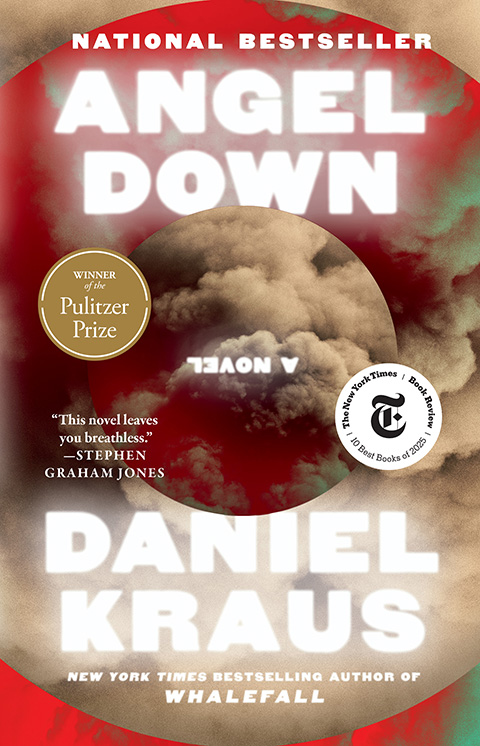 Gohstand Reading Room: PS 3611.R3757 A54 2025
Summary from publisher and author: Angel Down is a novel about five World War One soldiers who stumble upon a fallen angel who could hold the key to ending the war. Private Cyril Bagger has managed to survive the unspeakable horrors of the Great War through his wits and deception, swindling fellow soldiers at every opportunity. But his survival instincts are put to the ultimate test when he and four other grunts are given a deadly mission: venture into the perilous No Man’s Land to euthanize a wounded comrade. What they find amid the ruined battlefield, however, is not a man in need of mercy but a fallen angel, seemingly struck down by artillery fire. This celestial being may hold the key to ending the brutal conflict, but only if the soldiers can suppress their individual desires and work together. As jealousy, greed, and paranoia take hold, the group is torn apart by their inner demons, threatening to turn their angelic encounter into a descent into hell.
Other books on the shelves of the Gohstand Reading Room, that deeply immerse readers into the mindset of soldiers and the impact of war, also include these notable and fantastic reads:
O’Brien, Tim. The Things They Carried: A Work of Fiction. First Broadway, Broadway Books, 1999.
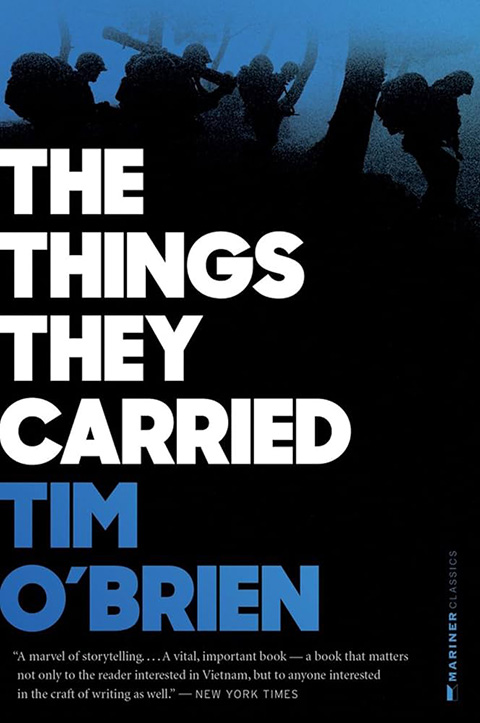 Location: Gohstand Reading Room; PS3565.B75 T48 1998
Publisher Summary: Heroic young men carry the emotional weight of their lives to war in Vietnam in a patchwork account of a modern journey into the heart of darkness. The Things They Carried depicts the men of Alpha Company: Jimmy Cross, Henry Dobbins, Rat Kiley, Mitchell Sanders, Norman Bowker, Kiowa, and of course, the character Tim O'Brien who has survived his tour in Vietnam to become a father and writer at the age of forty-three. They battle the enemy (or maybe more the idea of the enemy), and occasionally each other. In their relationships we see their isolation and loneliness, their rage and fear. They miss their families, their girlfriends and buddies; they miss the lives they left back home. Yet they find sympathy and kindness for strangers (the old man who leads them unscathed through the mine field, the girl who grieves while she dances), and love for each other, because in Vietnam they are the only family they have. We hear the voices of the men and build images upon their dialogue. The way they tell stories about others, we hear them telling stories about themselves. With the creative verve of the greatest fiction and the intimacy of a searing autobiography, The Things They Carried is a testament to the men who risked their lives in America's most controversial war. It is also a mirror held up to the frailty of humanity. Ultimately The Things They Carried and its myriad protagonists call to order the courage, determination, and luck we all need to survive.
Powers, Kevin. The Yellow Birds: A Novel. 1st ed., Little, Brown and Co., 2012.
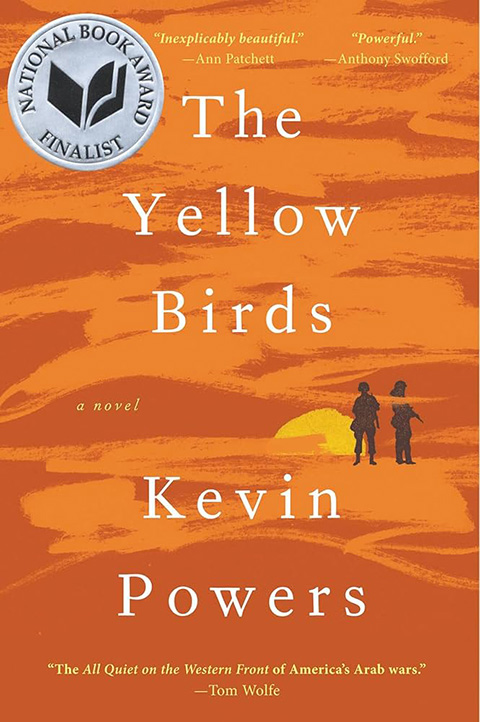 Gohstand Reading Room; PS3616.O88348 Y46 2012
Summary: In the midst of a bloody battle in the Iraq War, two soldiers, bound together since basic training, do everything to protect each other from both outside enemies and the internal struggles that come from constant danger. This novel written by a veteran of the war in Iraq, is the harrowing story of two young soldiers trying to stay alive. "The war tried to kill us in the spring." So begins this powerful account of friendship and loss. In Al Tafar, Iraq, twenty-one-year-old Private Bartle and eighteen-year-old Private Murphy cling to life as their platoon launches a bloody battle for the city. Bound together since basic training when Bartle makes a promise to bring Murphy safely home, the two have been dropped into a war neither is prepared for. In the endless days that follow, the two young soldiers do everything to protect each other from the forces that press in on every side: the insurgents, physical fatigue, and the mental stress that comes from constant danger. As reality begins to blur into a hazy nightmare, Murphy becomes increasingly unmoored from the world around him and Bartle takes actions he could never have imagined. In addition, the novel also offers insight into the effects of a hidden war on mothers and families at home.
Klay, Phil. Redeployment. The Penguin Press, 2014.
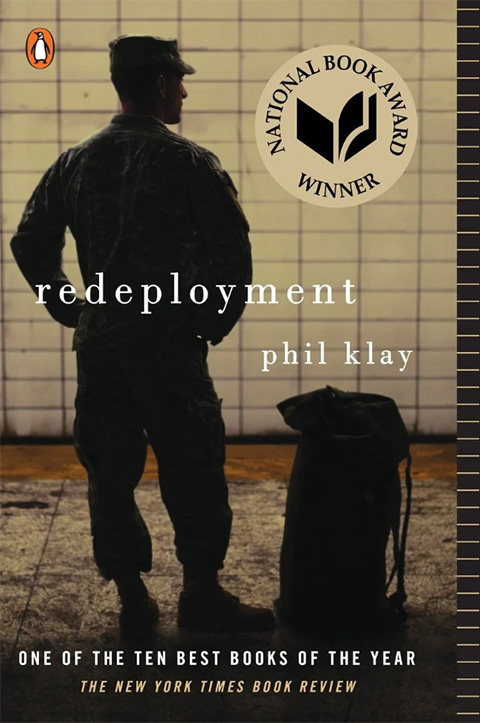 Gohstand Reading Room; PS3611.L4423 A6 2014
Publisher Summary: Redeployment takes readers to the frontlines of the wars in Iraq and Afghanistan, asking us to understand what happened there, and what happened to the soldiers who returned. Interwoven with themes of brutality and faith, guilt and fear, helplessness and survival, the characters in these stories struggle to make meaning out of chaos. In the title story, a soldier who has had to shoot dogs because they were eating human corpses must learn what it is like to return to domestic life in suburbia, surrounded by people "who have no idea where Fallujah is, where three members of your platoon died." In "After-Action Report", a Lance Corporal seeks expiation for a killing he didn't commit, in order that his best friend will be unburdened. A Mortuary Affairs Marine talks about his experiences collecting remains-of U.S. and Iraqi soldiers both. A chaplain sees his understanding of Christianity, and his ability to provide solace through religion, tested by the actions of a ferocious Colonel. And in the darkly comic "Money as a Weapons System", a young Foreign Service Officer is given the absurd task of helping Iraqis improve their lives by teaching them to play baseball. These stories reveal the intricate combination of monotony, bureaucracy, comradeship and violence that make up a soldier's daily life at war, and the isolation, remorse, and despair that can accompany a soldier's homecoming. Across nations and continents, Klay sets in devastating relief the two worlds a soldier inhabits: one of extremes and one of loss.
Awards
- National Book Award for Fiction, 2014.
- W.Y. Boyd Literary Award for Excellence in Military Fiction, 2015.
Wouk, Herman, et al. The Caine Mutiny: A Novel of World War II. Doubleday & Company, Inc, 1952
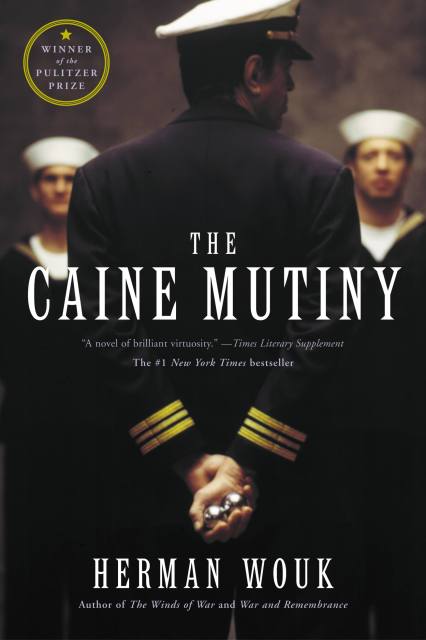 Gohstand Reading Room; PS3545.O98 C28 1951
Publisher Summary:
Set against the backdrop of World War II, The Caine Mutiny unfolds primarily in the Pacific theater of operations. The story takes place aboard the USS Caine, a fictional Navy destroyer-minesweeper, as it navigates the treacherous waters of war. The time frame spans from the early 1940s to the immediate post-war period, capturing the intense pressures and moral dilemmas faced by servicemen during this tumultuous era.
While much of the action occurs at sea, the narrative also touches down in various locations across the Pacific. From the naval base at Pearl Harbor to the shores of unnamed Pacific islands, the story vividly portrays the vast expanse of the theater of operations. The climactic court-martial scene shifts the setting to San Francisco, bringing the consequences of wartime decisions into sharp focus on American soil.
The novel and film skillfully juxtapose the claustrophobic confines of life aboard a warship with the immense, often hostile Pacific Ocean. This contrast heightens the tension as the crew grapples with both external threats and internal conflicts. Through its diverse settings &endash; from storm-tossed seas to formal courtrooms - The Caine Mutiny paints a comprehensive picture of the American naval experience during World War II.
Awards
- Pulitzer Prize, Fiction, 1952.
Remarque, Erich Maria. All Quiet on the Western Front. Amereon House, 1983
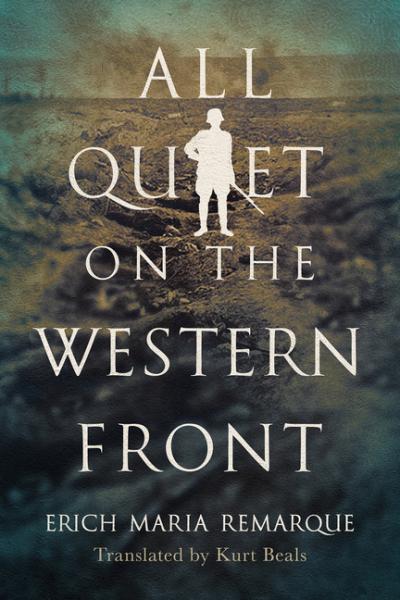 Gohstand Reading Room; PT2635.E68 I413 1983
Summary from publisher WW Norton: The greatest war novel of all time rendered in a taut, muscular, and urgent new translation. An immediate sensation when it was published in 1929, Erich Maria Remarque’s All Quiet on the Western Front has sold more than twenty million copies worldwide since then, making it the best-selling German novel of all time. Its impact is indisputable: it has been adapted for film, television, and other media; has influenced all subsequent works of war literature; and has been taught in high school and college classes ever since. Until now, one translation—published in 1929, and very much a product of its time—has introduced most readers in English to Remarque’s wrenching portrait of the horrors of trench warfare. Now, nearly a century later, renowned translator Kurt Beals recaptures the energy and descriptive force of the German original, rendering Remarque’s distinctly terse, telegraphic prose into a contemporary idiom, conveying for a new generation the immediacy and intensity of this classic novel.
In addition to these wonderful reads, we invite you to also visit our University Library Exhibit Gallery’s Words of War: Personal Experiences of Conflict which is still on display (and right next to the Gohstand Reading Room) through July 15 2026.
Written by Librarian Lynn Lampert, May 18, 2026
Read more The Book Drop blog entriesby Lynn Lampert, Coordinator of Instruction & Information Literacy - May 05, 2026
There’s something special about discovering the right book to read at the right time. Whether it’s a novel you can’t put down, a memoir that shifts your perspective, or a classic title that lingers long after the final page, reading has a way of meeting us where we are while also simultaneously taking us somewhere new. It also does all of this while providing comfort and escape from our daily stresses. Books are magical!
Welcome to The Book Drop, a new CSUN University Library blog dedicated to celebrating the unique experience that reading a book offers. The Book Drop will highlight new and older titles found on the shelves of the Robert and Maureen Gohstand Leisure Reading Room at California State University, Northridge’s University Library (located on the second-floor west wing). This blog aims to be an extension of this very special space within the library, which is designed for curiosity, comfort, and connection to the written word.
The Gohstand Reading Room’s leisure collection invites CSUN students to step beyond coursework and rediscover reading as a source of enjoyment, relaxation, and personal inquiry. The Book Drop blog aims to bring that mission to life beyond the shelves – by connecting readers to new acquisitions and events that will be taking place in the Reading Room.
Why “The Book Drop”?
The name of this blog plays on a familiar library ritual: returning books through a physical book drop after checking them out. But here, the meaning is also flipped. Instead of just returning books, we’re delivering them—dropping fresh title recommendations, revealing hidden gems, and recommending timeless classics directly to you.
Think of each post as a small but meaningful “drop”: a new title to explore, an author to discover, or a reminder of a book worth revisiting. Whether you’re an avid reader or just looking for your next great read, The Book Drop is your invitation to engage with books and there will be no assignments or quizzes.
What You Can Expect
Each post on The Book Drop will highlight selections of fiction and nonfiction available on the shelves in the Reading Room. Here’s a glimpse of what’s lies ahead for readers of this blog:
- New Arrivals: Stay up to date with selected recently added titles, from contemporary fiction to thought-provoking nonfiction.
- Shelf Highlights: Curated selections of great reads books you might otherwise miss—perfect for browsing with intention the next time you stop by the reading room.
- Classics Revisited: Timeless works that continue to resonate with readers over the years.
- Author Spotlights: Get to know the voices behind the books, with features on influential and emerging authors.
- Themed Reads: Collections of books organized around ideas, moods, or moments (such as book anniversaries or special themes) whether you’re seeking escape, insight, or inspiration.
- Save the Date Reminders – Reminders of upcoming talks and presentations in the Gohstand Reading Room.
A Space for Reading Beyond Requirements
At its core, The Book Drop is about (re)connecting our CSUN community with reading as a personal, enriching and recreational experience. During our busy schedules and academic demands, the Reading Room—and hopefully this blog—will remind us that reading doesn’t have to be assigned.
So, whether you’re visiting the Reading Room for the first time or looking for your next literary escape, this blog is here to hopefully help you find a great book.
Keep an eye out—your next great reads are about to drop below.
New Fiction Titles
Guo, Xiaolu. Call Me Ishmaelle. Chatto & Windus, 2026.
 Gohstand Reading Room; PR9450.9.G86 C35 2025
Publisher summary: 1843. Ishmaelle is born in a small village on the stormy Kent coast where she grows up swimming with dolphins. After her parents and infant sister die, her brother, Joseph, leaves to find work as a sailor. Abandoned and desperate for a life at sea, Ishmaelle disguises herself as a cabin boy and travels to New York. Call Me Ishmaelle reimagines the epic battle between man and nature in Herman Melville's Moby Dick from a female perspective. As the American Civil War breaks out in 1861, Ishmaelle boards the Nimrod, a whaling ship led by the obsessive Captain Seneca, a Black free man of heroic stature who is haunted by a tragic past. Here, she finds protectors in Polynesian harpooner, Kauri, and Taoist monk, Muzi, whose readings of the I-Ching guide their quest. Through the bloody male violence of whaling, and the unveiling of her feminine identity, Ishmaelle realizes there is a mysterious bond between herself and the mythical white whale, Moby Dick..
Dinniman, Matt. Operation Bounce House. Ace, an imprint of Penguin Random House LLC, 2026.
 Gohstand Reading Room; PS3604.I49 O64 2026
Publisher Summary: A man must fight for his planet against impossible odds when gamers from Earth attempt to remotely annihilate it in this epic, fast-paced novel from the New York Times bestselling author of the smash-hit Dungeon Crawler Carl. All colonist Oliver Lewis ever wanted to do is run the family ranch with his sister, maybe play a gig or two with his band, and keep his family's aging fleet of intelligent agriculture bots ticking as long as possible. As a fan of Earth television and culture, he figures it will be a good thing when the transfer gate finally opens all the way and restores instant travel and full communication between Earth and his planet, New Sonora. But there's a complication. Even though the settlers were promised they'd be left in peace, Earth's government now has other plans. The colossal Apex Corporation is hired to commence an "eviction action." But maximizing profits will always be Apex's number one priority. Why spend money printing and deploying their own AI soldiers when they can turn it into a game? Why not charge bored Earthers for the opportunity to design their own war machines and remotely pilot them from the comfort of their own homes? The game is called Operation Bounce House. Oliver and his friends soon find themselves fighting for their lives against machines piloted by gamers who've paid a premium for the privilege. With the help of an old book from his grandfather and a bucket of rusty parts, Oliver is determined to defend the only home he's ever known.
New Non-Fiction Titles
Baron, David. The Martians: The True Story of an Alien Craze That Captured Turn-of-the-Century America. First edition., Liveright Publishing Corporation, a division of W.W. Norton & Company, 2026.
 Gohstand Reading Room; QB54 .B376 2025
Publisher Summary: 'There Is Life on the Planet Mars' (New York Times, December 9, 1906). This New York Times headline was no joke. In the early 1900s, many Americans actually believed we had discovered intelligent life on Mars, as best-selling science writer David Baron chronicles in The Martians, his truly bizarre tale of a nation swept up in Mars mania. At the center of Baron's historical drama is Percival Lowell, the Boston Brahmin and Harvard scion, who observed 'canals' etched into the surface of Mars. Lowell devised a grand theory that the red planet was home to a utopian society that had built gargantuan ditches to funnel precious meltwater from the polar icecaps to desert farms and oasis cities. The public fell in love with the ambitious amateur astronomer who shared his findings in speeches and wildly popular books. While at first people treated the Martians whimsically--Martians headlining Broadway shows, biologists speculating whether they were winged or gilled--the discussion quickly became serious. Inventor Nikola Tesla announced he had received radio signals from Mars; Alexander Graham Bell agreed there was 'no escape from the conviction' that intelligent beings inhabited the planet. Martian excitement reached its zenith when Lowell financed an expedition to photograph Mars from Chile's Atacama Desert, resulting in what newspapers hailed as proof of the Martian canals' existence. Triumph quickly yielded to tragedy. Those wild claims and highly speculative photographs emboldened Lowell's critics, whose withering attacks gathered steam and eventually wrecked the man and his theory--but not the fervor he had started. Although Lowell would die discredited and delusional in 1916, the Mars frenzy spurred a nascent literary genre called science fiction, and the world's sense of its place in the universe would never be the same. Today, the red planet maintains its grip on the public's imagination. Many see Mars as civilization's destiny--the first step toward our becoming an interplanetary species--but, as David Baron demonstrates, this tendency to project our hopes onto the world next door is hardly new. The Martians is a scintillating and necessary reminder that while we look to Mars for answers, what we often find are mirrors of ourselves.
Chang, Jeff. Water Mirror Echo: Bruce Lee and the Making of Asian America. First edition., Mariner Books, 2026. Chang, Jeff. Water Mirror Echo : Bruce Lee and the Making of Asian America. First edition., Mariner Books, 2026.
 Gohstand Reading Room; PN2287.L2897 C43 2025
Publisher Summary: More than a half-century after his passing, Bruce Lee is as towering a figure to people around the world as ever. On his path to becoming a global icon, he popularized martial arts in the West, became a bridge to people and cultures from the East, and just as he was set to conquer Hollywood once and for all, he died of cerebral edema at age thirty-two. It's no wonder that Bruce Lee's legend has only bloomed in the decades since. Yet, in so many ways, his legend has eclipsed the man. Forgotten is the stark reality of the baby boy born in segregated San Francisco, who spent his youth in war-ravaged, fight-crazy Hong Kong. Forgotten is the curious teenager who found his way back to America, where he embraced West Coast counterculture and meshed it with the Asian worldviews and philosophies that reared him. Forgotten is the man whose very presence broke barriers and helped shape the idea of what being an Asian in America is, at the very dawn of Asian America. Water Mirror Echo-a title inspired by Bruce Lee's own way of moving, being and responding to the world-is a page-turning and powerful reminder. At the helm is Jeff Chang, the award-winning author of Can't Stop Won't Stop, whose writing on culture, politics, the arts and music have made him one of the most acclaimed and distinctive voices of our time. In his hands, Bruce Lee's story brims with authenticity. Now, based on in-depth interviews with Lee's closest intimates, thousands of newly available personal documents, and featuring dozens of unseen photographs from the family's archive, Chang does the nearly impossible. He reveals the man behind the enduring iconography and stirringly shows Lee's growing fame ushering in something that's turned out to be even more enduring: the creation of Asian America.
Read more The Book Drop blog entries