February 17th marks the beginning of Lunar New Year, or Spring Festival — a time of community and celebration around the globe, including China, Korea, Vietnam, and the U.S. Rooted in lunisolar calendars across East and Central Asia–most often the Chinese Lunar calendar and related variants–Lunar New Year starts with the second new moon after the winter solstice. This international holiday is observed by around 2 billion people across the globe. In China, the celebration is called chūnjié, or “Spring Festival”. In Korean, the celebration is called Seollal, while in Vietnamese it is Tết, or Tết Nguyên Đán. In the United States, Lunar New Year celebrations are a vital part of many American communities.
The Year of the Horse
In 2026, we will enter the Year of the Horse in the Chinese zodiac, regarded as energetic and confident. Specifically, this is the Year of the fire horse, as the lunar calendar also incorporates a rotation of natural elements in addition to animal zodiac signs.
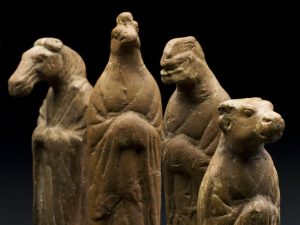
Pottery copy of a small statue representing the Chinese zodiac sign of Wu, the Horse, original probably Wei or Sui Dynasty, 618-907 CE copy possibly taken in China, late 19th century. https://jstor.org/stable/community.26324496.
If you’re curious to learn about Lunar New Year using CSUN Library’s collections, you might try using it as a key phrase or searching related terms in OneSearch. There are many aspects to explore — from the economic impacts of celebrations, to environmental studies on the use of fireworks in festivals, to lesson plan development and art projects for children, to the impact of the year’s zodiac on birthing rates! Here’s a sample of interesting catalog records related to Lunar New Year: