Newsletter Edition: Fall 2026
Contributed by Elizabeth Altman
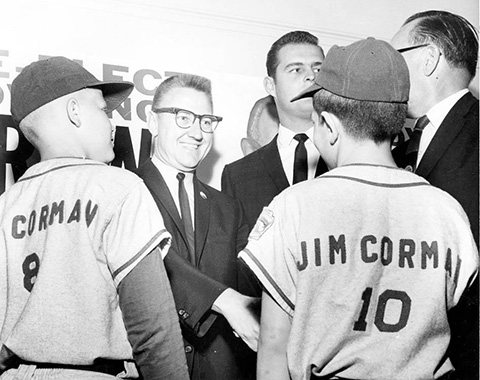
Our Special Collections & Archives librarians were gratified to learn this past July that their project, “American Government Traditions: Federal, State, and Local Intersections in Post-War Los Angeles,” had been awarded $284,235 in grant funding from the National Endowment of the Humanities (NEH). The two-year project will make available the legislative papers of three Los Angeles legislators: James Corman, a Democrat who served on the Los Angeles City Council 1957-1961 and later represented the 21st and 22nd congressional districts in the US House of Representatives 1961-1981; Roberta “Bobbi” Fiedler, the Republican who unseated him in the 21st District and served 1981-1987; and Edward M. “Ed” Davis, a Republican California state senator who served 1981-1993. CSUN’s Special Collections & Archives is no stranger to NEH-funded projects, but the NEH itself has been in the news for having cancelled $100 million in previously awarded grants on ideological grounds, later reinstated under a judge’s order. Head Archivist and grant Project Director Ellen Jarosz remarks, “NEH grants are always competitive, and have felt even more so in recent years. We were hopeful, if not optimistic, that the grant would be awarded. Finding out NEH had chosen to fund the proposal was a wonderful surprise.”
Archives donations are generally driven by a relationship the subject has had with the institution. Archivist and Co-Project Director Mallory Furnier explains, “Donations begin with a conversation between the stewards of a politician’s papers and the potential archival repository. We always want to make sure that the papers fit the collecting scope of our institution. Since we document the history and development of Los Angeles, and more broadly California, these local politicians are a good fit with what we preserve and provide access to. Political collections like these will most often include correspondence, photographs, papers related to legislative work, constituent files, and ephemera from political campaigns.”
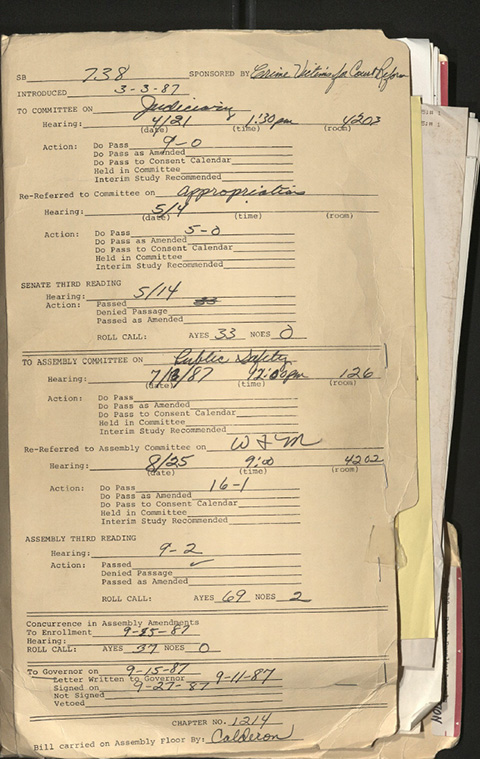
The grant will fund a project archivist and student workers to organize, preserve, describe, and make available over 400 linear feet of archival materials, as well as digitize several hundred items for inclusion in the library’s Digital Collections. The processed collections will join other materials relating to the three politicians in the library’s physical archives and digital collections, already sought out for research. “We receive regular requests for materials in the Congressman James C. Corman Collection. His tenure was so long that the related topics are wide ranging,” says Furnier. The collections to be processed likely include materials relating to Fiedler’s opposition to school busing, and to Corman’s service on the President's National Advisory Commission on Civil Disorders from 1967-1968. “We have many students and researchers interested in Civil Rights-related public protest and dissent, busing students, and the many Chicano/a activist movements in the second half of the 20th century.”
Taken together, the materials contribute to the image of a mid-20th-century political climate different from our own, in which a single issue could be championed on both the left and the right. Jarosz elaborates, “For instance, it’s difficult to imagine a Republican senator taking any sort of pro-choice stance today, but we know toward the end of his time in the California State Senate, Republican Senator Ed Davis declared he would stop voting against the use of Medi-Cal funds to support abortions. Another Ed Davis example relates to environmentalism and conservation: while today we tend to think of environmentalism as a cause of the political left, Davis was an outspoken supporter of environmental policy. During his second term, in particular, he supported bills protecting mountain lions and expanding California’s state parks.”
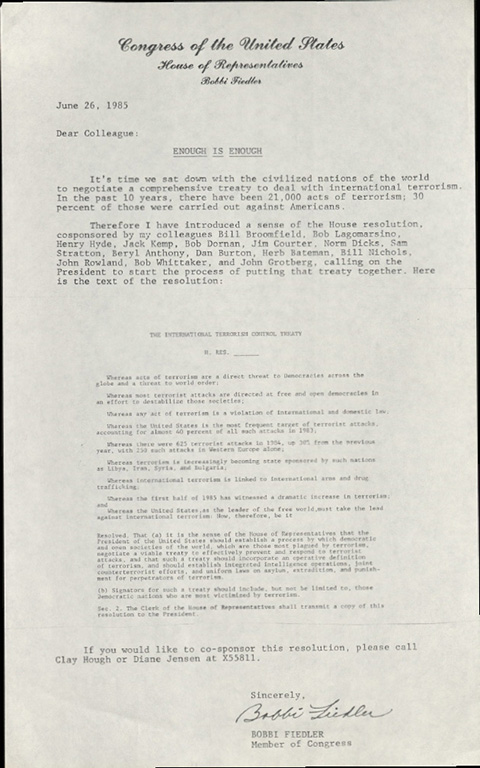
The materials will require careful, attentive handling. Gayle O’Hara, University Archivist and Co-Project Director, explains, “We know there are thermal faxes and audio/visual materials such as audiocassettes. As these materials can degrade and/or become obsolete quickly, we’ll plan for preservation photocopying and have our Digital Collections team digitize the a/v materials.” The size of the project may be the biggest challenge, says O’Hara. “Space for processing large collections is always an issue. Even digitizing items will require time and attention, so as to choose the items that best meet researcher needs.”
“In addition to the nuts and bolts of processing,” O’Hara continues, “we also plan to hold an outreach event involving CSUN as well as the wider community. There are a lot of moving parts and we need to stay on track to not only do justice to the collections and researchers, but to be accountable to the National Endowment for the Humanities, who is generously providing the funding to make this possible.”
Give to the University Library
Give a Gift Today