Oct 19 - Nov 06
Día de Muertos 2026
Jul 1, 2026 12:00am to Jul 31, 2026 11:00pm
Online
Disability Pride Month is an annual celebration that recognizes disability as a natural part of human diversity. According to the organization Disability Belongs, “Over time, Disability Pride Month has become more than a commemoration of the passing of a civil rights law. It is also a recognition of disability identity, culture, leadership, and belonging. Disability Pride invites people to understand and to recognize the contributions of disabled people in every part of community life.”
Disability Pride Month is held every July to commemorate the anniversary of the Americans with Disabilities Act (ADA), which was advanced and fought for by disabled people across the United States. The theme of Disability Pride Month 2026 is “The World Works Better With Us.”
The CSUN University Library invites you to join us as we honor and uplift the history of the disability rights movement. Peruse these books that shine a light on themes of disability pride and justice, available as e-Books through the CSUN University Library.
For more information about Disability Pride Month, checkout these online resources and organizations:
Aging & Disabilities Department. (2026a). Disability pride month 2026: The world works better with us. Los Angeles County Aging & Disabilities Department. https://ad.lacounty.gov/about-us/campaigns/disability-pride-2026/
Disability Belongs. (2026b, July 6). Disability pride month: Identity, culture, and belonging. Disability Belongs. https://www.disabilitybelongs.org/2026/07/disability-pride-month-2026/
The Arc. (2025, May 19). Disability pride month 2026: Theme, history, how to celebrate. The Arc. https://thearc.org/blog/why-and-how-to-celebrate-disability-pride-month
.
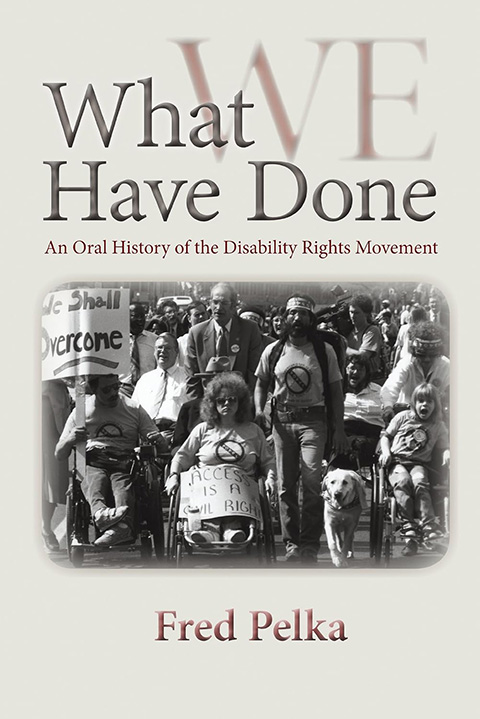
In What We Have Done: An Oral History of the Disability Rights Movement, Fred Pelka takes that slogan at face value. He presents the voices of disability rights activists who, in the period from 1950 to 1990, transformed how society views people with disabilities, and recounts how the various streams of the movement came together to push through the Americans with Disabilities Act of 1990, the most sweeping civil rights legislation since passage of the Civil Rights Act of 1964. Beginning with the stories of those who grew up with disabilities in the 1940s and '50s, the book traces how disability came to be seen as a political issue, and how people with disabilities―often isolated, institutionalized, and marginalized―forged a movement analogous to the civil rights, women's rights, and gay rights movements, and fought for full and equal participation in American society. (description from Amazon)
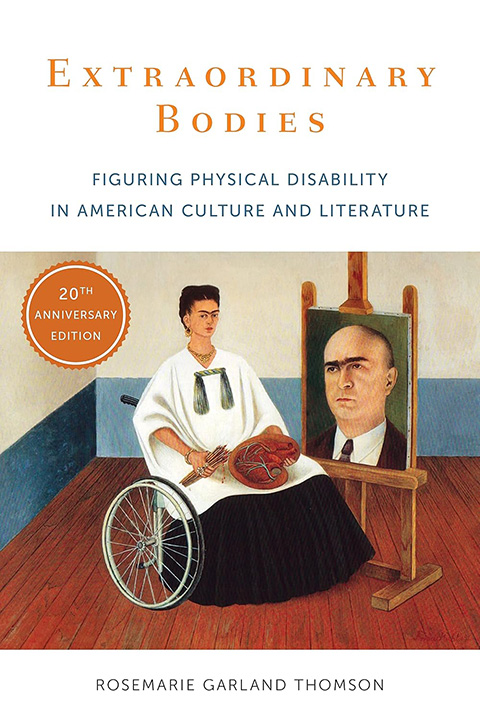
Extraordinary Bodies is a cornerstone text of disability studies, establishing the field upon its publication in 1997. Framing disability as a minority discourse rather than a medical one, the book added depth to oppressive narratives and revealed novel, liberatory ones. Through her incisive readings of such texts as Harriet Beecher Stowe's Uncle Tom's Cabin and Rebecca Harding Davis's Life in the Iron Mills, Rosemarie Garland-Thomson exposed the social forces driving representations of disability. She encouraged new ways of looking at texts and their depiction of the body and stretched the limits of what counted as a text, considering freak shows and other pop culture artifacts as reflections of community rites and fears. Garland-Thomson also elevated the status of African-American novels by Toni Morrison and Audre Lorde. Extraordinary Bodies laid the groundwork for an appreciation of disability culture and an inclusive new approach to the study of social marginalization. (description from Columbia UP)
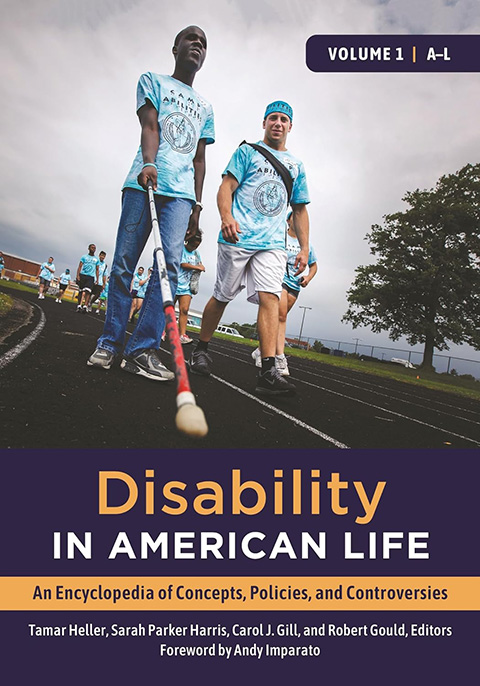
Once primarily thought of as a medical issue, disability is now more widely recognized as a critical issue of identity, personhood, and social justice. By discussing challenges confronting people with disabilities and their families and by collecting numerous accounts of disability experiences, this volume firmly situates disability within broader social movements, policy, and areas of marginalization, providing a critical examination into the lived experiences of people with disabilities and how disability can affect identity. (description from Bloomsbury Press)
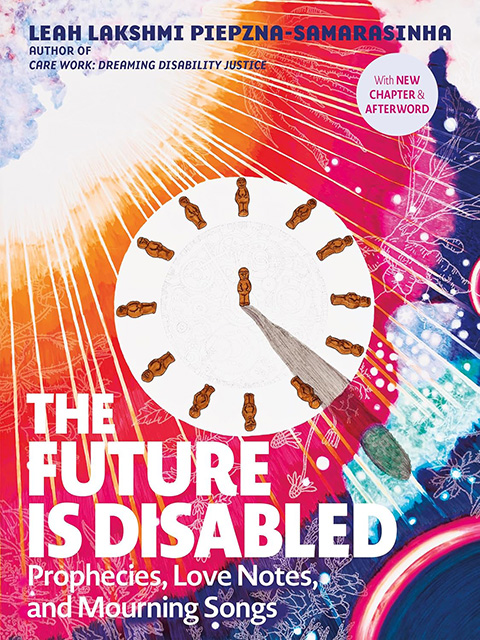
In The Future Is Disabled, Leah Lakshmi Piepzna-Samarasinha asks some provocative questions: What if, in the near future, the majority of people will be disabled—and what if that’s not a bad thing? And what if disability justice and disabled wisdom are crucial to creating a future in which it’s possible to survive fascism, climate change, and pandemics and to bring about liberation? Building on the work of her game changing book Care Work: Dreaming Disability Justice, Piepzna-Samarasinha writes about disability justice at the end of the world, documenting the many ways disabled people kept and are keeping each other—and the rest of the world—alive during Trump, fascism and the COVID-19 pandemic. Other subjects include crip interdependence, care and mutual aid in real life, disabled community building, and disabled art practice as survival and joy. Written over the course of two years of disabled isolation during the pandemic, this is a book of love letters to other disabled QTBIPOC (and those concerned about disability justice, the care crisis, and surviving the apocalypse); honor songs for kin who are gone; recipes for survival; questions and real talk about care, organizing, disabled families, and kin networks and communities; and wild brown disabled femme joy in the face of death. With passion and power, The Future Is Disabled remembers our dead and insists on our future.– from the publisher
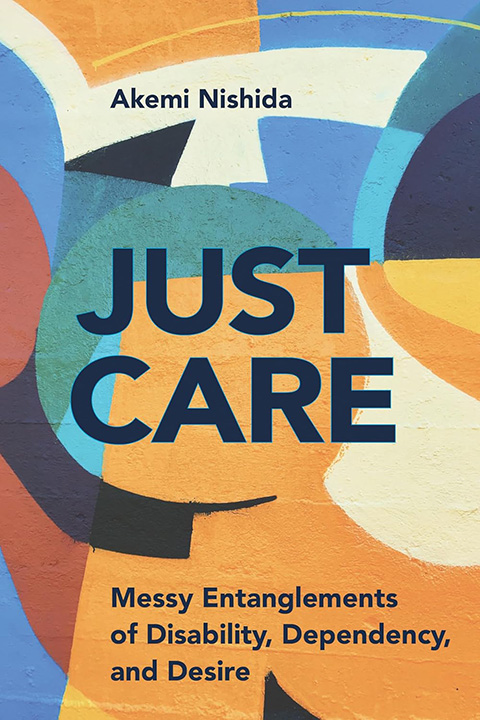
“Just Care examines care as a site where the somatic, the political economy, and intersectional social oppressions manifest and materialize interactively, while it is also a vision and praxis for radically collective and affectionate ways to live and transform society”– Provided by publisher.
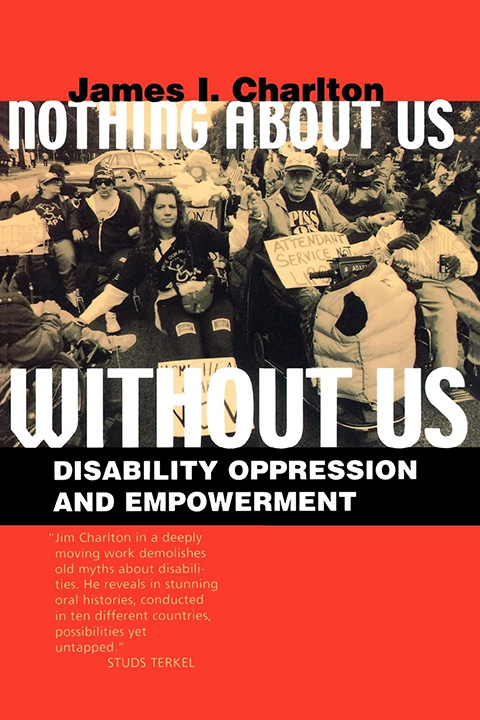
James Charlton has produced a ringing indictment of disability oppression, which, he says, is rooted in degradation, dependency, and powerlessness and is experienced in some form by five hundred million persons throughout the world who have physical, sensory, cognitive, or developmental disabilities. Nothing About Us Without Us is the first book in the literature on disability to provide a theoretical overview of disability oppression that shows its similarities to, and differences from, racism, sexism, and colonialism. Charlton’s analysis is illuminated by interviews he conducted over a ten-year period with disability rights activists throughout the Third World, Europe, and the United States. Charlton finds an antidote for dependency and powerlessness in the resistance to disability oppression that is emerging worldwide. His interviews contain striking stories of self-reliance and empowerment evoking the new consciousness of disability rights activists. As a latecomer among the world’s liberation movements, the disability rights movement will gain visibility and momentum from Charlton’s elucidation of its history and its political philosophy of self-determination, which is captured in the title of his book. Nothing About Us Without Us expresses the conviction of people with disabilities that they know what is best for them. Charlton’s combination of personal involvement and theoretical awareness assures greater understanding of the disability rights movement — from the publisher
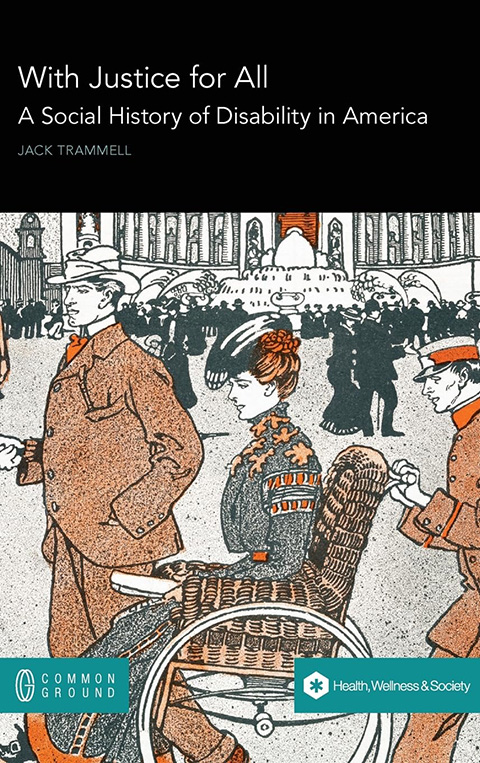
"With Justice for All” is a narrative social history of disability in America. This book incorporates individual lived experiences, historical figures, legal developments, and social movements. The story of disability told here is arguably the story of America. Historian Douglas Bayton maintained that disability is everywhere-once you begin to look for it-and this text attempts to look in many places, some of which have not been looked into before by the critical scholarly eye. The story also brings the Disability Rights Movement (DRM) into its proper historical position, side by side with the Civil and Gender Rights Movements and the ongoing imagination of a more equitable America– Provided by publisher.
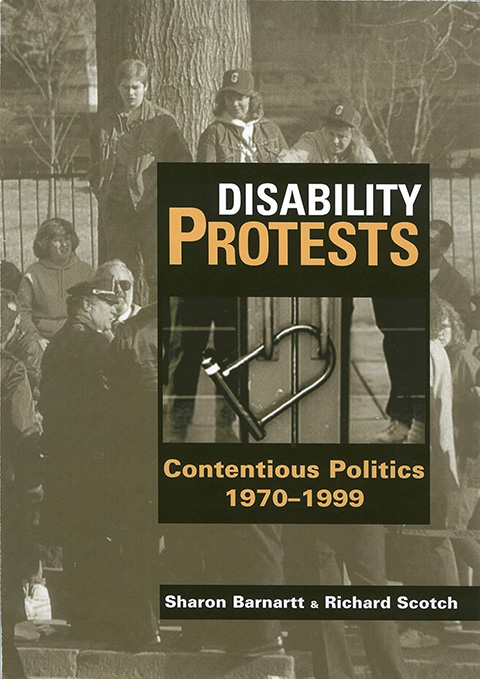
Part and parcel to the civil rights movements of the past thirty years has been a sustained, coordinated effort among disabled Americans to secure equal rights and equal access to that of non-disabled people. Beyond merely providing a history of this movement, Sharon Barnartt and Richard Scotch’s Disability Protests: Contentious Politics, 1970-1999 offers an incisive, sociological analysis of thirty years of protests, organization, and legislative victories within the deaf and disabled populations.The authors begin with a thoughtful consideration of what constitutes “contentious” politics and what distinguishes a sustained social movement from isolated acts of protest. The numbers of disability rights protests are meticulously catalogued over the course of thirty years, revealing significant increases in both cross-disability actions as well as disability-specific actions. Political rancor within disability communities is addressed as well. Chapter four, “A Profile of Contentious Actions” confronts the thorny question of who is “deaf enough” or “disabled enough” to adequately represent their constituencies. Barnartt and Scotch conclude by giving special attention to the Rehabilitation Act of 1973, the Americans with Disabilities Act of 1990, and the 1988 Deaf President Now protest, focusing on how these landmark events affected their proponents. Disability Protests offers an entirely original sociological perspective on the emerging movement for deaf and disability rights. — from the Publisher
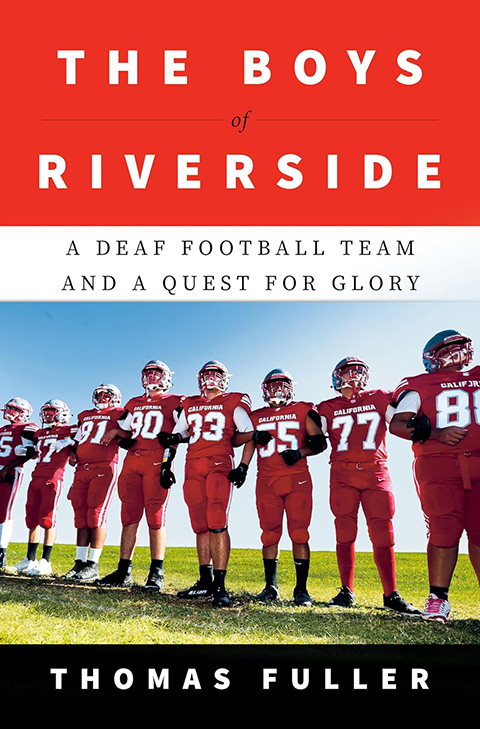
“The incredible story of an all-deaf high school football team’s triumphant climb from underdog to undefeated, their inspirational brotherhood, a fascinating portrait of deafness in America, and the indefatigable head coach who spearheaded the team”– Provided by publisher.
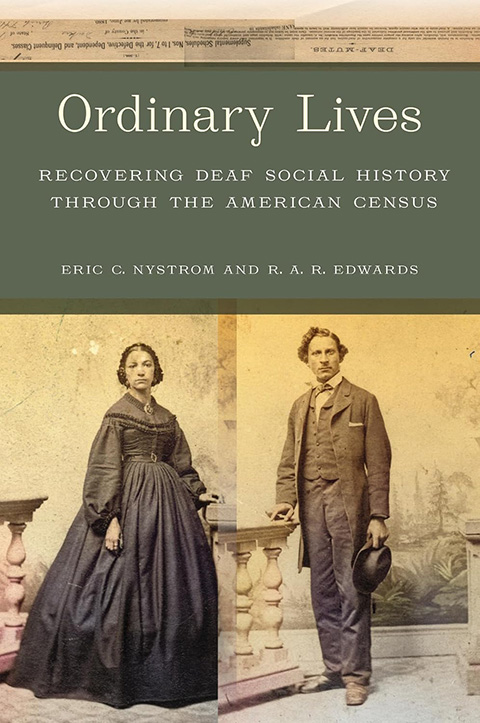
“The collective social history of deaf people in America has yet to be written. While scholars have focused their attention on residential schools for the deaf, leaders in the deaf community, and prominent graduates of these institutions, the lives of “ordinary” deaf individuals have been largely overlooked. Employing the methods of social history, such as the use of digital history techniques and often-ignored sources like census records, Eric C. Nystrom and R. A. R. Edwards recover the lived experiences of everyday deaf people in late nineteenth century America. Ordinary Lives captures the stories of deaf women and men, both Black and white, describing their family lives, networks of support, educational experiences, and successes and hardships. In this pioneering “deaf social history,” Edwards and Nystrom reconstruct the biographies of a wider range of deaf individuals to tell a richer, more nuanced, and more inclusive history of the larger American deaf community”– Provided by publisher.
Requests for accommodation services (e.g. sign language interpreters or transcribers) must be made at least five (5) business days in advance. Please email library.event@csun.edu in advance of the event.
Last Updated: 07/06/2026