Spotlight on War Fiction and the 2026 Pulitzer Prize Fiction Winner
by Lynn Lampert, Coordinator of Instruction & Information Literacy - May 19, 2026
Welcome back to The Book Drop, our new CSUN University Library blog dedicated to celebrating the unique experience that reading a book offers.
As we approach the end of May and Memorial Day, The Book Drop, inspired by this month’s announcement that the novel Angel Down by Daniel Kraus received the 2026 Pulitzer Prize for Fiction, is highlighting works that skillfully examine the toll warfare takes on both soldiers and civilians.
Sometimes it can be hard to understand why a certain book wins the Pulitzer Prize for Fiction. But with Angel Down, the honor really fits, as the novel is not only a powerful work that examines the impact of war, but its language is also beautifully crafted to make the reader feel like they are trapped in war. The Pulitzer-winning author Daniel Kraus says his novel Angel Down, set in France during World War I, is designed to trap readers inside it forever. On a recent episode of The New York Times “Book Review” podcast, Kraus explained why he wrote the book as one continuous sentence and how that intentional structure was meant to reflect the endless cycle of violence at the center of the story. Kraus stated that the novel is,
a story about how World War I began a cycle of industrialized violence that once we began it we were incapable of stopping it – it just moves like a wheel that we are trapped inside….and so I had the thought what if I wrote it all in one sentence and the end of the book circles back to the beginning of the book so that once you start reading it in effect you are trapped in the book forever.
Praise for Angel Down
Kraus demonstrates what a seasoned author is capable of at the highest level of literary ambition. The most gripping unforgettable, account of war in recent memory - American war fiction is certain to be haunted by this book for years to come. – John Milas
This novel leaves you breathless – Stephen Graham Jones
Learn More About the author Daniel Kraus
Kraus, Daniel. Angel Down. First Atria Books hardcover edition., Atria Books, an imprint of Simon & Schuster, LLC, 2026.
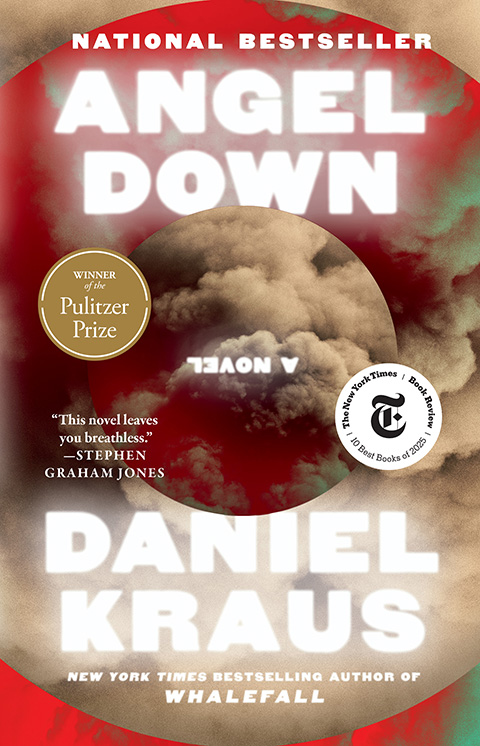 Gohstand Reading Room: PS 3611.R3757 A54 2025
Summary from publisher and author: Angel Down is a novel about five World War One soldiers who stumble upon a fallen angel who could hold the key to ending the war. Private Cyril Bagger has managed to survive the unspeakable horrors of the Great War through his wits and deception, swindling fellow soldiers at every opportunity. But his survival instincts are put to the ultimate test when he and four other grunts are given a deadly mission: venture into the perilous No Man’s Land to euthanize a wounded comrade. What they find amid the ruined battlefield, however, is not a man in need of mercy but a fallen angel, seemingly struck down by artillery fire. This celestial being may hold the key to ending the brutal conflict, but only if the soldiers can suppress their individual desires and work together. As jealousy, greed, and paranoia take hold, the group is torn apart by their inner demons, threatening to turn their angelic encounter into a descent into hell.
Other books on the shelves of the Gohstand Reading Room, that deeply immerse readers into the mindset of soldiers and the impact of war, also include these notable and fantastic reads:
O’Brien, Tim. The Things They Carried: A Work of Fiction. First Broadway, Broadway Books, 1999.
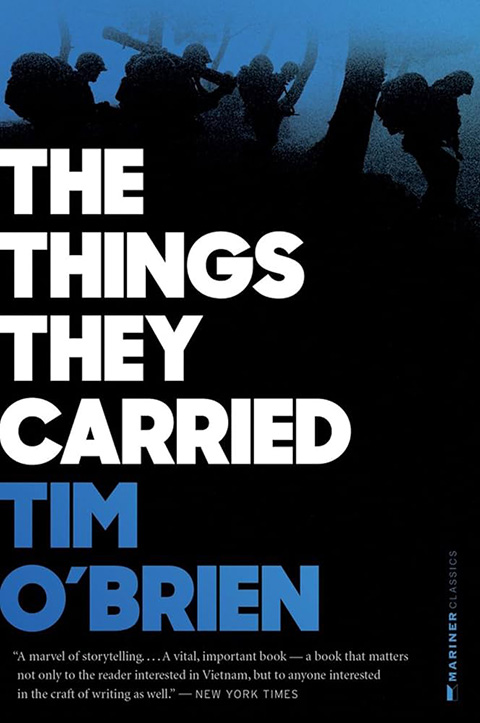 Location: Gohstand Reading Room; PS3565.B75 T48 1998
Publisher Summary: Heroic young men carry the emotional weight of their lives to war in Vietnam in a patchwork account of a modern journey into the heart of darkness. The Things They Carried depicts the men of Alpha Company: Jimmy Cross, Henry Dobbins, Rat Kiley, Mitchell Sanders, Norman Bowker, Kiowa, and of course, the character Tim O'Brien who has survived his tour in Vietnam to become a father and writer at the age of forty-three. They battle the enemy (or maybe more the idea of the enemy), and occasionally each other. In their relationships we see their isolation and loneliness, their rage and fear. They miss their families, their girlfriends and buddies; they miss the lives they left back home. Yet they find sympathy and kindness for strangers (the old man who leads them unscathed through the mine field, the girl who grieves while she dances), and love for each other, because in Vietnam they are the only family they have. We hear the voices of the men and build images upon their dialogue. The way they tell stories about others, we hear them telling stories about themselves. With the creative verve of the greatest fiction and the intimacy of a searing autobiography, The Things They Carried is a testament to the men who risked their lives in America's most controversial war. It is also a mirror held up to the frailty of humanity. Ultimately The Things They Carried and its myriad protagonists call to order the courage, determination, and luck we all need to survive.
Powers, Kevin. The Yellow Birds: A Novel. 1st ed., Little, Brown and Co., 2012.
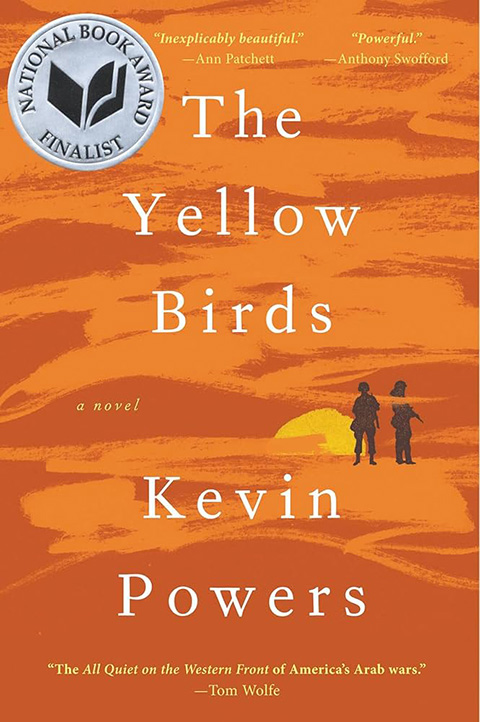 Gohstand Reading Room; PS3616.O88348 Y46 2012
Summary: In the midst of a bloody battle in the Iraq War, two soldiers, bound together since basic training, do everything to protect each other from both outside enemies and the internal struggles that come from constant danger. This novel written by a veteran of the war in Iraq, is the harrowing story of two young soldiers trying to stay alive. "The war tried to kill us in the spring." So begins this powerful account of friendship and loss. In Al Tafar, Iraq, twenty-one-year-old Private Bartle and eighteen-year-old Private Murphy cling to life as their platoon launches a bloody battle for the city. Bound together since basic training when Bartle makes a promise to bring Murphy safely home, the two have been dropped into a war neither is prepared for. In the endless days that follow, the two young soldiers do everything to protect each other from the forces that press in on every side: the insurgents, physical fatigue, and the mental stress that comes from constant danger. As reality begins to blur into a hazy nightmare, Murphy becomes increasingly unmoored from the world around him and Bartle takes actions he could never have imagined. In addition, the novel also offers insight into the effects of a hidden war on mothers and families at home.
Klay, Phil. Redeployment. The Penguin Press, 2014.
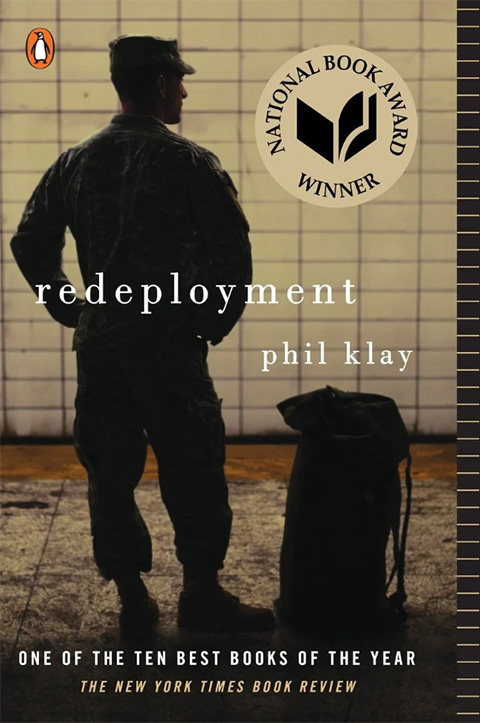 Gohstand Reading Room; PS3611.L4423 A6 2014
Publisher Summary: Redeployment takes readers to the frontlines of the wars in Iraq and Afghanistan, asking us to understand what happened there, and what happened to the soldiers who returned. Interwoven with themes of brutality and faith, guilt and fear, helplessness and survival, the characters in these stories struggle to make meaning out of chaos. In the title story, a soldier who has had to shoot dogs because they were eating human corpses must learn what it is like to return to domestic life in suburbia, surrounded by people "who have no idea where Fallujah is, where three members of your platoon died." In "After-Action Report", a Lance Corporal seeks expiation for a killing he didn't commit, in order that his best friend will be unburdened. A Mortuary Affairs Marine talks about his experiences collecting remains-of U.S. and Iraqi soldiers both. A chaplain sees his understanding of Christianity, and his ability to provide solace through religion, tested by the actions of a ferocious Colonel. And in the darkly comic "Money as a Weapons System", a young Foreign Service Officer is given the absurd task of helping Iraqis improve their lives by teaching them to play baseball. These stories reveal the intricate combination of monotony, bureaucracy, comradeship and violence that make up a soldier's daily life at war, and the isolation, remorse, and despair that can accompany a soldier's homecoming. Across nations and continents, Klay sets in devastating relief the two worlds a soldier inhabits: one of extremes and one of loss.
Awards
- National Book Award for Fiction, 2014.
- W.Y. Boyd Literary Award for Excellence in Military Fiction, 2015.
Wouk, Herman, et al. The Caine Mutiny: A Novel of World War II. Doubleday & Company, Inc, 1952
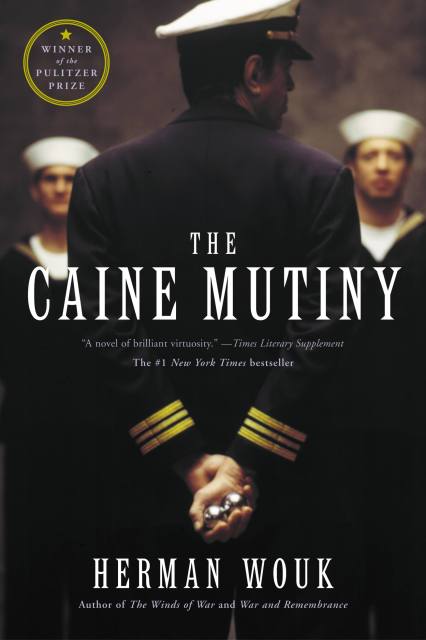 Gohstand Reading Room; PS3545.O98 C28 1951
Publisher Summary:
Set against the backdrop of World War II, The Caine Mutiny unfolds primarily in the Pacific theater of operations. The story takes place aboard the USS Caine, a fictional Navy destroyer-minesweeper, as it navigates the treacherous waters of war. The time frame spans from the early 1940s to the immediate post-war period, capturing the intense pressures and moral dilemmas faced by servicemen during this tumultuous era.
While much of the action occurs at sea, the narrative also touches down in various locations across the Pacific. From the naval base at Pearl Harbor to the shores of unnamed Pacific islands, the story vividly portrays the vast expanse of the theater of operations. The climactic court-martial scene shifts the setting to San Francisco, bringing the consequences of wartime decisions into sharp focus on American soil.
The novel and film skillfully juxtapose the claustrophobic confines of life aboard a warship with the immense, often hostile Pacific Ocean. This contrast heightens the tension as the crew grapples with both external threats and internal conflicts. Through its diverse settings &endash; from storm-tossed seas to formal courtrooms - The Caine Mutiny paints a comprehensive picture of the American naval experience during World War II.
Awards
- Pulitzer Prize, Fiction, 1952.
Remarque, Erich Maria. All Quiet on the Western Front. Amereon House, 1983
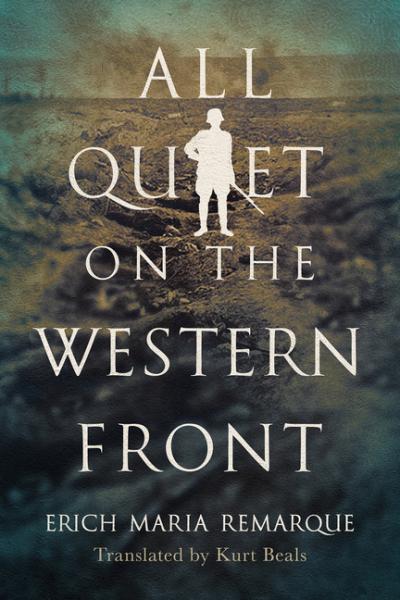 Gohstand Reading Room; PT2635.E68 I413 1983
Summary from publisher WW Norton: The greatest war novel of all time rendered in a taut, muscular, and urgent new translation. An immediate sensation when it was published in 1929, Erich Maria Remarque’s All Quiet on the Western Front has sold more than twenty million copies worldwide since then, making it the best-selling German novel of all time. Its impact is indisputable: it has been adapted for film, television, and other media; has influenced all subsequent works of war literature; and has been taught in high school and college classes ever since. Until now, one translation—published in 1929, and very much a product of its time—has introduced most readers in English to Remarque’s wrenching portrait of the horrors of trench warfare. Now, nearly a century later, renowned translator Kurt Beals recaptures the energy and descriptive force of the German original, rendering Remarque’s distinctly terse, telegraphic prose into a contemporary idiom, conveying for a new generation the immediacy and intensity of this classic novel.
In addition to these wonderful reads, we invite you to also visit our University Library Exhibit Gallery’s Words of War: Personal Experiences of Conflict which is still on display (and right next to the Gohstand Reading Room) through July 15 2026.
Written by Librarian Lynn Lampert, May 18, 2026
Read more The Book Drop blog entries