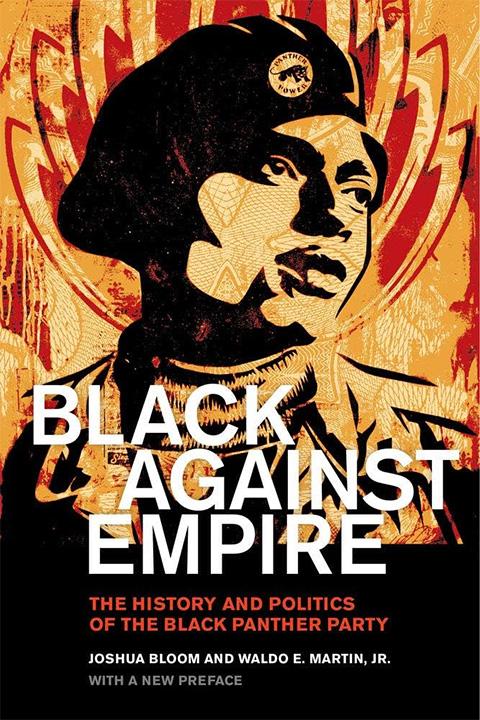
Black against empire : the history and politics of the Black Panther party
Joshua Bloom, author; Waldo E. Martin, author
This timely special edition, published on the fiftieth anniversary of the founding of the Black Panther Party, features a new preface by the authors that places the Party in a contemporary political landscape, especially as it relates to Black Lives Matter and other struggles to fight police brutality against black communities... Bold, engrossing, and richly detailed, this book cuts through the mythology and obfuscation, revealing the political dynamics that drove the explosive growth of this revolutionary movement and its disastrous unraveling. Informed by twelve years of meticulous archival research, as well as familiarity with most of the former Party leadership and many rank-and-file members, this book is the definitive history of one of the greatest challenges ever posed to American state power.
Black History Month
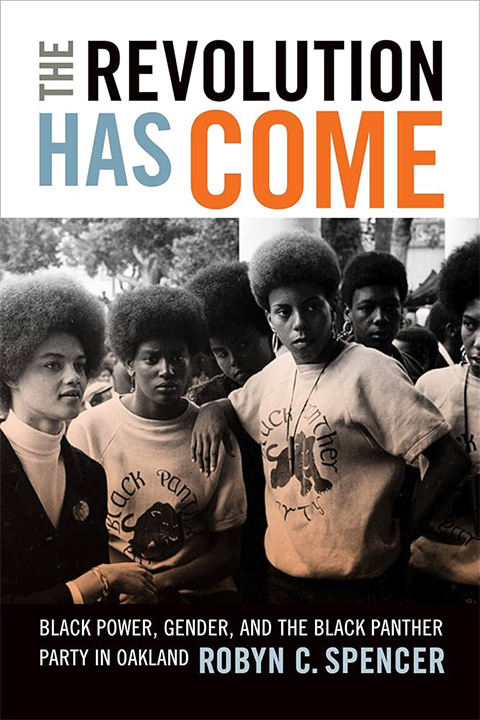
The revolution has come : Black power, gender, and the Black Panther Party in Oakland
Robyn C. Spencer
In The Revolution Has Come Robyn C. Spencer traces the Black Panther Party's organizational evolution in Oakland, California, where hundreds of young people came to political awareness and journeyed to adulthood as members. Challenging the belief that the Panthers were a projection of the leadership, Spencer draws on interviews with rank-and-file members, FBI files, and archival materials to examine the impact the organization's internal politics and COINTELPRO's political repression had on its evolution and dissolution... Providing a panoramic view of the party's organization over its sixteen-year history, The Revolution Has Come shows how the Black Panthers embodied Black Power through the party's international activism, interracial alliances, commitment to address state violence, and desire to foster self-determination in Oakland's black communities.
Black History Month
CSUN University Library celebrates Black History Month this February. Please check out our selection of books available online that celebrates Black History. Log into OneSearch to get online access or request through Interlibrary Loan.
Online copies of these books may be limited through the CSUN University Library, if it is unavailable you can check the Los Angeles Public Library or other local libraries near you for online access, or visit in person for physical copies.
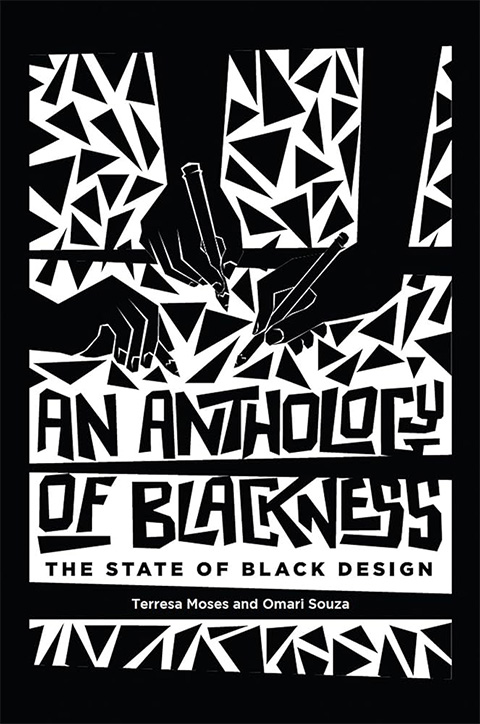
An Anthology of Blackness : The State of Black Design 2023 by Terresa Moses, editor; Omari Souza, editor
Shows why the design field has consistently failed to attract Black professionals, how Eurocentric hegemony impacts Black designers & how to create an antiracist, pro-Black design industry instead.
The revolution has come : Black power, gender, and the Black Panther Party in Oakland by Robyn C. Spencer
In The Revolution Has Come Robyn C. Spencer traces the Black Panther Party's organizational evolution in Oakland, California, where hundreds of young people came to political awareness and journeyed to adulthood as members. Challenging the belief that the Panthers were a projection of the leadership, Spencer draws on interviews with rank-and-file members, FBI files, and archival materials to examine the impact the organization's internal politics and COINTELPRO's political repression had on its evolution and dissolution... Providing a panoramic view of the party's organization over its sixteen-year history, The Revolution Has Come shows how the Black Panthers embodied Black Power through the party's international activism, interracial alliances, commitment to address state violence, and desire to foster self-determination in Oakland's black communities.
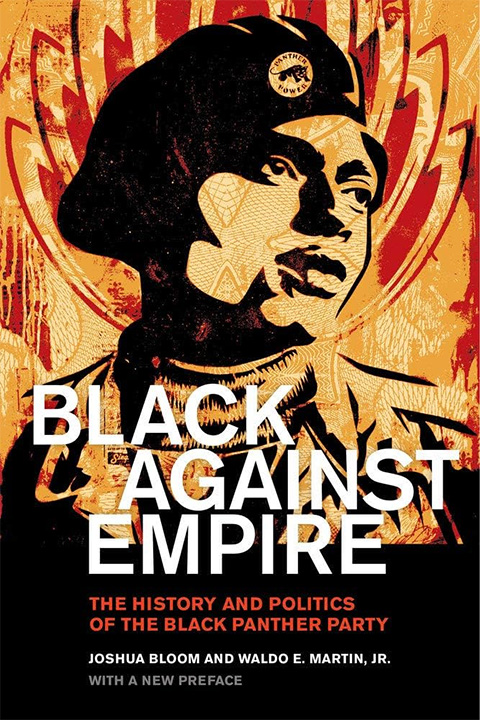
Black against empire : the history and politics of the Black Panther party by Joshua Bloom, author; Waldo E. Martin, author
This timely special edition, published on the fiftieth anniversary of the founding of the Black Panther Party, features a new preface by the authors that places the Party in a contemporary political landscape, especially as it relates to Black Lives Matter and other struggles to fight police brutality against black communities... Bold, engrossing, and richly detailed, this book cuts through the mythology and obfuscation, revealing the political dynamics that drove the explosive growth of this revolutionary movement and its disastrous unraveling. Informed by twelve years of meticulous archival research, as well as familiarity with most of the former Party leadership and many rank-and-file members, this book is the definitive history of one of the greatest challenges ever posed to American state power.
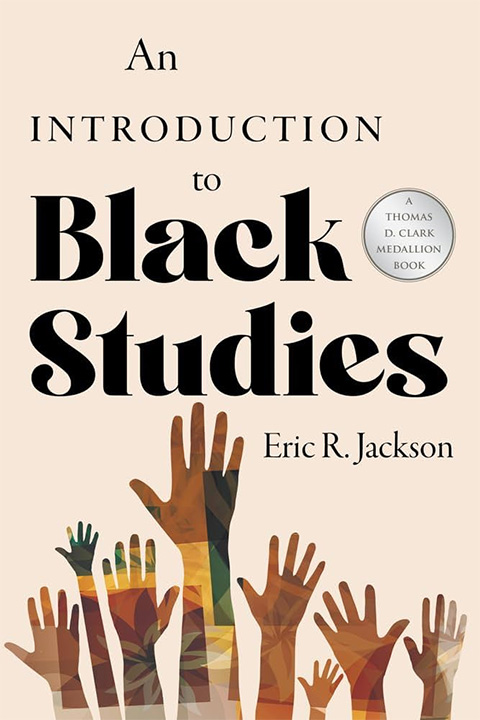
For years, the American public education system has neglected to fully examine and discuss the rich history of people of African descent, who have played a pivotal role in the transformation of the United States. The establishment of Black studies departments and programs represented a major victory for higher education and a vindication of Black scholars such as W. E. B. Du Bois and Nathan Huggins. This emerging field sought to address omissions from numerous disciplines as well as myriad distortions, stereotypes, and myths... Each chapter includes a biographical vignette of an important figure in African American history, such as Frederick Douglass, Louis Armstrong, and Madam C. J. Walker, as well as student learning objectives that provide a starting point for educators. This valuable work speaks to the strength and rigor of the field, its importance to the formal educational process, and its relevance to the United States and the world.
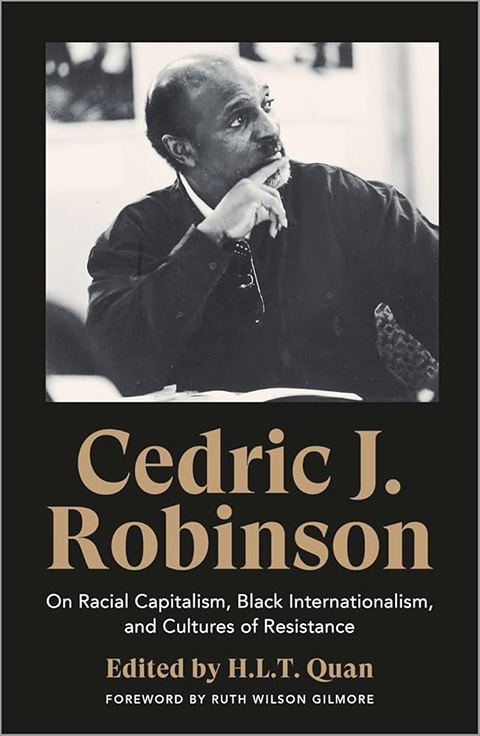
Cedric J. Robinson : On racial capitalism, Black internationalism, and cultures of resistance by Cedric J. Robinson
Cedric J. Robinson is one of the doyens of Black Studies and a pioneer in study of the Black Radical Tradition. His works have been essential texts, deconstructing racial capitalism and inspiring insurgent movements from Ferguson, Missouri to the West Bank. For the first time, Robinson's essays come together, spanning over four decades and reflective of his diverse interests in the interconnections between culture and politics, radical social theory, and classic and modern political philosophy.Themes explored include Africa and Black internationalism, World politics, race and US Foreign Policy, representations of blackness in popular culture, and reflections on popular resistance to racial capitalism, white supremacy and more.
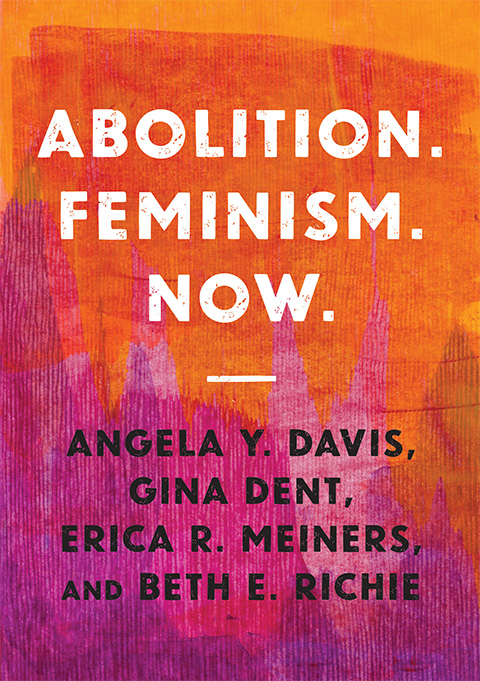
Abolition. Feminism. Now. by Angela Y. Davis, etc.
Abolition. Feminism. Now. is a celebration of freedom work, a movement genealogy, a call to action, and a challenge to those who think of abolition and feminism as separate--even incompatible--political projects. In this remarkable collaborative work, leading scholar-activists Angela Y. Davis, Gina Dent, Erica R. Meiners, and Beth E. Richie surface the often unrecognized genealogies of queer, anti-capitalist, internationalist, grassroots, and women-of-color-led feminist movements, struggles, and organizations that have helped to define abolition and feminism in the twenty-first century. This pathbreaking book also features illustrations documenting the work of grassroots organizers embodying abolitionist feminist practice. Amplifying the analysis and the theories of change generated out of vibrant community based organizing, Abolition. Feminism. Now. highlights necessary historical linkages, key internationalist learnings, and everyday practices to imagine a future where we can all thrive.
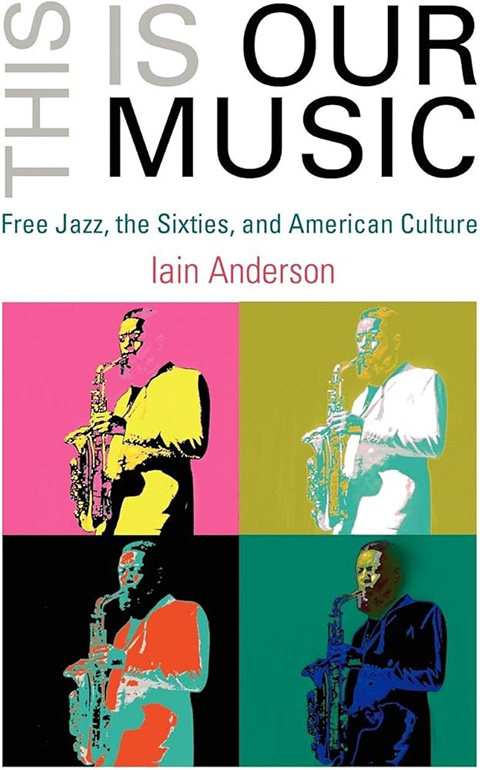
This is our music : free jazz, the Sixties, and American culture by Iain Anderson
This Is Our Music, declared saxophonist Ornette Coleman's 1960 album title. But whose music was it? At various times during the 1950s and 1960s, musicians, critics, fans, politicians, and entrepreneurs claimed jazz as a national art form, an Afrocentric race music, an extension of modernist innovation in other genres, a music of mass consciousness, and the preserve of a cultural elite. This original and provocative book explores who makes decisions about the value of a cultural form and on what basis, taking as its example the impact of 1960s free improvisation on the changing status of jazz. By examining the production, presentation, and reception of experimental music by Ornette Coleman, Cecil Taylor, John Coltrane, and others, Iain Anderson traces the strange, unexpected, and at times deeply ironic intersections between free jazz, avant-garde artistic movements, Sixties politics, and patronage networks.
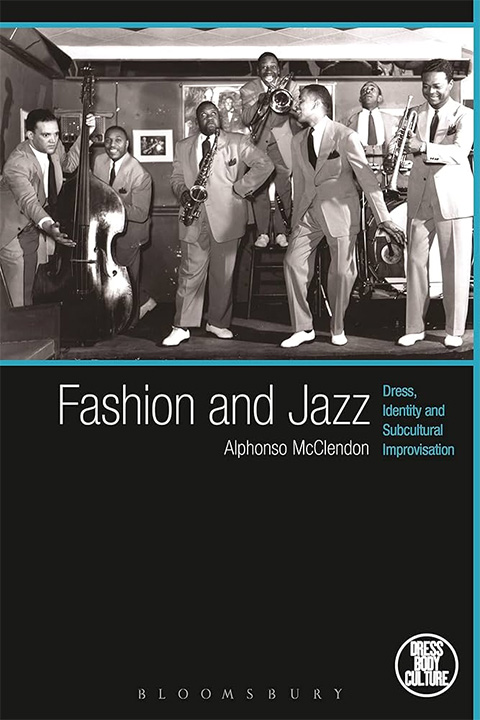
Fashion and jazz : dress, identity and subcultural improvisation by Alphonso McClendon
Born in the late 19th century, jazz gained mainstream popularity during a volatile period of racial segregation and gender inequality. It was in these adverse conditions that jazz performers discovered the power of dress as a visual tool used to defy mainstream societal constructs, shaping a new fashion and style aesthetic. Fashion and Jazz is the first study to identify the behaviours, signs and meanings that defined this newly evolving subcultural style. Drawing on fashion studies and cultural theory, the book provides an in-depth analysis of the social and political entanglements of jazz and dress, with individual chapters exploring key themes such as race, class and gender... It is essential reading for students of fashion, cultural studies, African-American studies and history.
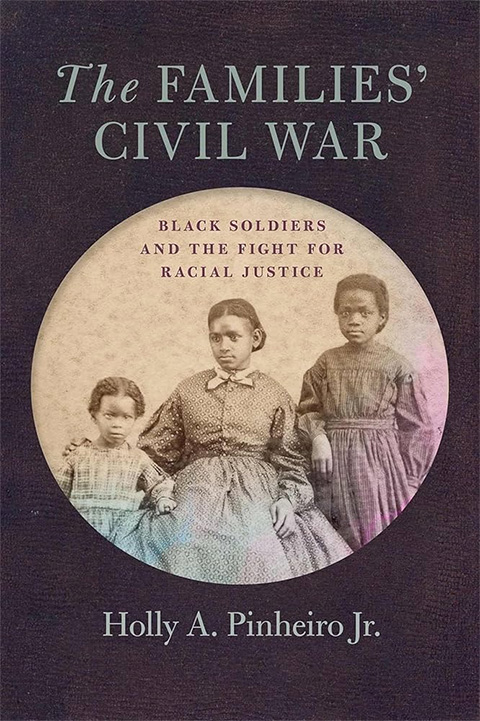
The Families' Civil War : Black Soldiers and the Fight for Racial Justice by Holly A. Pinheiro Jr.
This book tells the stories of freeborn northern African Americans in Philadelphia struggling to maintain families while fighting against racial discrimination from 1850 to the 1910s. Civil War military service worsened their already difficult circumstances due to its negative effects on their finances, living situations, minds, and bodies. At least 79,000 African American served in northern USCT regiments. A number of them, including most of the USCT veterans examined here, remained in the North and comprised a sizeable population of racial minorities living outside of the former Confederacy. In The Families' Civil War, Pinheiro provides a compelling account of the lives of USCT soldiers and their entire families, but also argues that Civil War was one battle in a longer war for racial justice.
We are the leaders we have been looking for by Eddie S. Glaude Jr.
Based on the Du Bois Lectures delivered at Harvard in 2011, We Are the Leaders We Have Been Looking For argues for the importance of self-cultivation in pursuit of justice as a critical feature of Black politics, what Eddie S. Glaude Jr. calls Black democratic perfectionism. Building on the political scientist Adolph Reed's work on 'Black custodial politics' Glaude critiques our impulse to outsource political needs to a professional class of politicians that purportedly represent us. Instead, he affirms the capacities of ordinary people to cultivate a better self and a better world by locating the prophetic and the heroic not in the pulpit but in the pew.
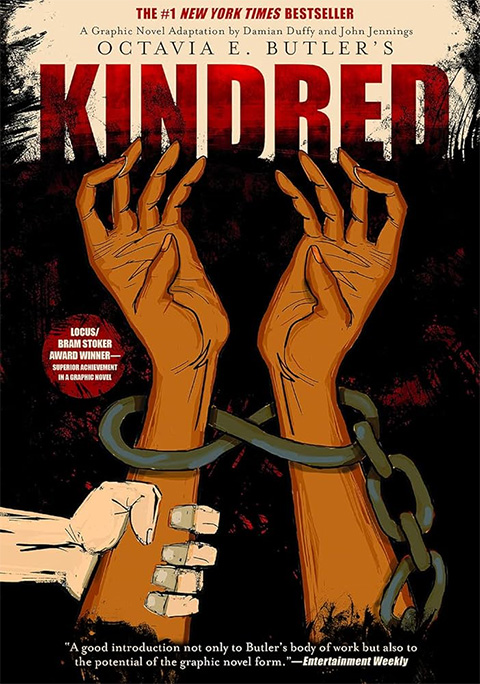
Octavia E. Butler's Kindred: a graphic novel adaptation by Octavia E. Butler; John Jennings; Damian Duffy
Home is a new house with a loving husband in 1970s California that is suddenly transformed into the frightening world of the antebellum South. Dana, a young black writer, can't explain how she is transported across time and space to a plantation in Maryland. But she does quickly understand why: to deal with the troubles of Rufus, a conflicted white slaveholder - and her progenitor. Her survival, her very existence, depends on it. This searing graphic-novel adaptation of Octavia E. Butler's science fiction classic is a powerfully moving, unflinching look at the violent, disturbing effects of slavery on the people it chained together, both black and white - and made kindred in the deepest sense of the word.
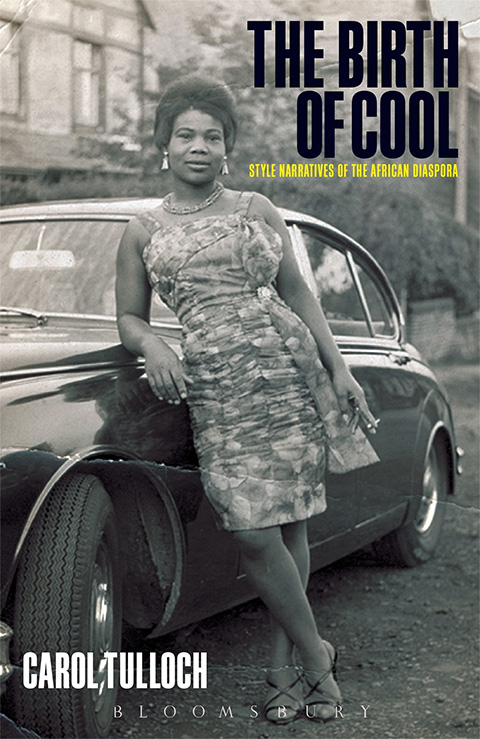
The birth of cool : style narratives of the African diaspora by Carol Tulloch
It is broadly recognized that black style had a clear and profound influence on the history of dress in the twentieth century, with black culture and fashion having long been defined as 'cool'. Yet despite this high profile, in-depth explorations of the culture and history of style and dress in the African diaspora are a relatively recent area of enquiry. The Birth of Cool asserts that 'cool' is seen as an arbiter of presence, and relates how both iconic and 'ordinary' black individuals and groups have marked out their lives through the styling of their bodies. Focusing on counter- and sub-cultural contexts, this book investigates the role of dress in the creation and assertion of black identity.
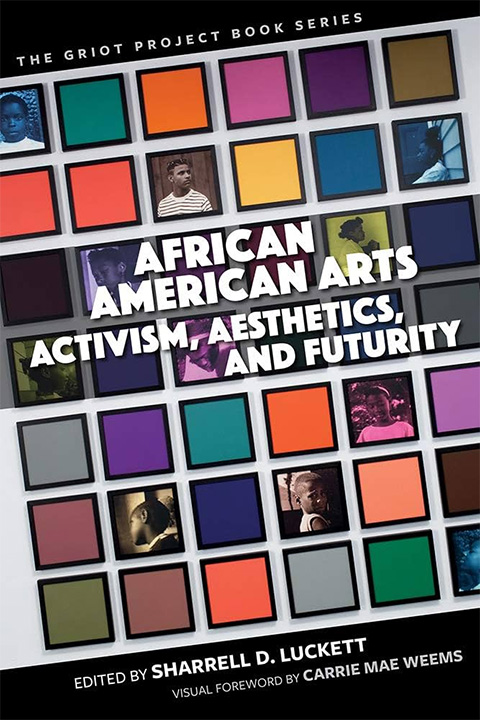
African American arts : activism, aesthetics, and futurity by Carrie Mae Weems
Signaling such recent activist and aesthetic concepts in the work of Kara Walker, Childish Gambino, BLM, Janelle Monáe, and Kendrick Lamar, and marking the exit of the Obama Administration and the opening of the National Museum of African American History and Culture, this anthology explores the role of African American arts in shaping the future, and further informing new directions we might take in honoring and protecting the success of African Americans in the U.S. The essays in African American Arts: Activism, Aesthetics, and Futurity engage readers in critical conversations by activists, scholars, and artists reflecting on national and transnational legacies of African American activism as an element of artistic practice, particularly as they concern artistic expression and race relations, and the intersections of creative processes with economic, sociological, and psychological inequalities.
Requests for accommodation services (e.g. sign language interpreters or transcribers) must be made at least five (5) business days in advance. Please email library.event@csun.edu in advance of the event.
An Anthology of Blackness : The State of Black Design 2023
Terresa Moses, editor; Omari Souza, editor
Shows why the design field has consistently failed to attract Black professionals, how Eurocentric hegemony impacts Black designers & how to create an antiracist, pro-Black design industry instead.
Black History Month
Thank you to our co-sponsors for making these events possible: University Student Union (USU), Educational Opportunity Program (EOP), California Faculty Association - Northridge Chapter (CFA - Northridge), Provost's Office, Africana Studies Department, The Tom & Ethel Bradley Center, and the Criminology Department.
Member Biographies
Norma Armour Mtume
Norma Mtume was raised in South Central Los Angeles and joined the Black Panther Party in the late 1960s. She became the Party's Minister of Health and Minister of Finance, as well as a political prisoner. Mtume became a lifelong health justice activist and co-founder of SHIELDS for Families, a health non-profit which serves African American and Latino families in South LA.
Ruth Wakabayashi
Ruth Wakabayashi was born in Boyle Heights, Los Angeles, to a Japanese family post-internment. After graduating from Cal State LA in 1969, she joined the Black Panther Party. She became an organizer and teacher at the Black Panthers' Oakland Community School. After leaving the party in 1977, she continued her activism with Nikkei Progressives, focusing on reparations and social justice.
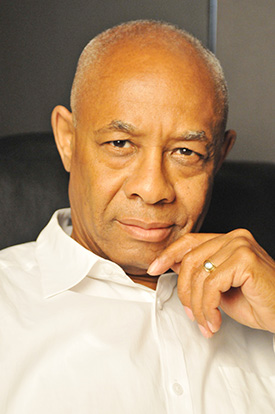
Hank Jones
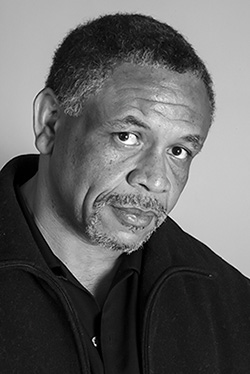
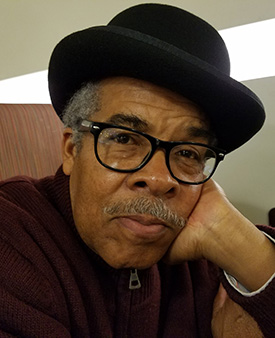
Hank Jones was born in Albany, Mississippi. He joined the Student Nonviolent Coordinating Committee in San Francisco in 1963. He then joined the Black Panther Party in 1967. In 2003, Hank Jones was one of the former Panthers known as the San Francisco 8 targeted by Homeland Security. He continues to be involved with international movements for liberation and social justice.
RSVP Form
Assistive Services
Requests for accommodation services (e.g. sign language interpreters or transcribers) must be made at least five (5) business days in advance. Please email library.event@csun.edu in advance of the event.
Feb 9, 2026 1:00pm - 2:30pm University Library: ASRS Viewing Room
Join the CSUN University Library and History Department faculty, Dr. Marissa Jenrich, for a showcase of student research spanning the 19th century through the 1980’s documenting Black history, activism, and resistance. Snacks will be served.
Co-hosted by CSUN's History Department.
Speakers
Navy Sims
My project is focused on the experiences of the United States Colored Troops as depicted in the African American Civil War Memorial in Washington D.C. In doing so, it highlights the importance of diverse African American stories from the Civil War era and beyond.
Ruben Chavez
This presentation examines the 1965 Watts Uprising and how it exposed long standing racial and economic inequalities in Los Angeles, particularly in relation to policing. It proposes three distinct ways of commemorating the rebellion and in doing so, it reveals how the expansion of police power after 1965 shaped and continues to shape the daily lives of Black and Brown communities.
Alishia Sandoval
This presentation examines the legislation put in place by the federal and state government during the era of the war on drugs and how the policies put in place allowed for the police to militarize against communities of color. It proposes a new exhibit that remembers those who were lost to these policies, many of which still continue to affect local communities.
Thank you to our co-sponsors for making these events possible: University Student Union (USU), Educational Opportunity Program (EOP), California Faculty Association - Northridge Chapter (CFA - Northridge), Provost's Office, Africana Studies Department, The Tom & Ethel Bradley Center, and the Criminology Department.
Assistive Services
Requests for accommodation services (e.g. sign language interpreters or transcribers) must be made at least five (5) business days in advance. Please email library.event@csun.edu in advance of the event.
Feb 4, 2026 3:00pm - 5:00pm University Library: Jack & Florence Ferman Presentation Room
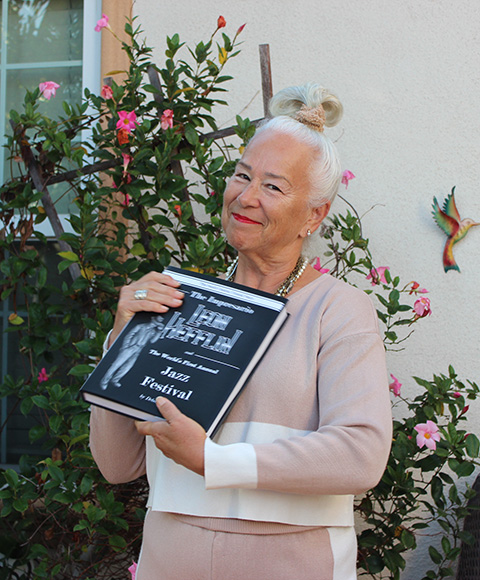
Deborah Swan
Join us for a presentation on The Impresario: Leon Hefflin and the World’s First Annual Jazz Festival by the author, Deborah Swan.
Deborah has dedicated herself to honoring and preserving the legacy of her grandfather, Leon Hefflin Sr. Hefflin was the producer of the long running Cavalcade of Jazz at Wrigley Field in Los Angeles, California. Cavalcade of Jazz is considered the first large-scale Jazz music event in the United States.
Thank you to our co-sponsors for making these events possible: University Student Union (USU), Educational Opportunity Program (EOP), California Faculty Association - Northridge Chapter (CFA - Northridge), Provost's Office, Africana Studies Department, The Tom & Ethel Bradley Center, and the Criminology Department.
Assistive Services
Requests for accommodation services (e.g. sign language interpreters or transcribers) must be made at least five (5) business days in advance. Please email library.event@csun.edu in advance of the event.
Feb 11, 2026 12:00pm - 2:00pm University Library: Jack & Florence Ferman Presentation Room
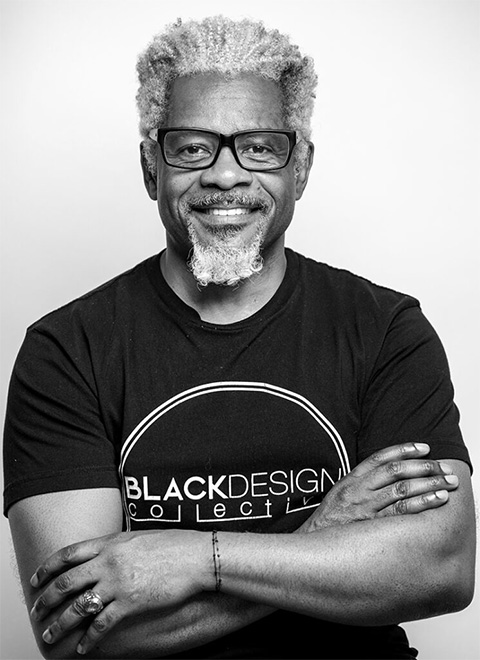
TJ Walker
Join us for an engaging conversation with designer, industry leader, and Black Design Collective co-founder, TJ Walker. This event is co-hosted by the student organization from Family and Consumer Sciences, TRENDS. Refreshments will be served.
For more than two decades, the clothing designs of Thomas “TJ” Walker have been featured among the pages of such prominent publications as: Forbes, Details, Code, Black Enterprise, Elle, Source, Sportswear International, Vibe and Women’s Wear Daily. Known primarily for his design prowess in the menswear apparel industry, Walker is at heart a true fine artist. Throughout his career, while simultaneously occupying the position as Educator, Creative Director, Design Consultant or Chief Creative Officer for several notable clothing companies such as Cross Colours, Groove Company, Mence, DKNY, DADA, and Converse, he has continued to indulge in his first love, fine art.
Walker, a successful designer is currently developing design programs for inner-city children to inspire and nurture the development of raw creative talent.
Thank you to our co-sponsors for making these events possible: University Student Union (USU), Educational Opportunity Program (EOP), California Faculty Association - Northridge Chapter (CFA - Northridge), Provost's Office, Africana Studies Department, The Tom & Ethel Bradley Center, and the Criminology Department.
RSVP Form
Assistive Services
Requests for accommodation services (e.g. sign language interpreters or transcribers) must be made at least five (5) business days in advance. Please email library.event@csun.edu in advance of the event.
Feb 21, 2023 1:00pm - 2:30pm Black House
Black House is at 18348 Halsted Street (see locator map)
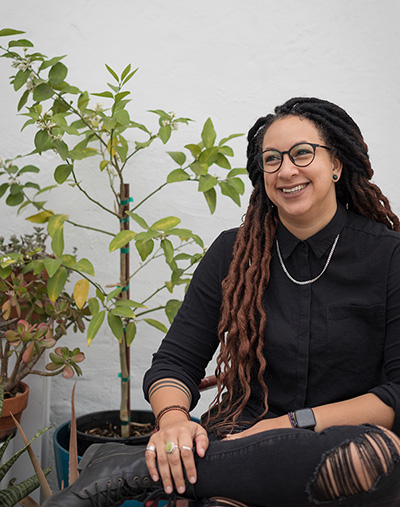
Tara Pixley
Photographer and scholar Tara Pixley will talk about how her work and that of other Black female and non-binary photographers charter alternative futures for critically-engaged photography that challenges colonialism, heteronormativity, and racism, making visible structural forms of violence and patriarchy. Pixley will be in conversation with the Bradley Center's director, José Luis Benavides, and archivist, Keith Rice.
Tara Pixley, Ph.D. is a queer, Jamaican-American photographer, filmmaker and media scholar based in Los Angeles, where she is an Associate Professor of Journalism at Loyola Marymount University. She is a 2022 Reynolds Journalism Fellow and 2022 Pulitzer Center Grantee, a 2021 IWMF NextGen Fellow, a 2020 awardee of the World Press Photo Solutions Visual Journalism Initiative and a 2016 Visiting Knight Fellow at Harvard University's Nieman Foundation for Journalism. Her writing and photography have appeared in the New York Times, Wall Street Journal, NPR, Newsweek, Allure, HuffPost, Nieman Reports, ESPN Magazine, and the Black Scholar, among many others. Her filmic and photographic work intersect with her scholarship and advocacy, each addressing the intersectionality of race, gender, class, visual rhetoric, and the potential for visual media to reimagine marginalized communities. She is on the Board of stock photo co-op Stocksy United and serves as Secretary of the National Press Photographers Association (NPPA) Board. She is also a co-Founder and the current Director of Authority Collective — an organization dedicated to establishing equity in visual media — and she is currently working on a book chronicling the move to decolonize the visual journalism industry.
Co-hosted by CSUN Black House.
Join us for other Black History Month events throughout February
Assistive Services
Requests for accommodation services (e.g. sign language interpreters or transcribers) must be made at least five (5) business days in advance. Please email library.event@csun.edu in advance of the event.
Feb 25, 2020 2:00pm - 4:30pm University Library: Jack & Florence Ferman Presentation Room
Join us as we view African American life from both sides of the camera. Presentations illustrate the topic from past, present, and future perspectives. Our panel of Los Angeles photographers include Ian Foxx (iFoxx Media Group), Roderick Lyons (professor, Los Angeles Valley College), and Malcolm Ali (photojournalist) who respectively address photographing the African American community, Black Fine Art photography, and building diversity in the photographic arts.
Light refreshments will be served.
About our Presenters
Ian Foxx
Ian Foxx
A native of Detroit, Ian Foxx celebrates 50 years in the Entertainment industry. Ian began his professional career in New York City at the Shakespeare Public Theater and later as Managing Producer for the Family Repertory Company which toured theaters, television stations, and schools on the East Coast. Upon arriving in Seattle, he formed Foxx Follies Productions that toured the west coast performing his original material.
Upon arriving in Los Angeles in the mid-1970s, Foxx worked closely with Inner City Cultural Center, Ebony Showcase Theatre, and the Los Angeles Actors Theatre where he and mentor, Rafic Bey, founded the non-profit organization, The Foxx Follies Theatre Workshop in 1979 in the Crenshaw area of Los Angeles training youth in all aspects of theater production. Soon thereafter, he collaborated with author Herbert Simmons on a television pilot of the novel “Corner Boy”, a story of inner-city Black America.
In 1998, Foxx served as staff photographer for L.A. Watts Times over the next decade where he would meet legendary photographer Bill Jones. As a freelance photojournalist, Foxx produced photos for numerous publications including Los Angeles Times, Jet, and Ebony Magazine while continuing to produce short films and documentaries. In 2009, Foxx became owner and manager of Foxx Studios, providing photographic and video services. Most recently, he published “Heroes and Legends Awards” a photographic memoir containing 28 years of celebrity and community event photographs.
Roderick Lyons
Roderick Lyons
Rod Lyons’ journey to fine art photography has been anything but traditional. A Los Angeles native he began his photography career more than 40 years ago in the United States Air Force.
In 1978, Lyons graduated from California State University, Long Beach with a degree in journalism with an emphasis in photojournalism. Twenty years later he returned to the university to pursue an MFA in fine art photography. After years of producing work in the fine art genre, he discovered his second calling as a teacher of photography in 1993. As stated by Lyons, “Teaching has been a godsend for me. It put me in a position where I am expected to produce work, and yet I am able to help young people start their photographic journey—the best of two worlds.”
Lyons has had his photographs published in several publications including Los Angeles Times, Lenswork, and Black and White Magazine. His work has also been accessioned in numerous public and private collections including the California African American Museum of Art and the Smithsonian’s National Museum of African American History and Culture.
Lyons is currently Professor of Photography at Los Angeles Valley College in Southern California.
Malcolm Ali
Malcolm Ali
Malcolm Ali has been a professional photographer for over 40 years beginning in 1979. His studies have taken him to multiple institutions on both coasts including the New York Institute of Photography, Los Angeles City College, and the Allens School of photography in Los Angeles.
As a photographer, Ali has traveled the world over, capturing such events as the Million Man March, the O.J. Simpson trial, and professional boxing matches. He has worked as staff photographer for Wireimage of Getty Images photographing celebrities and events such as the Grammys and Soul Train Awards. In addition, he provides photography services for weddings, parties and more.
Ali’s photographs have appeared in publications of national scale including, Time Magazine, Life Magazine, and Rolling Stone, as well as such newspapers as the Herald-Dispatch, Los Angeles Sentinel, and Final Call.
Ali has spent much of his career as an advocate and mentor for young photographers across the nation and beyond.
Assistive Services
Requests for accommodation services (e.g. sign language interpreters or transcribers) must be made at least five (5) business days in advance. Please email library.event@csun.edu in advance of the event.