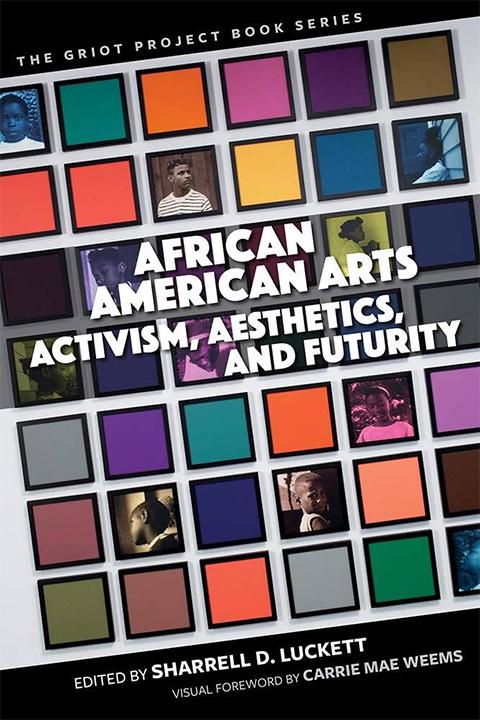
African American arts : activism, aesthetics, and futurity

African American arts : activism, aesthetics, and futurity Carrie Mae Weems Signaling such recent activist and aesthetic concepts in the work of Kara Walker, Childish Gambino, BLM, Janelle Monáe, and Kendrick Lamar, and marking the exit of the Obama Administration and the opening of the National Museum of African American History and Culture, this anthology explores the role of African American arts in shaping the future, and further informing new directions we might take in honoring and protecting the success of African Americans in the U.S. The essays in African American Arts: Activism, Aesthetics, and Futurity engage readers in critical conversations by activists, scholars, and artists reflecting on national and transnational legacies of African American activism as an element of artistic practice, particularly as they concern artistic expression and race relations, and the intersections of creative processes with economic, sociological, and psychological inequalities. Black History Month Cover of African American arts : activism, aesthetics, and futurity
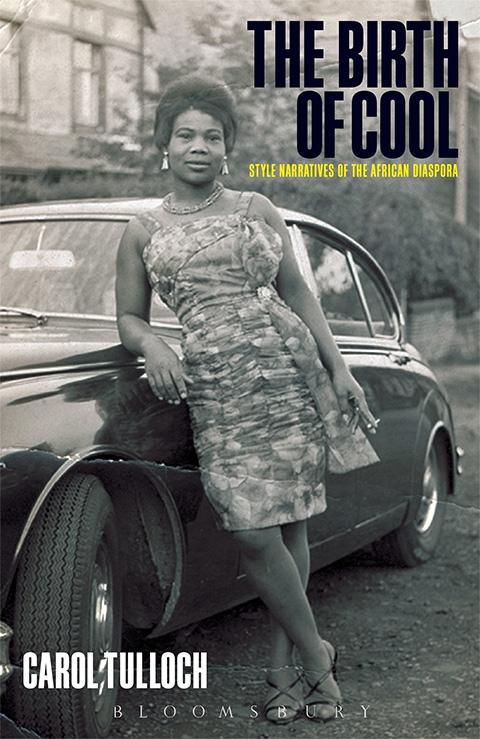
The birth of cool : style narratives of the African diaspora

The birth of cool : style narratives of the African diaspora Carol Tulloch It is broadly recognized that black style had a clear and profound influence on the history of dress in the twentieth century, with black culture and fashion having long been defined as 'cool'. Yet despite this high profile, in-depth explorations of the culture and history of style and dress in the African diaspora are a relatively recent area of enquiry. The Birth of Cool asserts that 'cool' is seen as an arbiter of presence, and relates how both iconic and 'ordinary' black individuals and groups have marked out their lives through the styling of their bodies. Focusing on counter- and sub-cultural contexts, this book investigates the role of dress in the creation and assertion of black identity. Black History Month Cover of The birth of cool : style narratives of the African diaspora

Octavia E. Butler's Kindred: a graphic novel adaptation

Octavia E. Butler's Kindred: a graphic novel adaptation Octavia E. Butler; John Jennings; Damian Duffy Home is a new house with a loving husband in 1970s California that is suddenly transformed into the frightening world of the antebellum South. Dana, a young black writer, can't explain how she is transported across time and space to a plantation in Maryland. But she does quickly understand why: to deal with the troubles of Rufus, a conflicted white slaveholder - and her progenitor. Her survival, her very existence, depends on it. This searing graphic-novel adaptation of Octavia E. Butler's science fiction classic is a powerfully moving, unflinching look at the violent, disturbing effects of slavery on the people it chained together, both black and white - and made kindred in the deepest sense of the word. Black History Month Cover of Octavia E. Butler's Kindred: a graphic novel adaptation

We are the leaders we have been looking for

We are the leaders we have been looking for Eddie S. Glaude Jr. Based on the Du Bois Lectures delivered at Harvard in 2011, We Are the Leaders We Have Been Looking For argues for the importance of self-cultivation in pursuit of justice as a critical feature of Black politics, what Eddie S. Glaude Jr. calls Black democratic perfectionism. Building on the political scientist Adolph Reed's work on 'Black custodial politics' Glaude critiques our impulse to outsource political needs to a professional class of politicians that purportedly represent us. Instead, he affirms the capacities of ordinary people to cultivate a better self and a better world by locating the prophetic and the heroic not in the pulpit but in the pew. Black History Month Cover of We are the leaders we have been looking for

The Families' Civil War : Black Soldiers and the Fight for Racial Justice

The Families' Civil War : Black Soldiers and the Fight for Racial Justice Holly A. Pinheiro Jr. This book tells the stories of freeborn northern African Americans in Philadelphia struggling to maintain families while fighting against racial discrimination from 1850 to the 1910s. Civil War military service worsened their already difficult circumstances due to its negative effects on their finances, living situations, minds, and bodies. At least 79,000 African American served in northern USCT regiments. A number of them, including most of the USCT veterans examined here, remained in the North and comprised a sizeable population of racial minorities living outside of the former Confederacy. In The Families' Civil War, Pinheiro provides a compelling account of the lives of USCT soldiers and their entire families, but also argues that Civil War was one battle in a longer war for racial justice. Black History Month Cover of The Families' Civil War : Black Soldiers and the Fight for Racial Justice

Fashion and jazz : dress, identity and subcultural improvisation

Fashion and jazz : dress, identity and subcultural improvisation Alphonso McClendon Born in the late 19th century, jazz gained mainstream popularity during a volatile period of racial segregation and gender inequality. It was in these adverse conditions that jazz performers discovered the power of dress as a visual tool used to defy mainstream societal constructs, shaping a new fashion and style aesthetic. Fashion and Jazz is the first study to identify the behaviours, signs and meanings that defined this newly evolving subcultural style. Drawing on fashion studies and cultural theory, the book provides an in-depth analysis of the social and political entanglements of jazz and dress, with individual chapters exploring key themes such as race, class and gender... It is essential reading for students of fashion, cultural studies, African-American studies and history. Black History Month Cover of Fashion and jazz : dress, identity and subcultural improvisation

This is our music : free jazz, the Sixties, and American culture

This is our music : free jazz, the Sixties, and American culture Iain Anderson This Is Our Music, declared saxophonist Ornette Coleman's 1960 album title. But whose music was it? At various times during the 1950s and 1960s, musicians, critics, fans, politicians, and entrepreneurs claimed jazz as a national art form, an Afrocentric race music, an extension of modernist innovation in other genres, a music of mass consciousness, and the preserve of a cultural elite. This original and provocative book explores who makes decisions about the value of a cultural form and on what basis, taking as its example the impact of 1960s free improvisation on the changing status of jazz. By examining the production, presentation, and reception of experimental music by Ornette Coleman, Cecil Taylor, John Coltrane, and others, Iain Anderson traces the strange, unexpected, and at times deeply ironic intersections between free jazz, avant-garde artistic movements, Sixties politics, and patronage networks. Black History Month Cover of This is our music : free jazz, the Sixties, and American culture

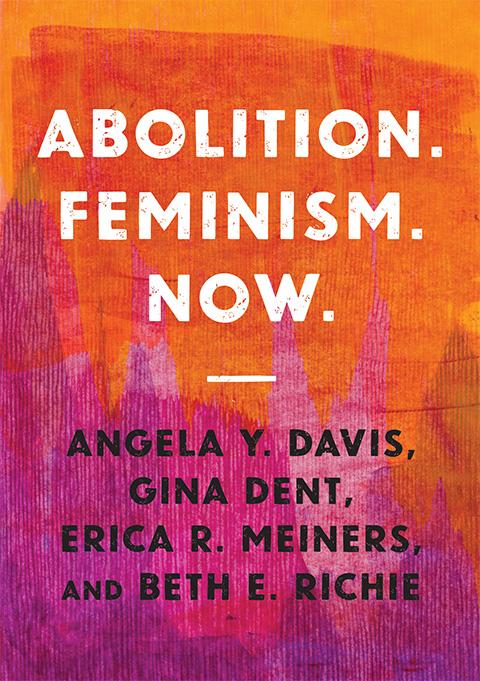
Abolition. Feminism. Now.

Abolition. Feminism. Now. Angela Y. Davis, etc. Abolition. Feminism. Now. is a celebration of freedom work, a movement genealogy, a call to action, and a challenge to those who think of abolition and feminism as separate--even incompatible--political projects. In this remarkable collaborative work, leading scholar-activists Angela Y. Davis, Gina Dent, Erica R. Meiners, and Beth E. Richie surface the often unrecognized genealogies of queer, anti-capitalist, internationalist, grassroots, and women-of-color-led feminist movements, struggles, and organizations that have helped to define abolition and feminism in the twenty-first century. This pathbreaking book also features illustrations documenting the work of grassroots organizers embodying abolitionist feminist practice. Amplifying the analysis and the theories of change generated out of vibrant community based organizing, Abolition. Feminism. Now. highlights necessary historical linkages, key internationalist learnings, and everyday practices to imagine a future where we can all thrive. Black History Month Cover of Abolition. feminism. now.

An Introduction to Black Studies

An Introduction to Black Studies Eric Jackson For years, the American public education system has neglected to fully examine and discuss the rich history of people of African descent, who have played a pivotal role in the transformation of the United States. The establishment of Black studies departments and programs represented a major victory for higher education and a vindication of Black scholars such as W. E. B. Du Bois and Nathan Huggins. This emerging field sought to address omissions from numerous disciplines as well as myriad distortions, stereotypes, and myths... Each chapter includes a biographical vignette of an important figure in African American history, such as Frederick Douglass, Louis Armstrong, and Madam C. J. Walker, as well as student learning objectives that provide a starting point for educators. This valuable work speaks to the strength and rigor of the field, its importance to the formal educational process, and its relevance to the United States and the world. Black History Month Cover of An Introduction to Black Studies
Subscribe to Black History Month
Scroll back to the top of the page