CSUN’s Bygone Landscapes: Early Photographs from 1958-1977
by Steve Kutay, Digital Services Librarian - March 31, 2026
The recent demolition of the Orange Grove Bistro and the newly constructed Maple Hall and Autodesk Technology Engagement Center at CSUN reminds us that college campus landscapes are dynamic despite their image as immutable pillars of tradition and knowledge. Their evolutions are slow but ultimately reflect changes in enrollment, emerging student needs, new technologies, and the forces of nature. But they are also augmented by the imaginations of their occupants through acts of beautification and culturalization that express identity in steady pursuit of the modern, liberal campus.
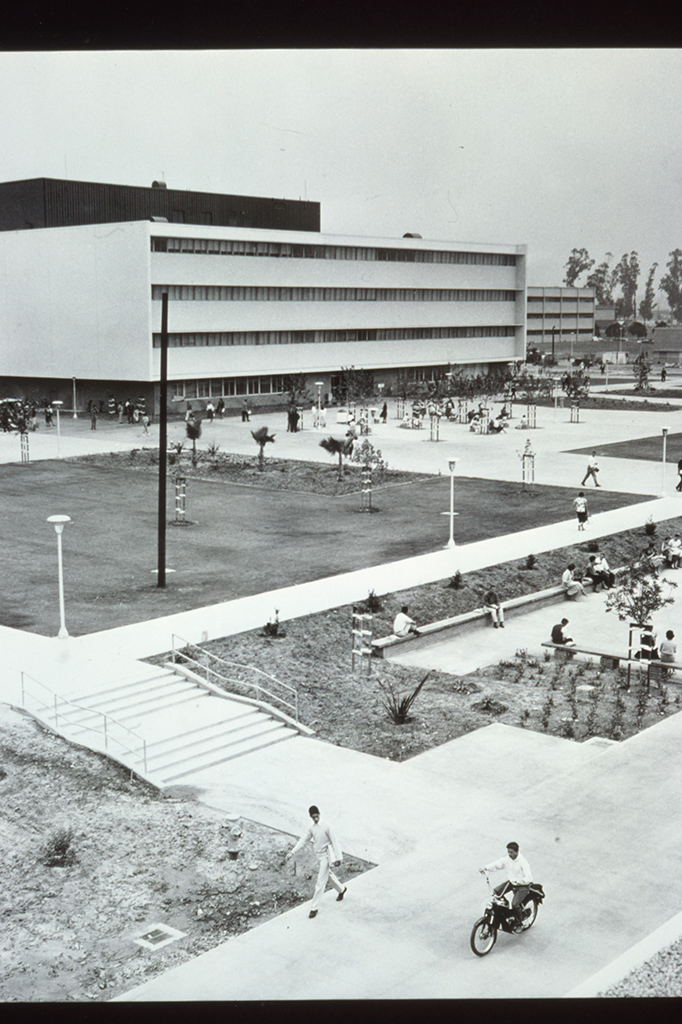
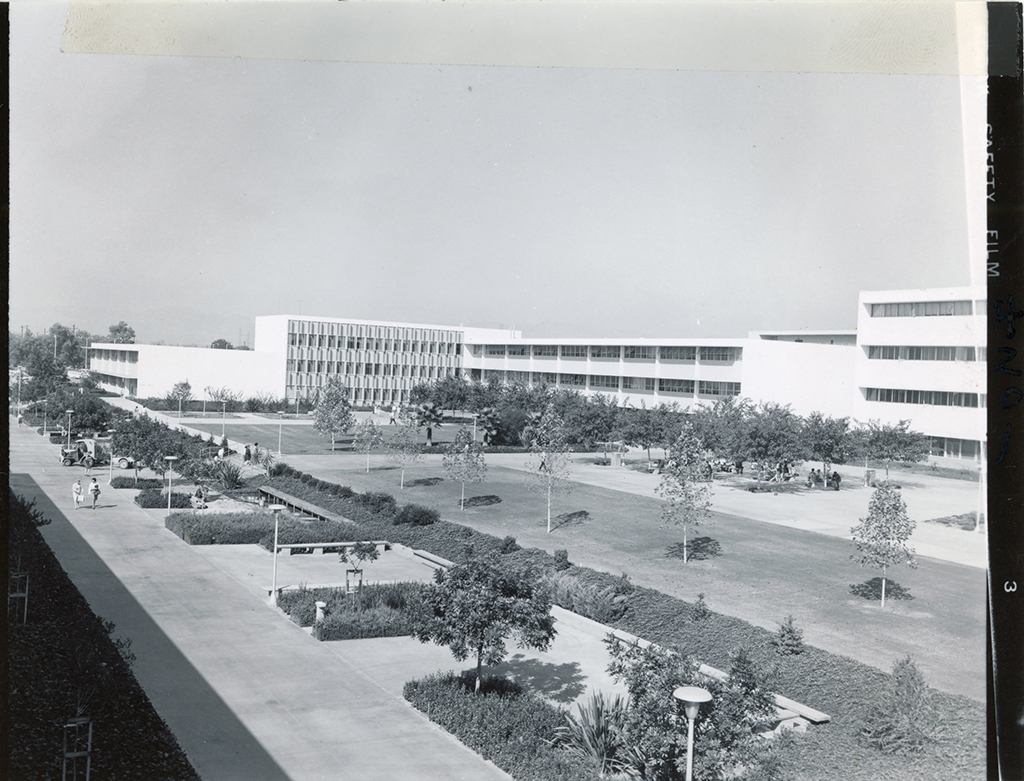
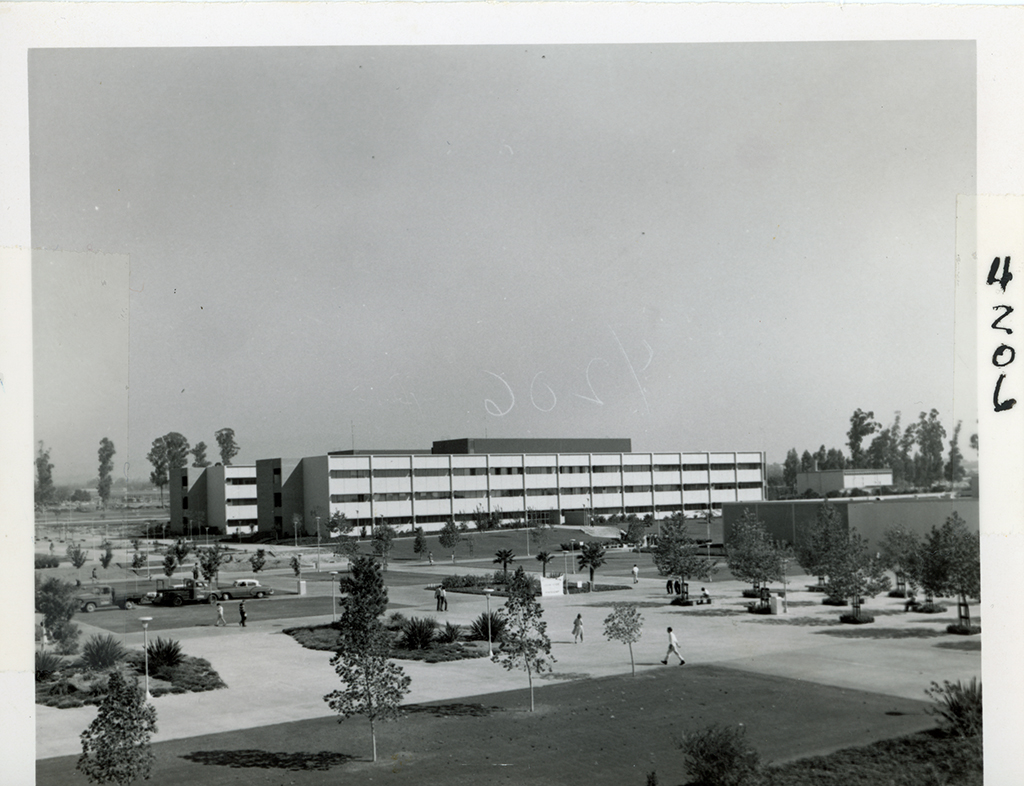
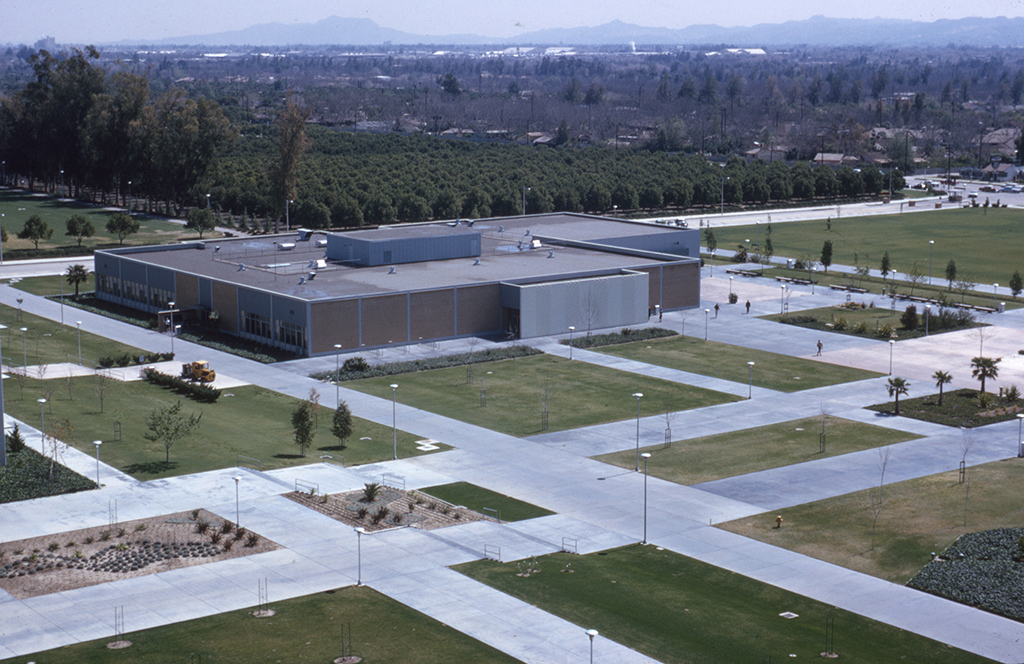
The University Archives Photograph Collection is the focus of a multi-year project to digitize the images to make them available online. Thus far, a number of photographic slides feature early campus development. This post features structures (or lack thereof) during its first 20 years that have since been removed. The CSUN map may be of use for orientation purposes.
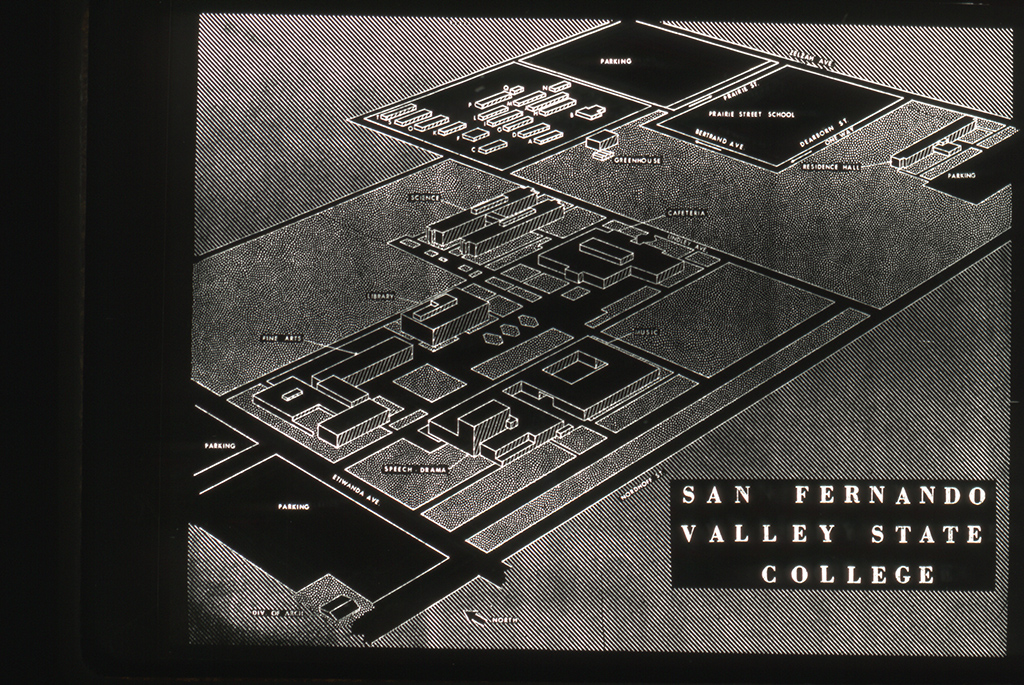
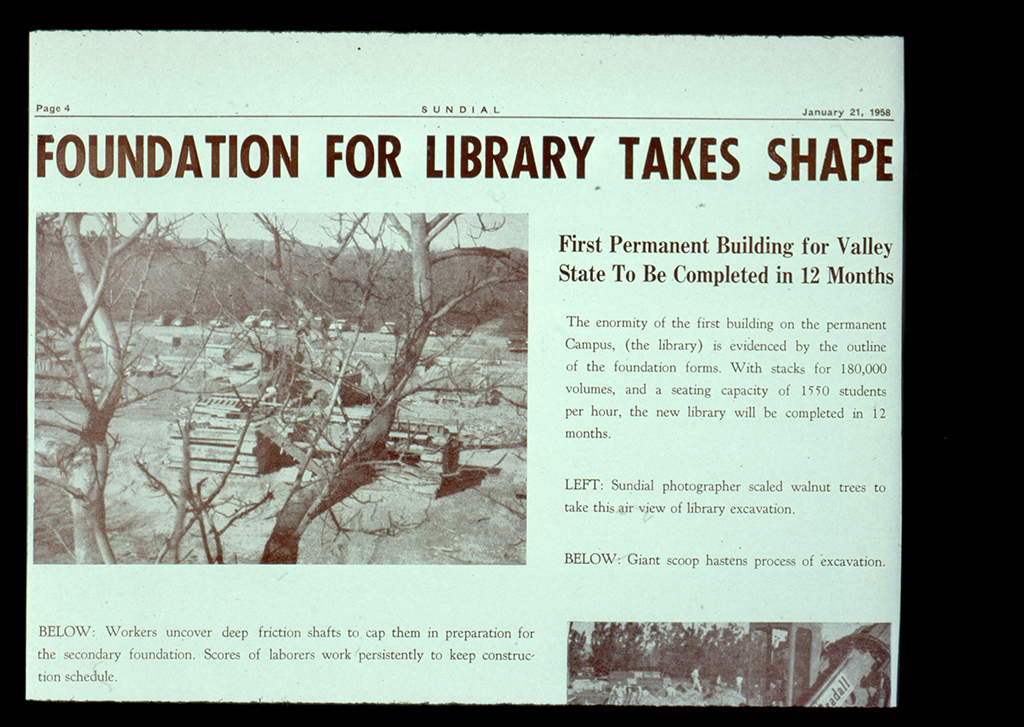
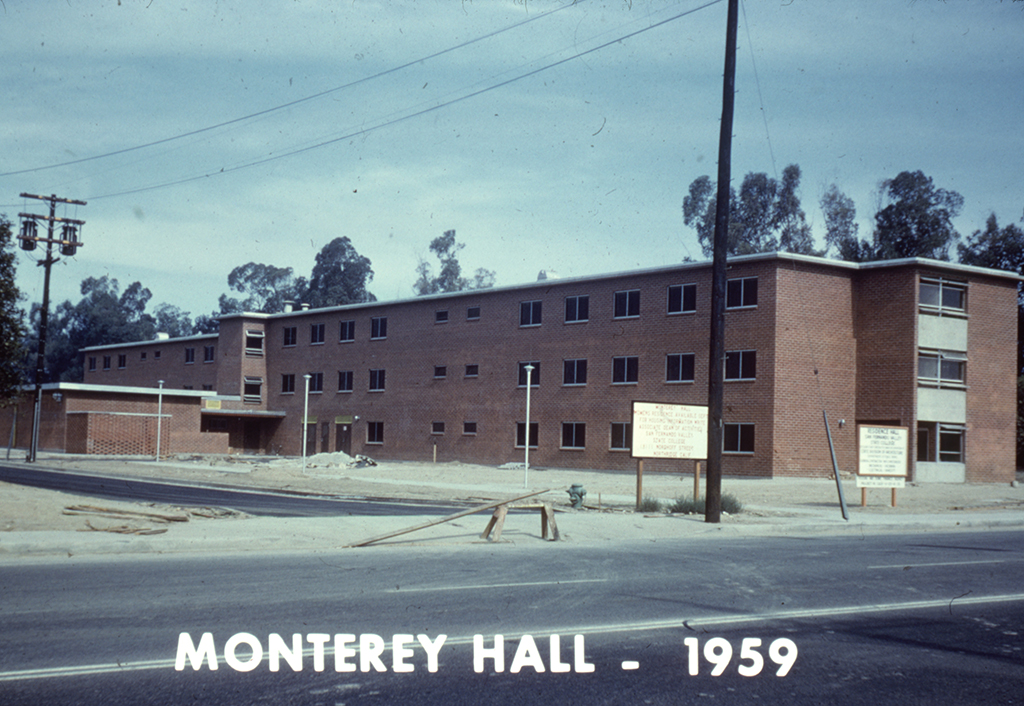
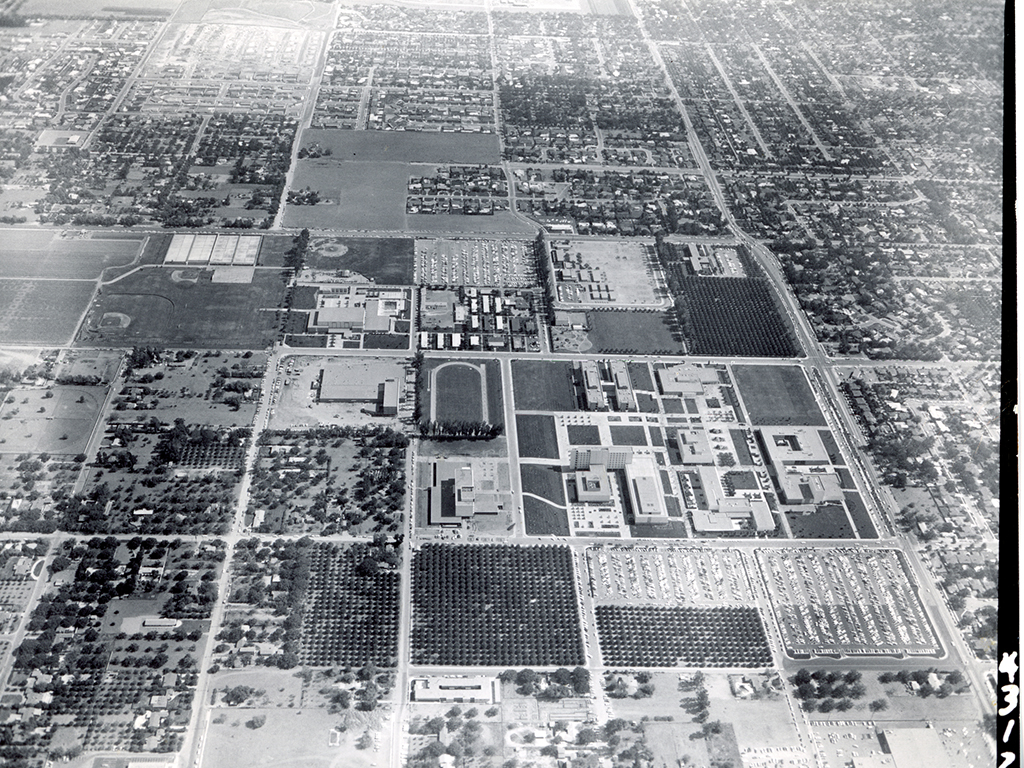
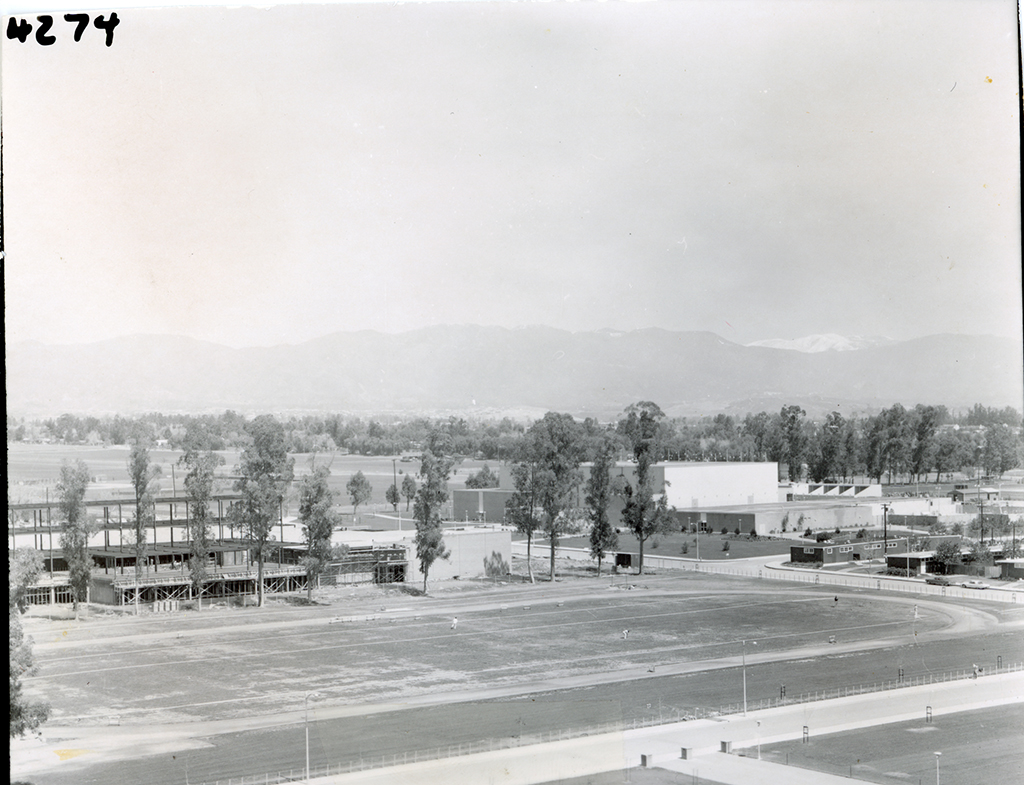
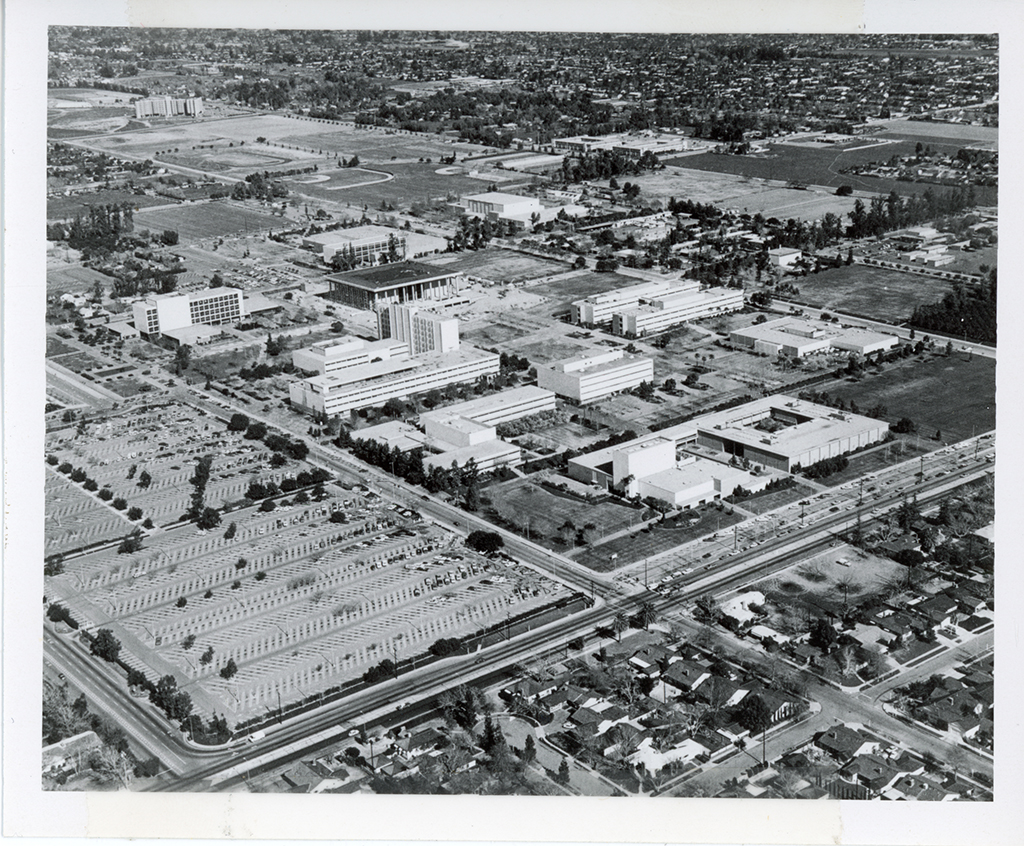
Initially, a satellite campus of Los Angeles State College, San Fernando Valley State College (SFVSC) came into its own in 1958. At this time, construction was underway on the first fixed building on campus resulting in the library that was completed in 1959. 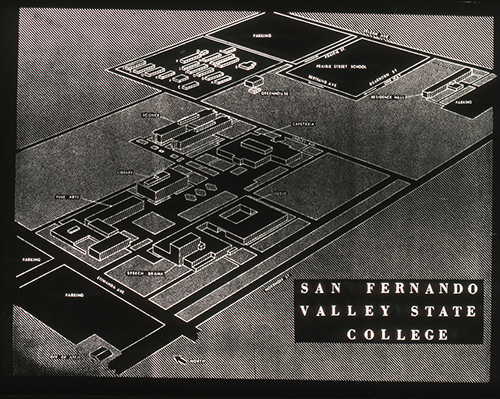 Shortly thereafter, the campus quickly began to take shape along the southern border of Nordhoff Street flanked by Etiwanda and Zelzah Avenues on the west and east respectively. Among the first major structures to follow (left to right in image 1 in the gallery below) were the Speech and Drama building, the Music building, and the Monterey Hall student residences at the corner of Zelzah to the right of the orange grove which still exists today. Located just to the north of these buildings (left to right in image 1 in the gallery below) are the Richard Neutra Fine Arts building, the original library, and the cafeteria. Located directly above the cafeteria are the twin science buildings, now known as Eucalyptus and Live Oak Halls.
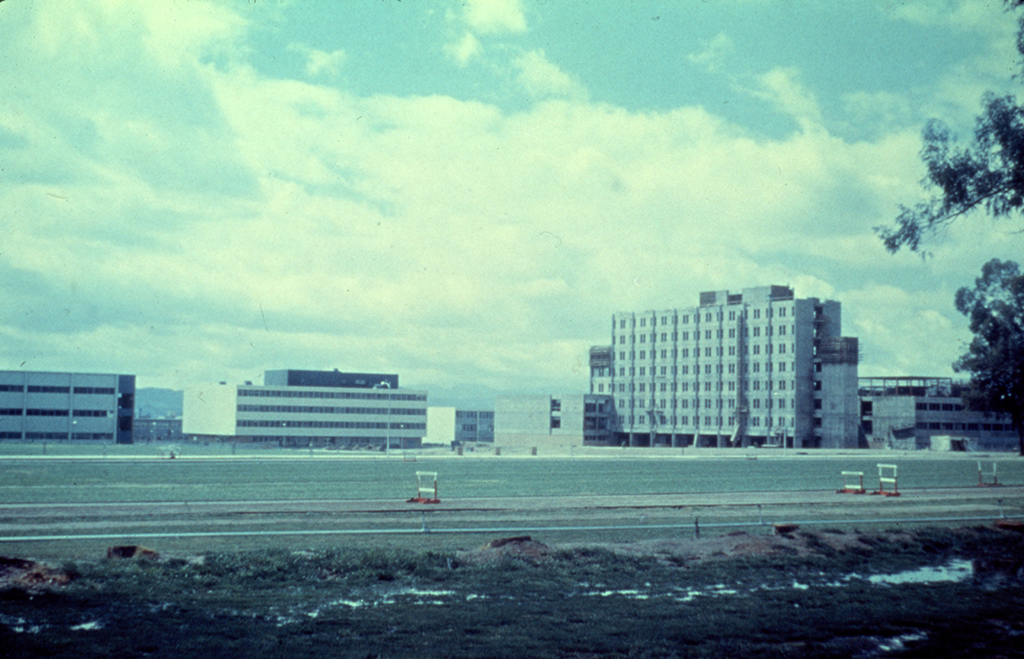
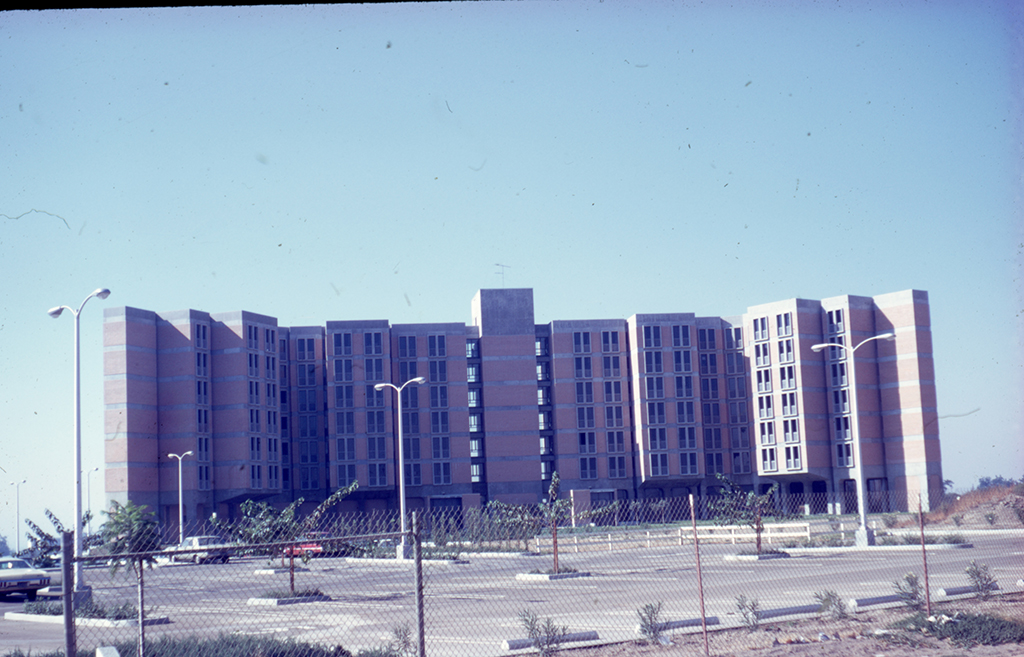
Increasing enrollment at SFVSC necessitated a surge in campus building development in the mid-1960s with the completion of the Administration building (Bayramian Hall), the Physical Education building (Redwood Hall), the Engineering building (Jacaranda Hall), in addition to the interconnected Sierra complex (Sierra Hall, Sierra Tower, and Richfield Hall). The decade ended with the construction of two new dormitories in the north campus panhandle, Northridge Hall in 1967 and Rincon in Hall1969 which was later renovated as the University Tower Apartments.
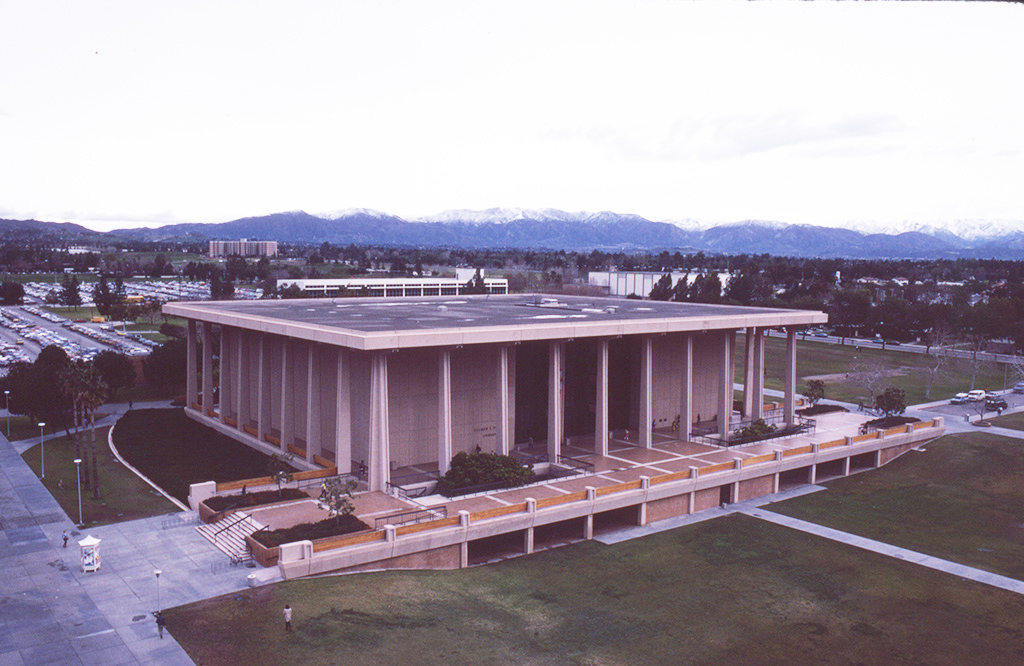
Construction on a new library began in 1971, just prior to SFVSC being admitted into the CSU system as California State University, Northridge. 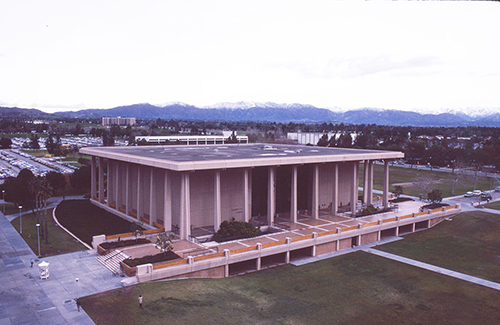 The Oviatt Library (now University Library) was completed in 1973 upon a central plot of land containing a track and field and a vestigial orange orchard. The iconic column design of the library originally did not include the east and west wings added in 1991, nor the grand staircase with terraced lawn flanks completed in 1999. The position of the new library along with the previous buildings formed a large, open campus area now comprising the University Library Lawn and Sierra Quad. The original library was subsequently renamed South Library.
The Northridge earthquake of January 17, 1994, irreparably damaged many campus structures. While the University Library and Sierra Tower required extensive and lengthy repairs, the South Library, Fine Arts building, and University Tower Apartments were razed and their contributions to the campus landscape were short lived.
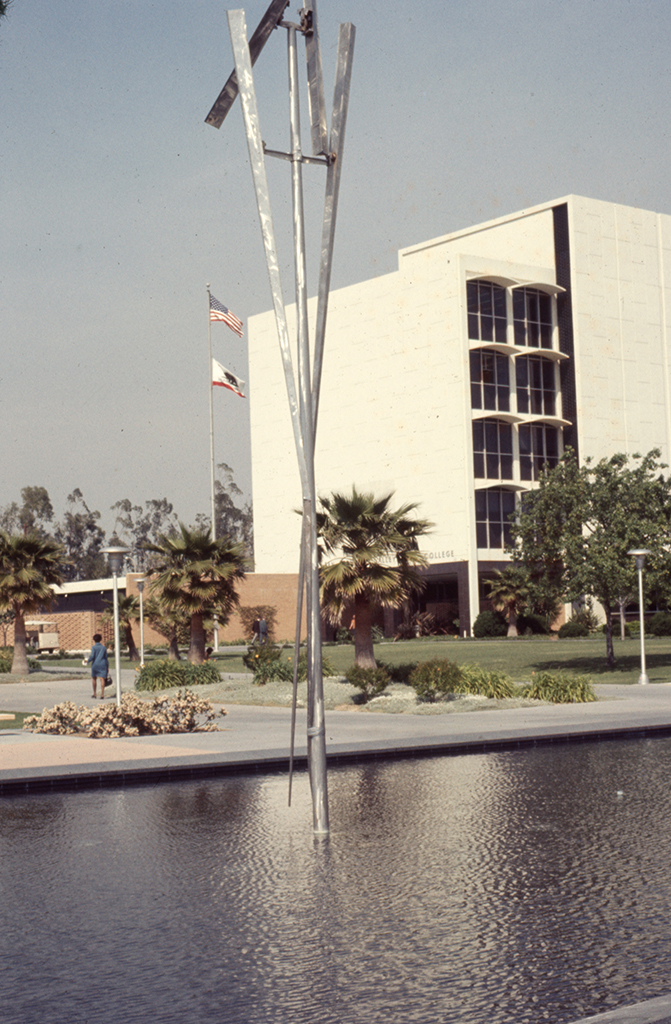
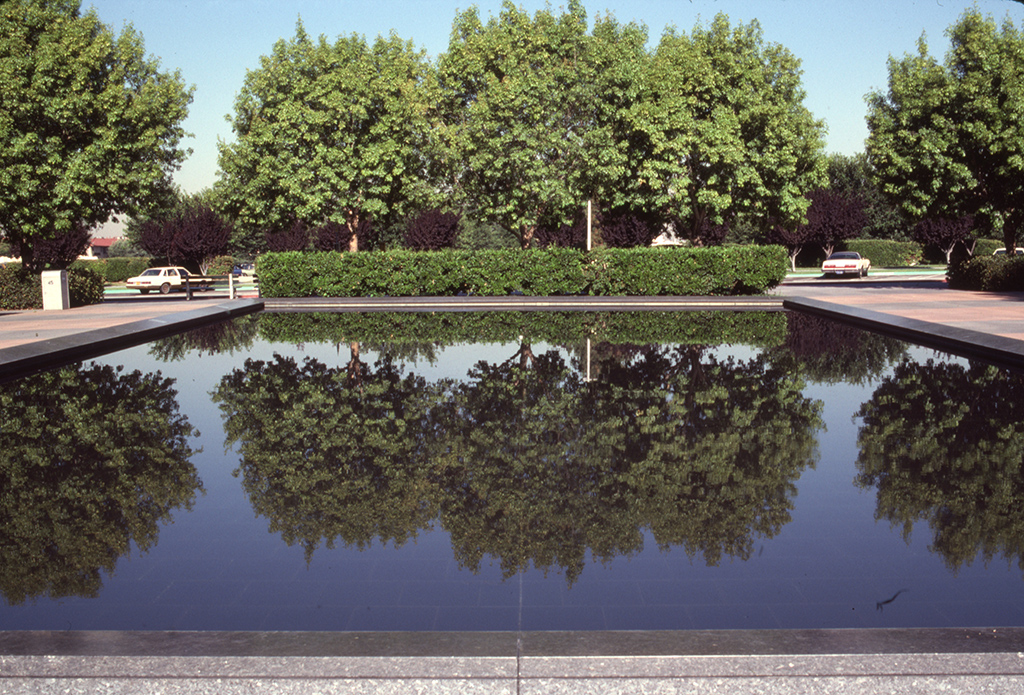
The collection of University Archives photographs also features landmarks from the past. In 1968, where the Prator Sundial Fountain now stands, was instead a trapezoidal reflecting pool at the foot of Etiwanda Avenue. Early on, the pool was home to the stainless-steel kinetic sculpture, Two Up, Two Down by George Rickey, later to be transplanted a couple of times, and now residing in the pond outside the Soraya. On calm days the shallow pool provided impressive mirror image displays of its surroundings, especially of the Administration building. However, the landmark was not without controversies as it tended to attract garbage or was drained for long periods due to evaporation loss during droughts. In 1991, the pond was found to contain a corvette that had crashed into it during a police chase the night before. The pool was eventually removed from its location in 1997.
The University Archives Photograph Collection includes print and film images dating from 1886-2012 and is open for research.
Image Gallery
Post tagged as: university archives, photographs, san fernando valley
Read more Peek in the Stacks blog entries