Seeing Beauty Despite the Struggle: the Art of Fritz Faiss
by Gayle O’Hara, University Archivist - August 11, 2026
San Fernando Valley State College (SFVSC), now California State University, Northridge, attracted many prominent faculty members in its early years. Among them was artist Fritz Faiss. Born in 1905 in a small town in Germany’s Black Forest, Faiss went on to study at the Bauhaus, a revolutionary art, design, and architecture school, where he was taught by renowned artists such as Wassily Kandinsky and Paul Klee.
Faiss, who also trained as a medical doctor, was part of the modern German abstract expressionist movement, which put him and many others at odds with the rigid, tradition-bound cultural views of Adolf Hitler and the Nazi Party. After Hitler came to power in 1933, Faiss’ studio was destroyed twice, as were a number of his art pieces. In 1937, he was formally declared a “degenerate” artist and imprisoned in a forced labor camp, where he was subject to medical experiments. Faiss later stated that out of 130 prisoners he was one of only three who survived that camp.
Due to his reputation in artist circles and his decline in physical health, many advocated for his release, including the American Red Cross. In 1943 Faiss was discharged from the camp and spent the next couple of years convalescing, unable to leave Germany as his passport had been confiscated. In 1951, he was able to emigrate to California, initially settling in Pasadena. Faiss taught at UCLA and the Otis Art Institute before coming to SFVSC in 1961. Faiss taught art here until he retired with professor emeritus status in 1973. He passed away in 1981 at the age of 76.
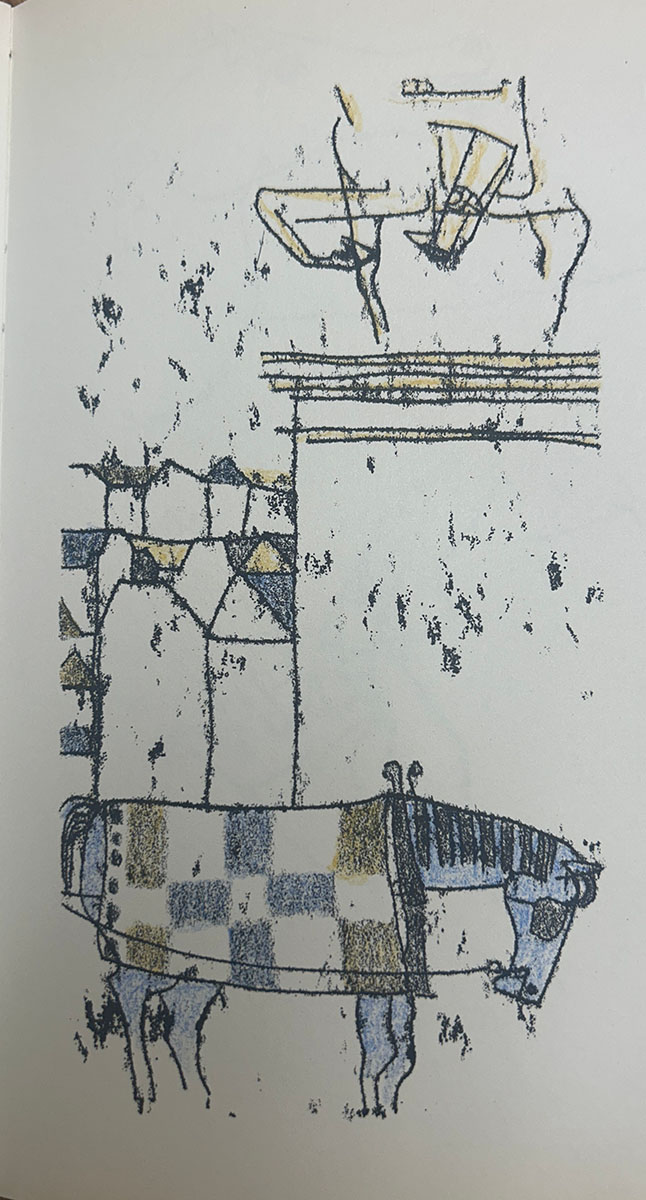
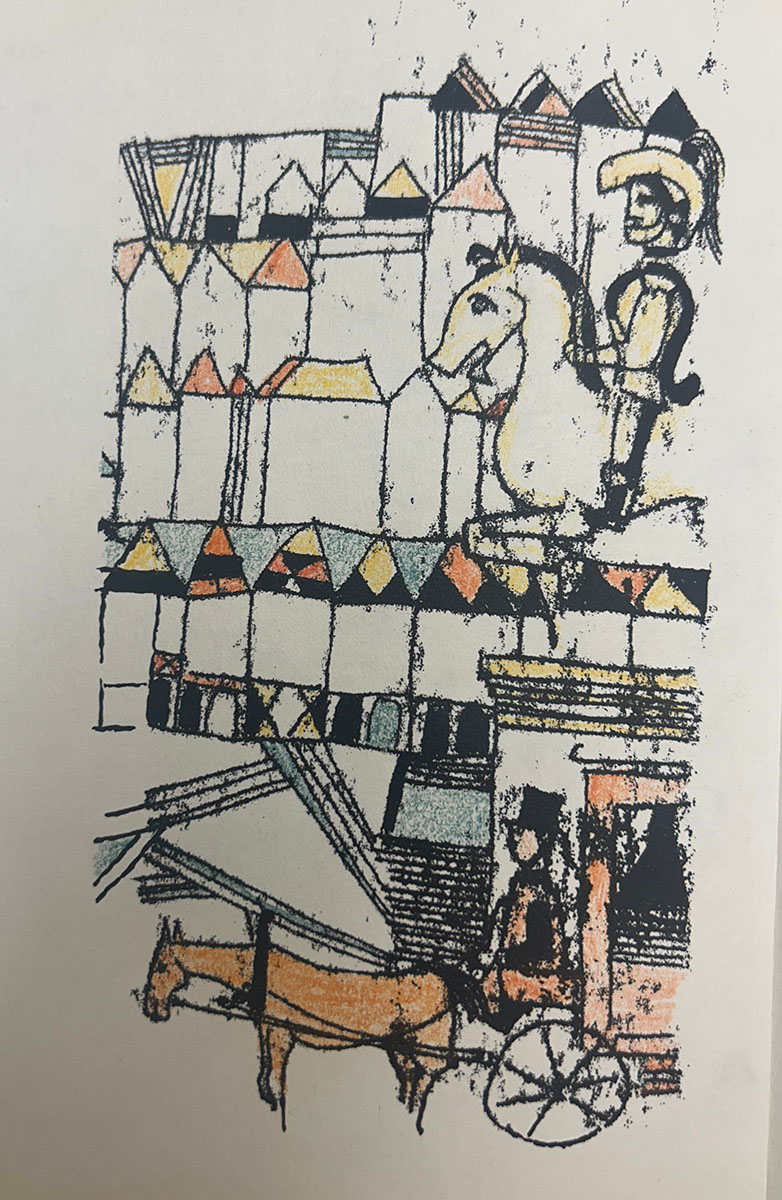
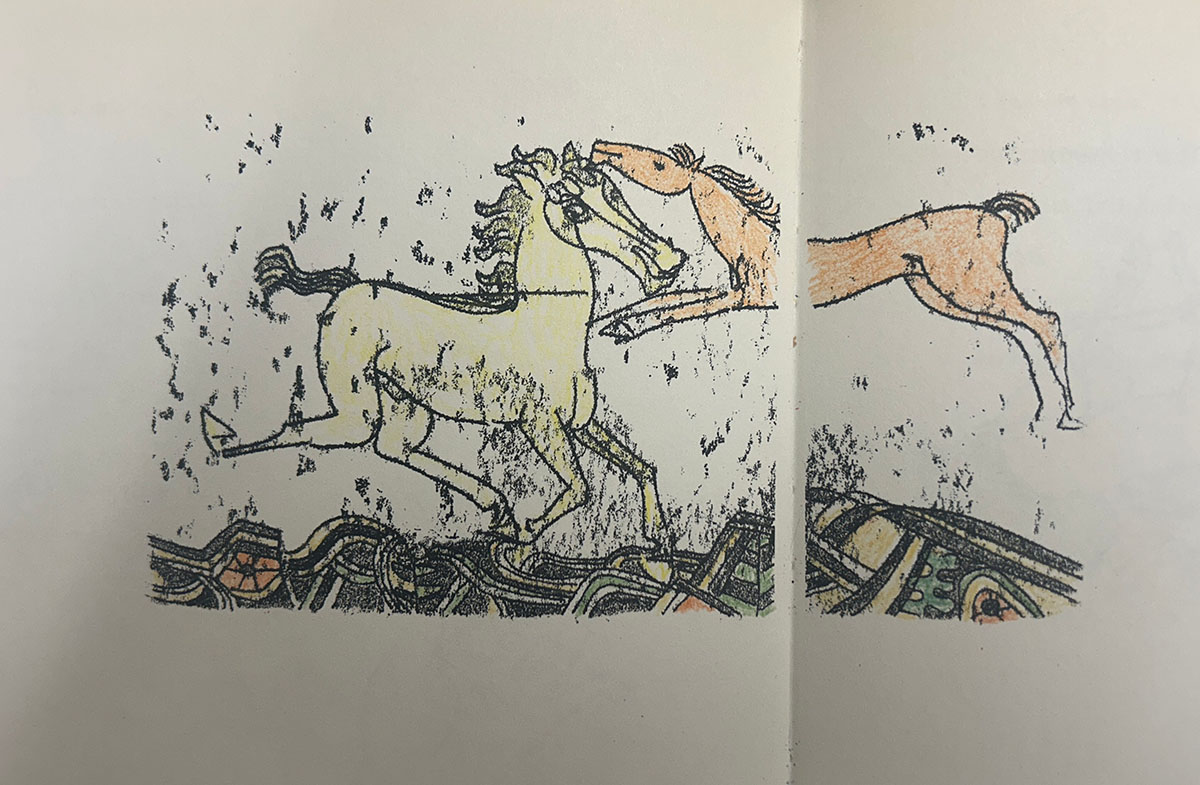
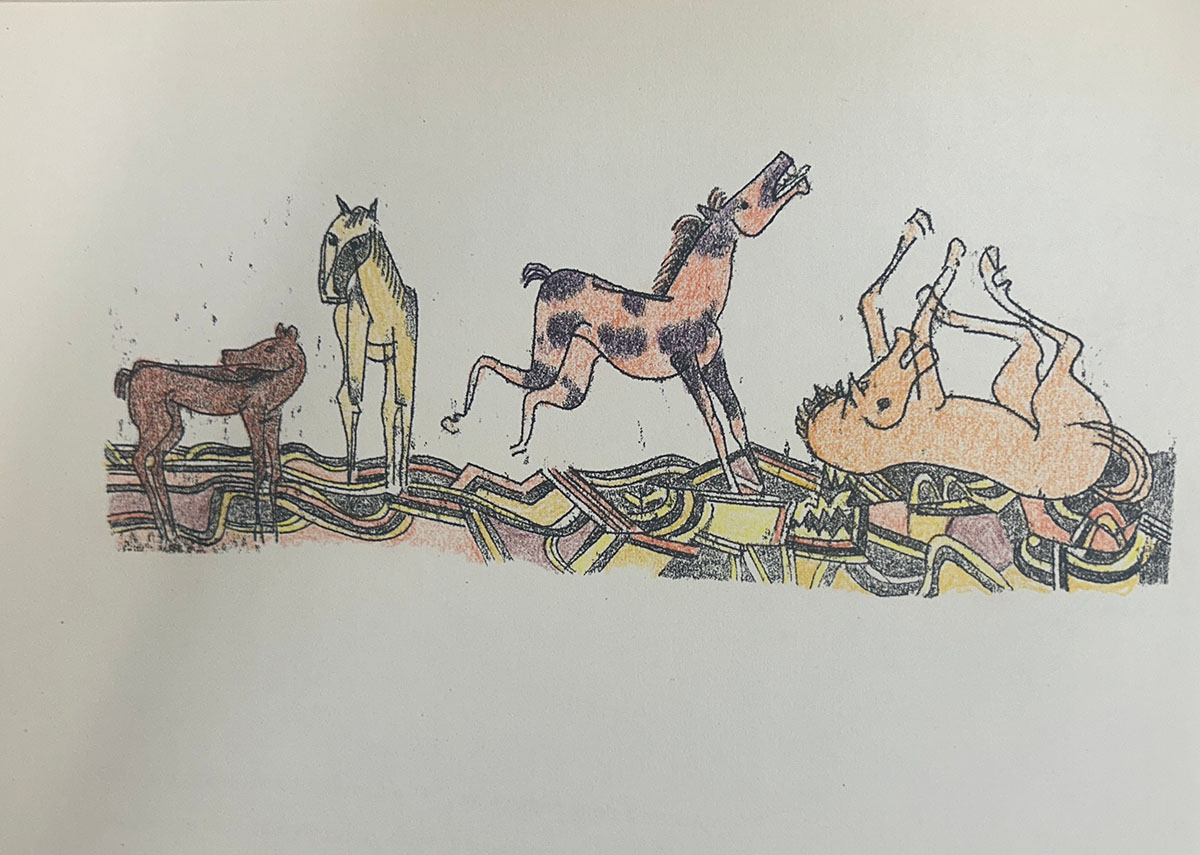
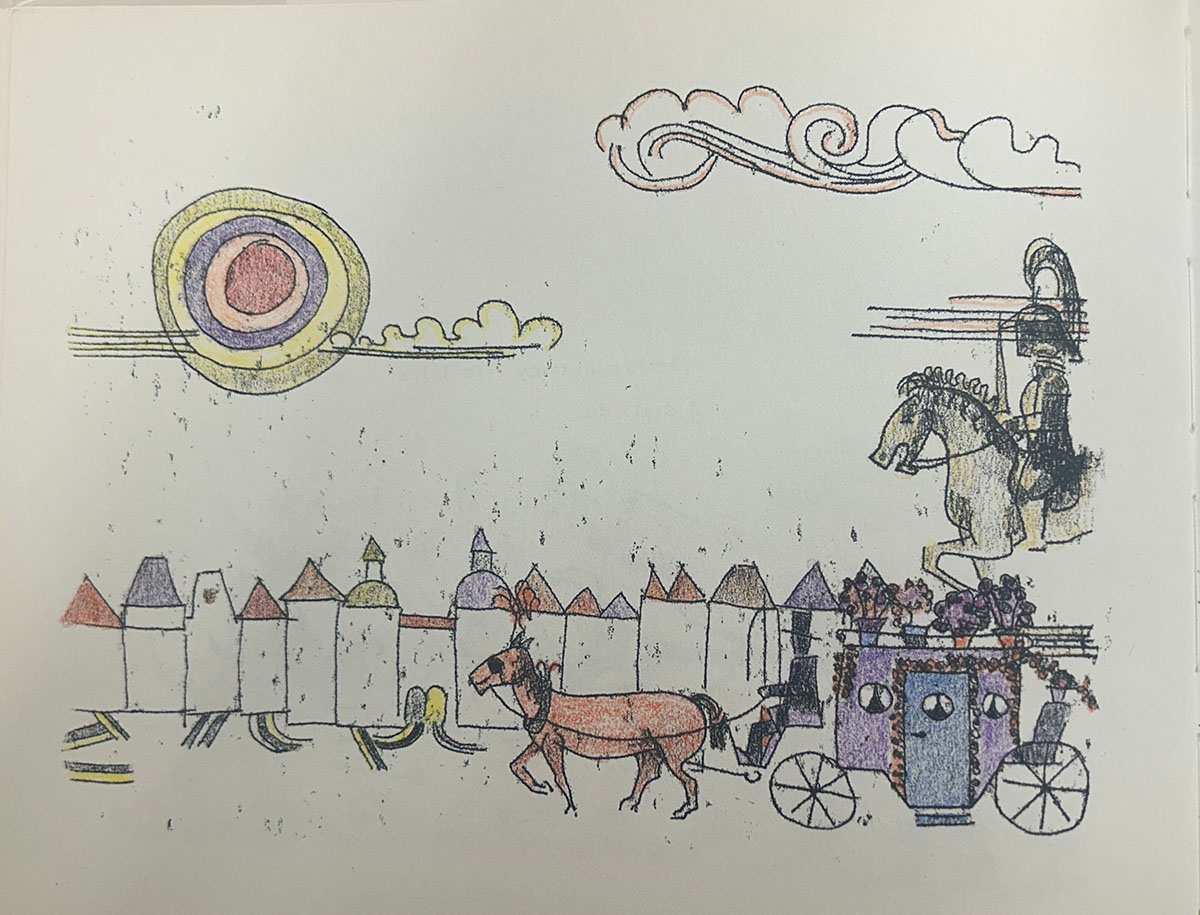
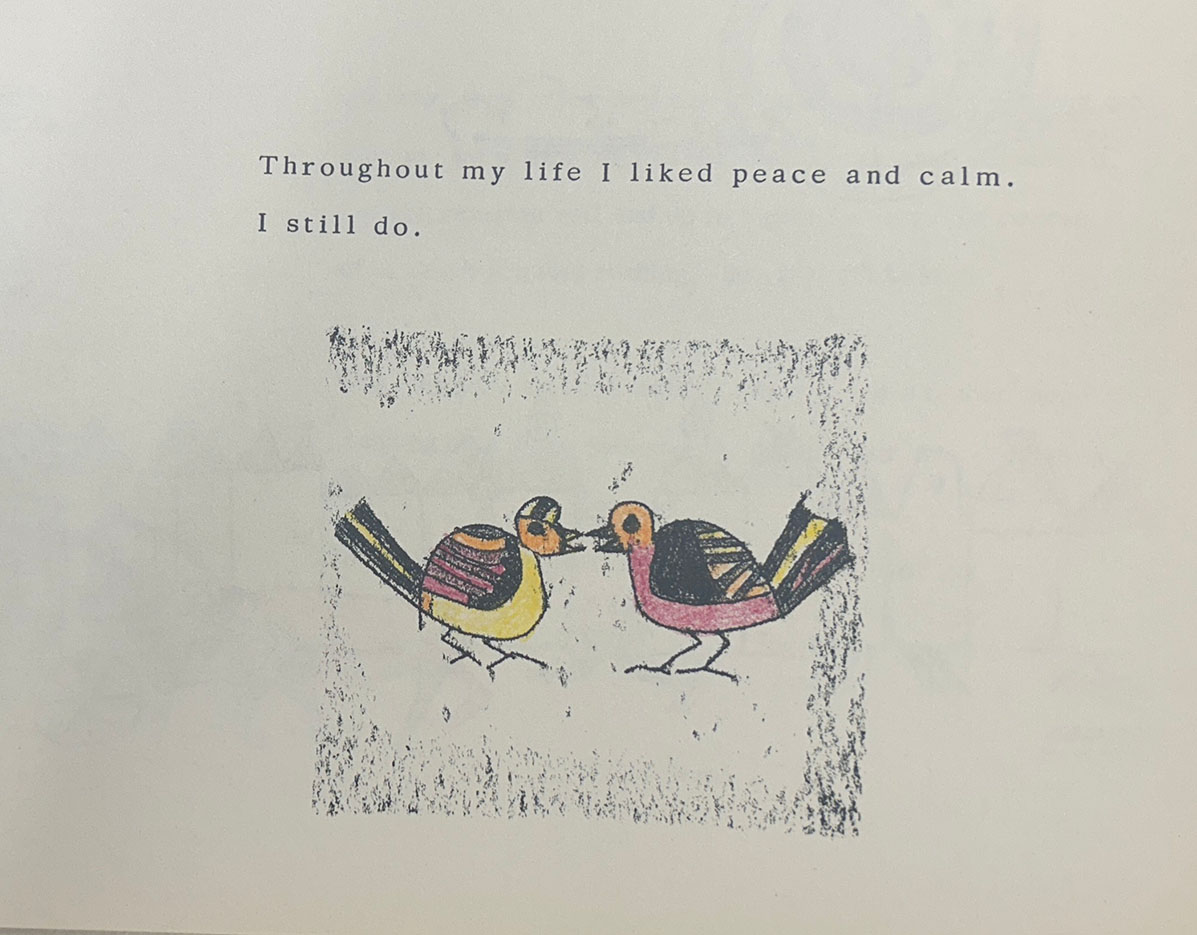
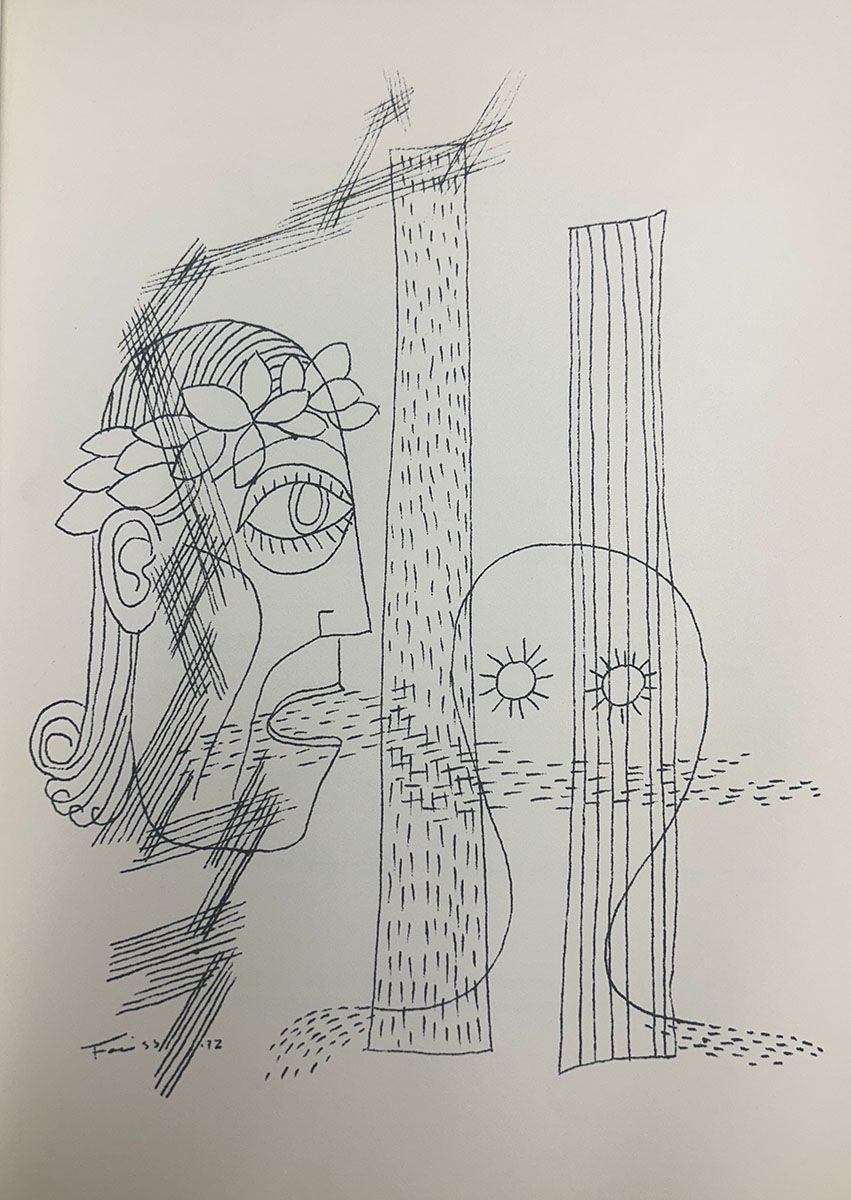
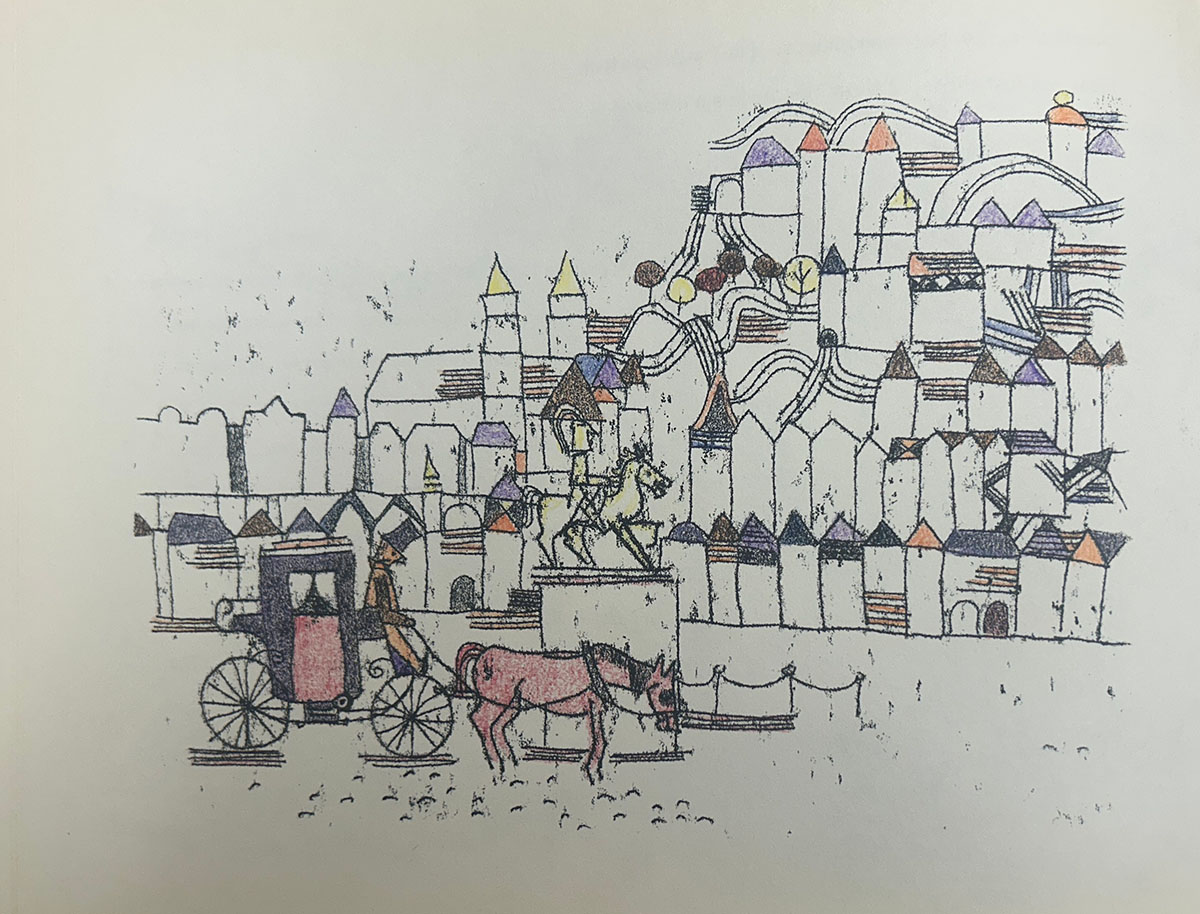 CSUN Special Collections & Archives is home to a book by Faiss with a brief story and beautiful illustrations, Hackney Jade & the War-Horse. It tells the tale of Hackney Jade, a humble draft horse who toils under the hot sun with arthritic legs and many aches and pains from her years of labor. “Hackney-jade” is an old historical term for an inferior, worn-out work horse. One day she comes across the War-Horse, a huge bronze monument on polished marble with a king astride the mighty charger horse. The exhausted Hackney Jade asks for some shade from her powerful brother horse, who replies that he only points his shadow in one direction and observes how superior he is to the common horse. They have several other encounters, each showcasing the War-Horse's arrogance and lack of empathy. This prompts Hackney Jade to reflect on her life and to realize that, despite her hardships and present struggles, she has loved others and been loved, has given birth and experienced joy as a parent, and feels all the spectrum of emotions, something that eludes the War-Horse, however regal he is. Hackney Jade knows there will never be a monument to her, but her days have been filled with something far richer. An empty life of power cannot compare to a humble life filled with moments of sweetness even while there is pain.
 In Lenticle: two interviews with Fritz Faiss (also found in Special Collections & Archives), Faiss discusses being a young man as a part of an idealistic, inspired generation of artists who were “overpowered, crushed” by the Nazi regime, who seemed to only care about domination and destroying “the enemy”. You could become the enemy simply for who you were or for what you thought, even in private, or for what art you created that was not deemed properly “German”. Despite the trauma he suffered, Faiss still believed in the power of art and loved teaching. His approach to working with color was especially important in his teaching here on campus.
If you are interested in learning more about Fritz Faiss, please visit the Reading Room to check out these resources. In addition, you can see a small sampling of Faiss’ work in the CSUN online digital University Art Collection. You can also watch an interview with Fritz Faiss conducted as part of the People of Achievement in Southern California digital collection.
Image Gallery




Post tagged as: special collections, rare books
Read more Peek in the Stacks blog entries