Haiku, or Moments Captured and Released
by Philip W. Walsh, Ph.D., Lecturer, Department of Interdisciplinary Studies and Liberal Studies - February 03, 2026
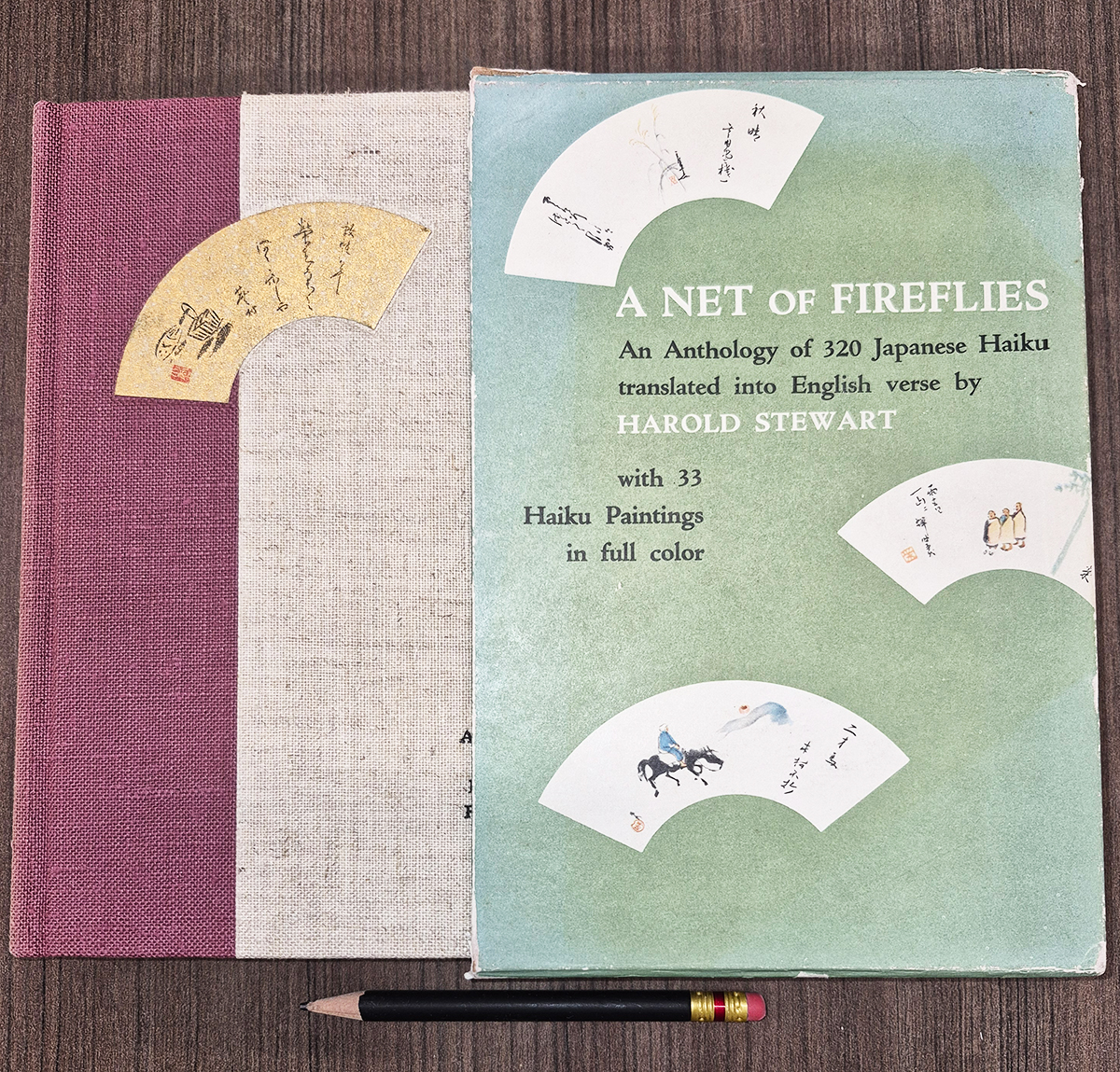
Haiku is a Japanese poetry tradition, dating back to at least the 17th century, usually consisting of seventeen syllables: five in the first and last lines, and seven in the second. Most haiku poets also follow two other conventions: the kigo, a word indicating a season, and the kireji, the cutting word, which serves as a pause or break between two distinct ideas or subjects. Both of these are evident in this poem by Basho, probably the best known of all haiku, translated by Harold Stewart in his Net of Fireflies:
The old green pond is silent: here the hop
Of a frog plumbs the evening stillness: plop!
Stewart’s translation here, like the others in his book, eschews the traditional seventeen syllable structure, presenting it as a rhyming couplet instead. Despite this change in form, the translation retains the other important elements of the haiku: the frog suggests the kigo, because this animal is most active in spring, and the kireji is present in the movement from silence and stillness to sudden sound (this movement being represented in the original Japanese by the untranslatable "ya" at the end of the first line). This anthology was published the Charles E. Tuttle Company, which produced many books on Japanese culture for American readers.
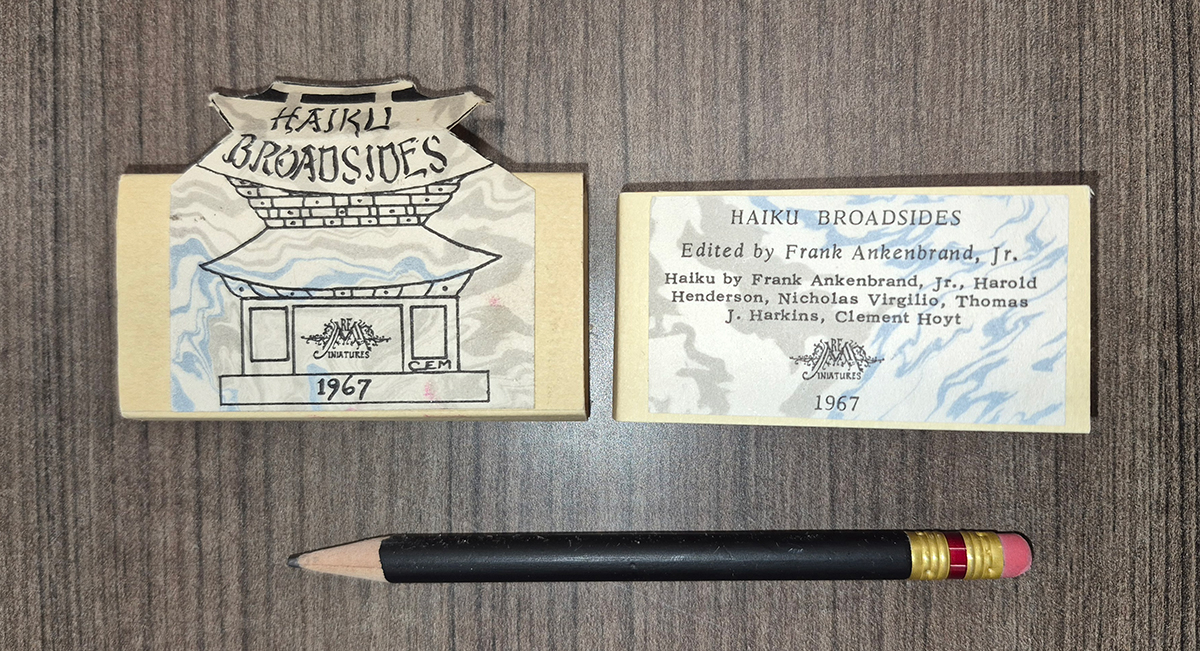
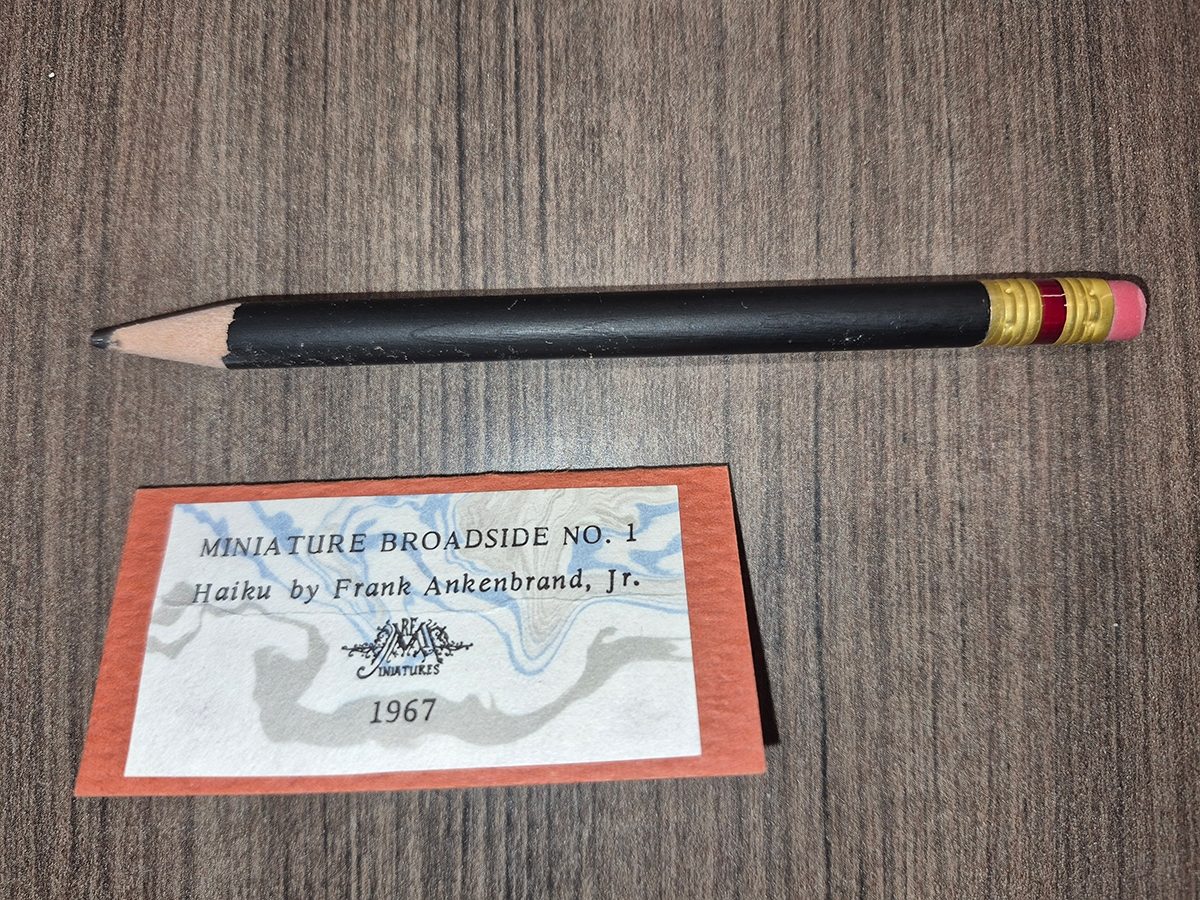
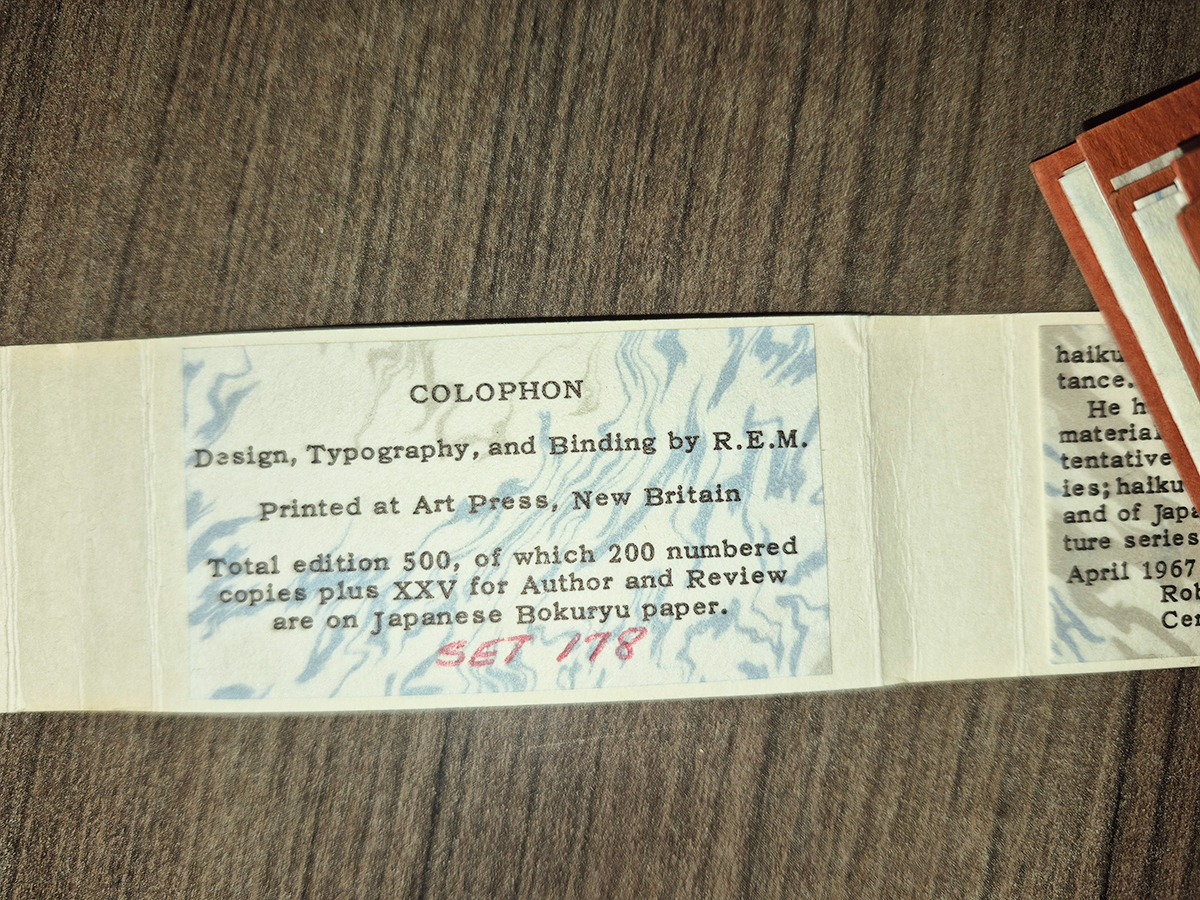
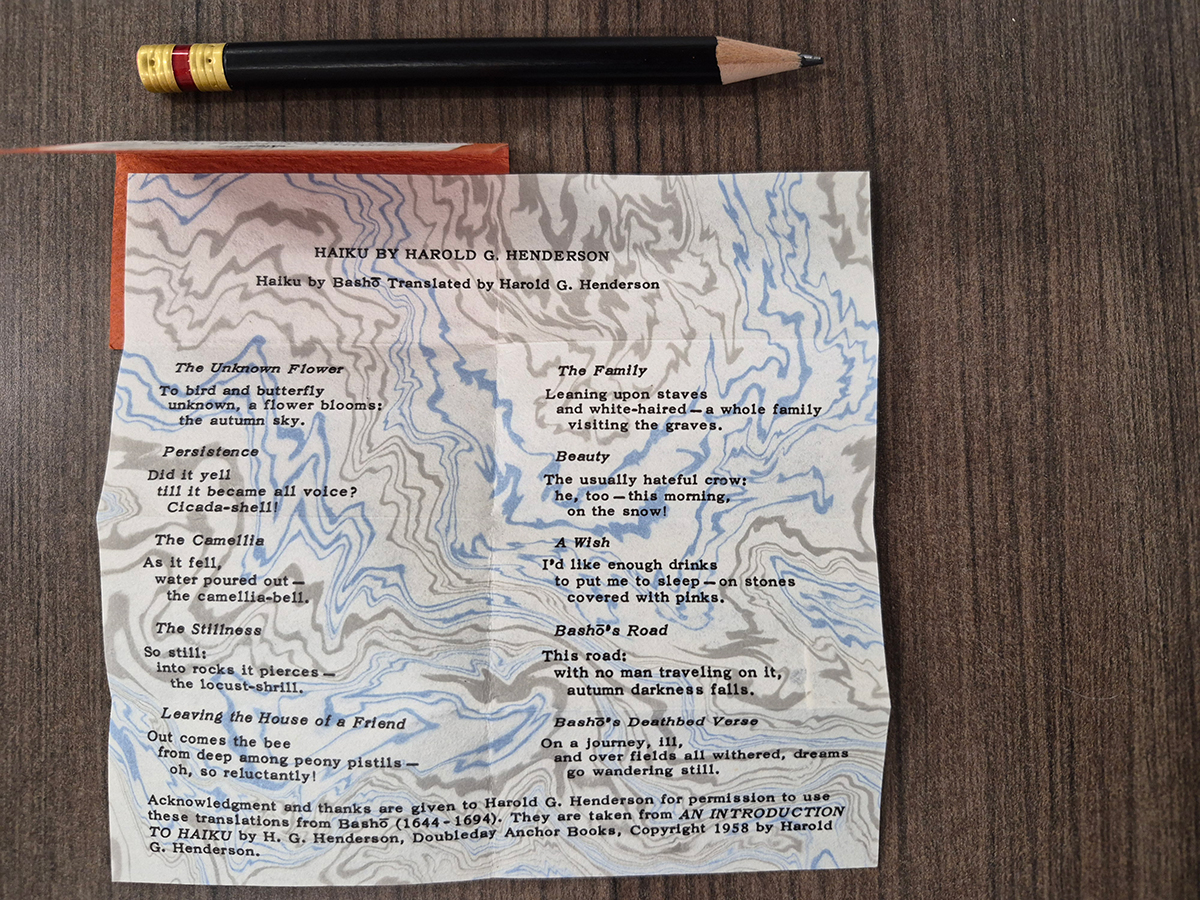
It is not merely the haiku themselves which are beautiful; many of these collections of haiku are also remarkable as material objects. 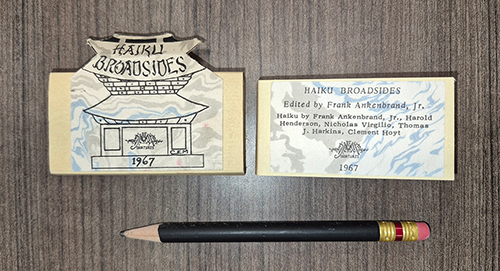 Haiku Broadsides (1967) features poems by several noted haiku poets, printed on folded paper. This anthology was limited to 500 sets and was the first in a series.
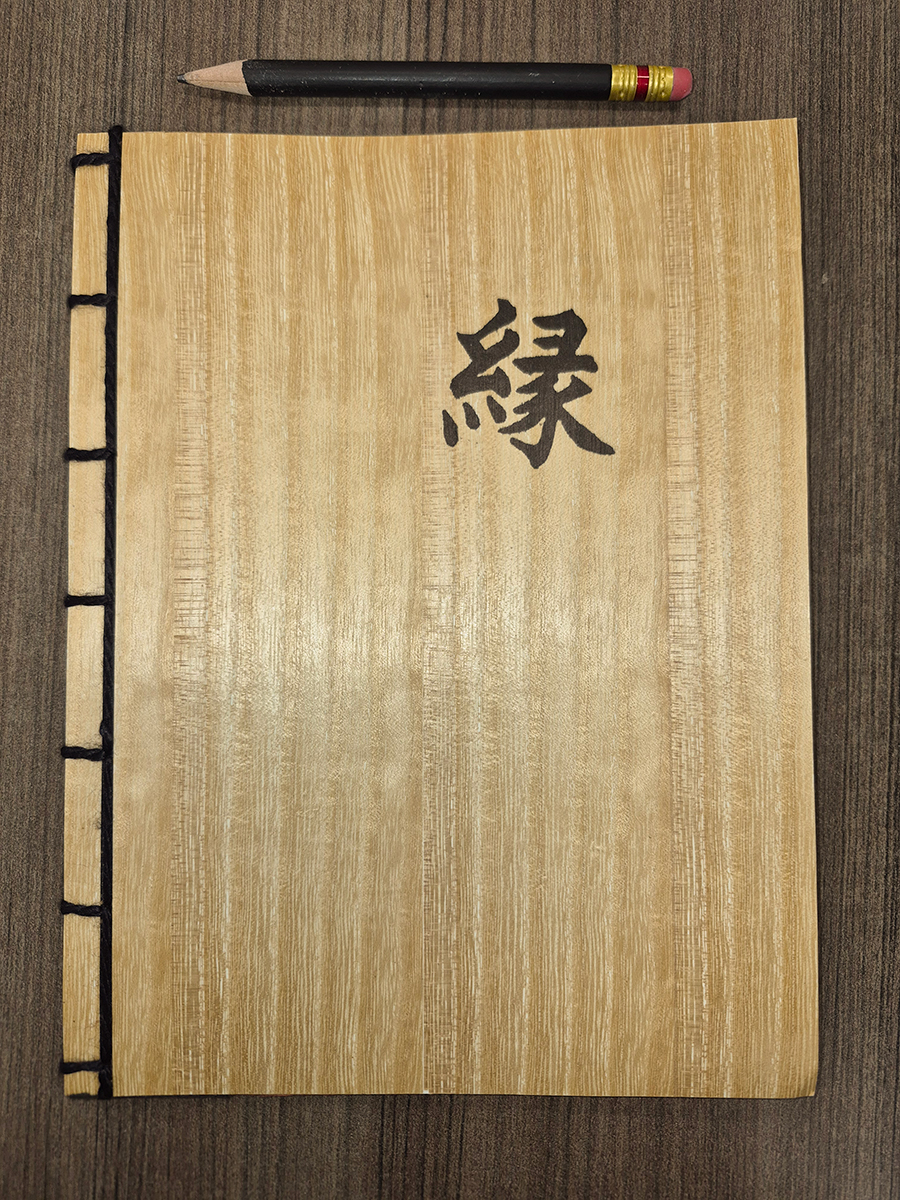
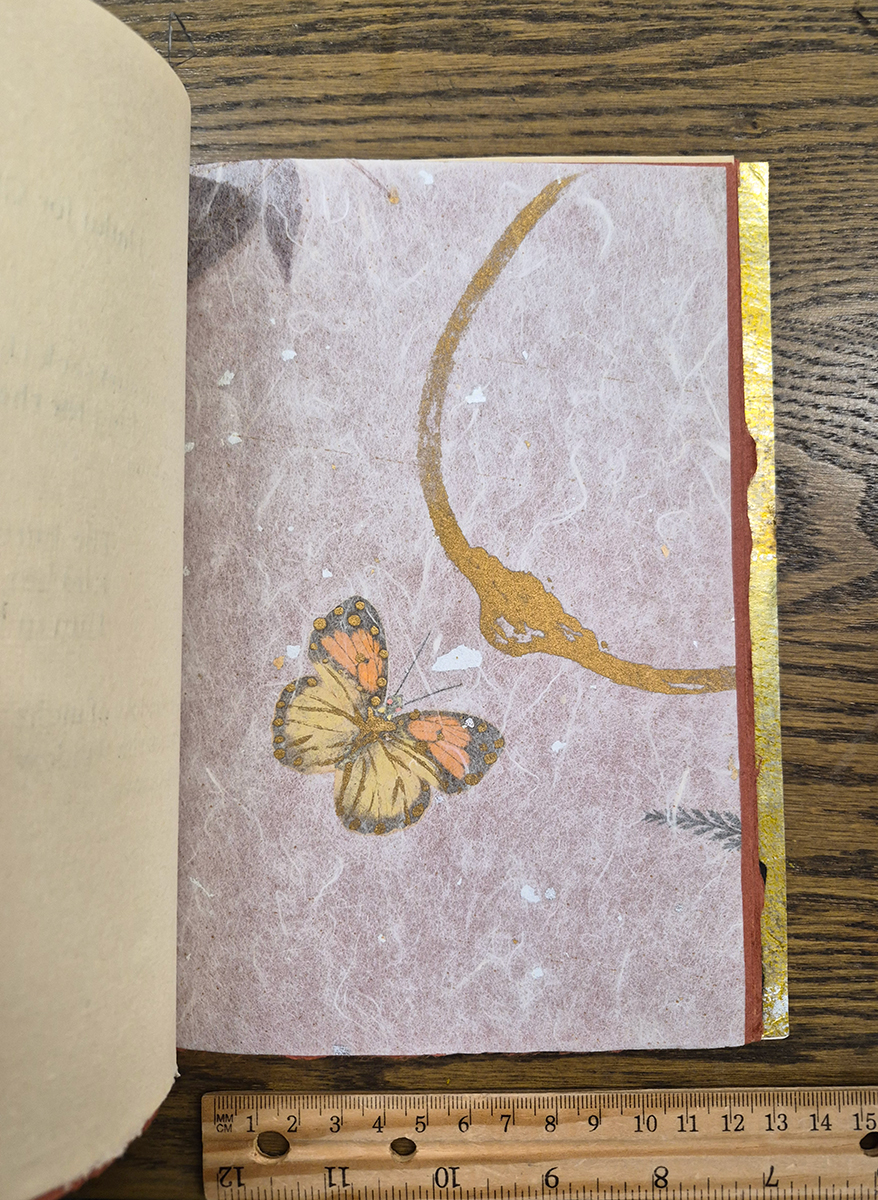
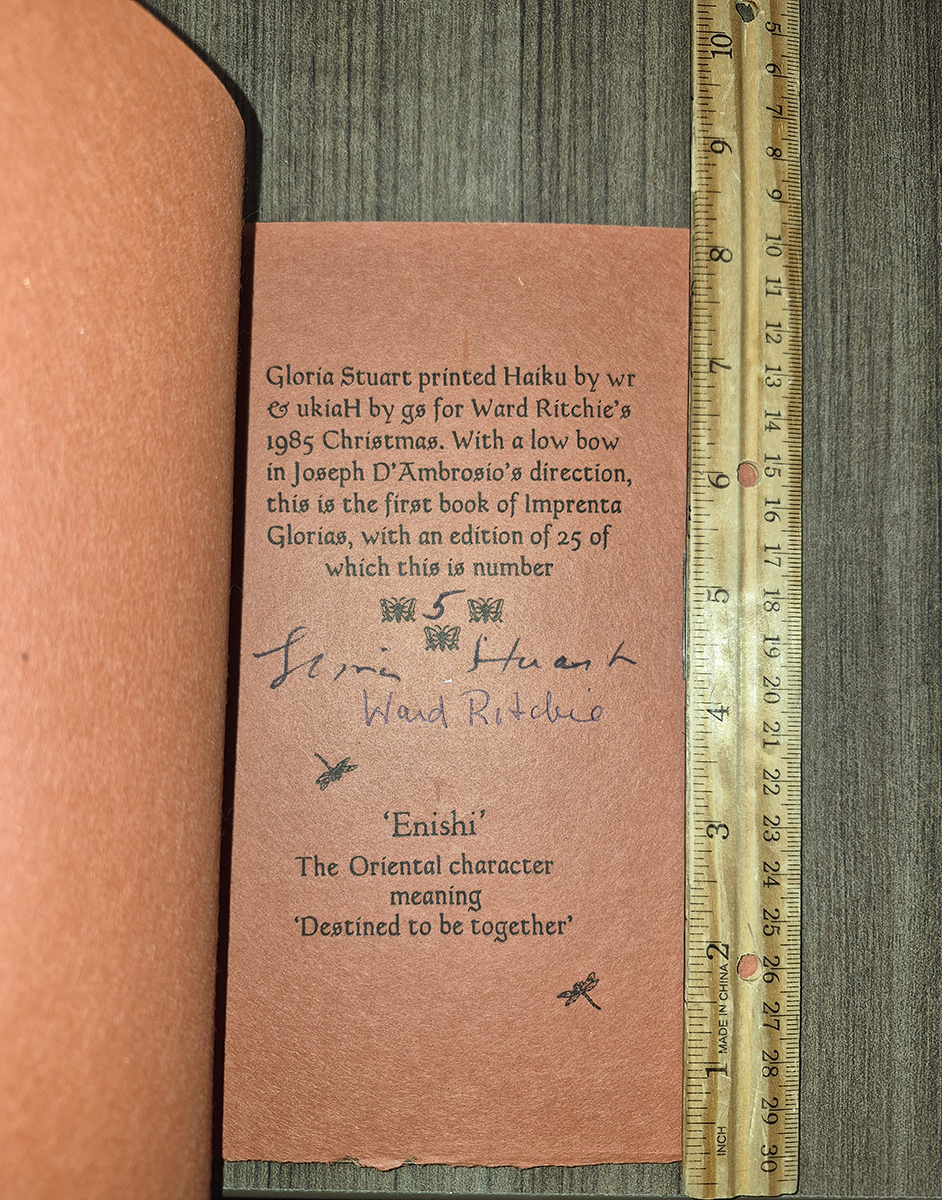
Enishi contains two haiku written by printer Ward Ritchie, and actress and visual artist Gloria Stuart, each dedicating their poems to the other. Printed on handmade Moriki paper, the book also contains laminated leaves and butterflies.
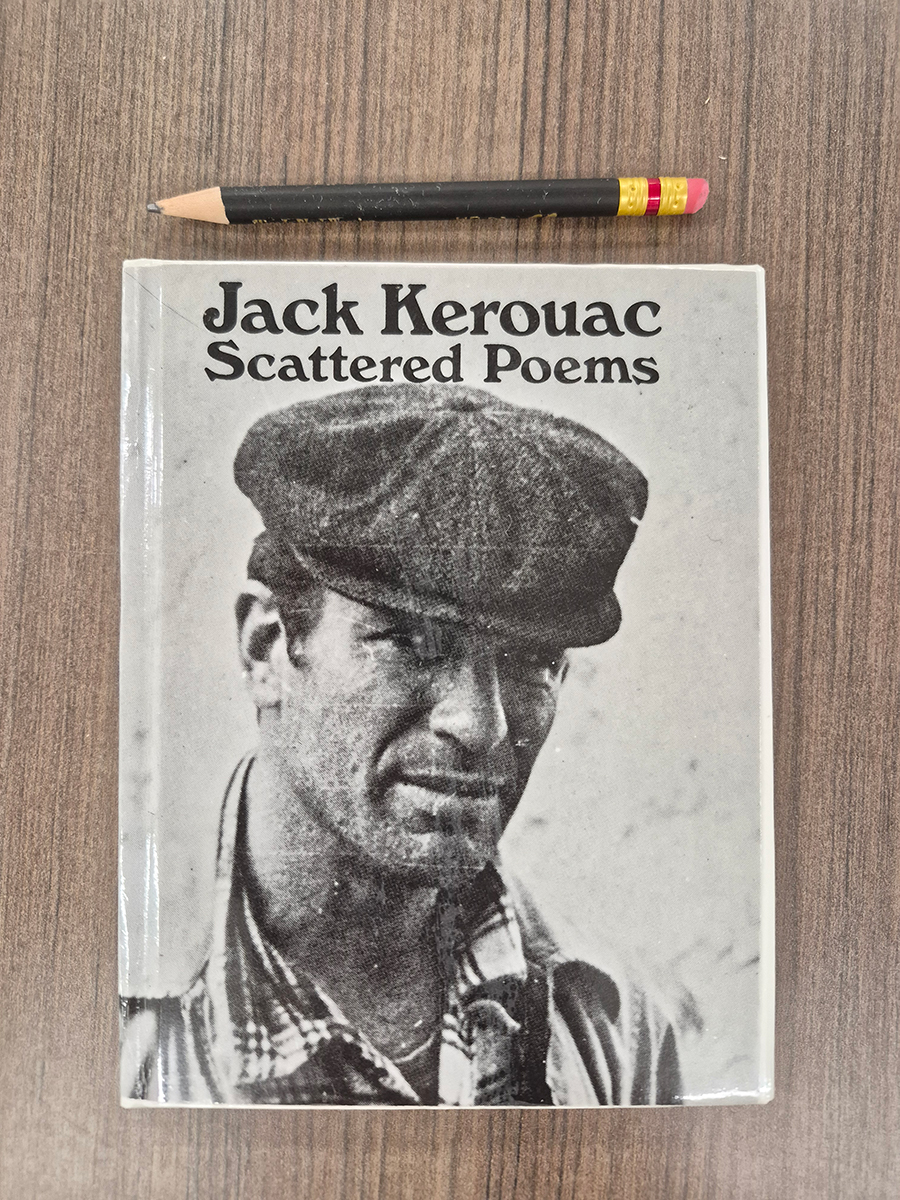
Jack Kerouac, the Beat poet, started writing haiku in 1956, and wrote hundreds in the following decade, many of them on notebooks which he carried in the pocket of his characteristic lumberjack shirt. He decided that the seventeen syllable structure was not necessary in English, since English syllables are longer than those in Japanese. His poems also feature human activity more often than traditional poems of this sort: poems which make observations on human behavior, rather than describing the natural world, are usually called senryu, but Kerouac does not make that distinction. This collection, Scattered Poems, was published by City Lights Books, a press which championed the Beat poets and San Francisco culture.
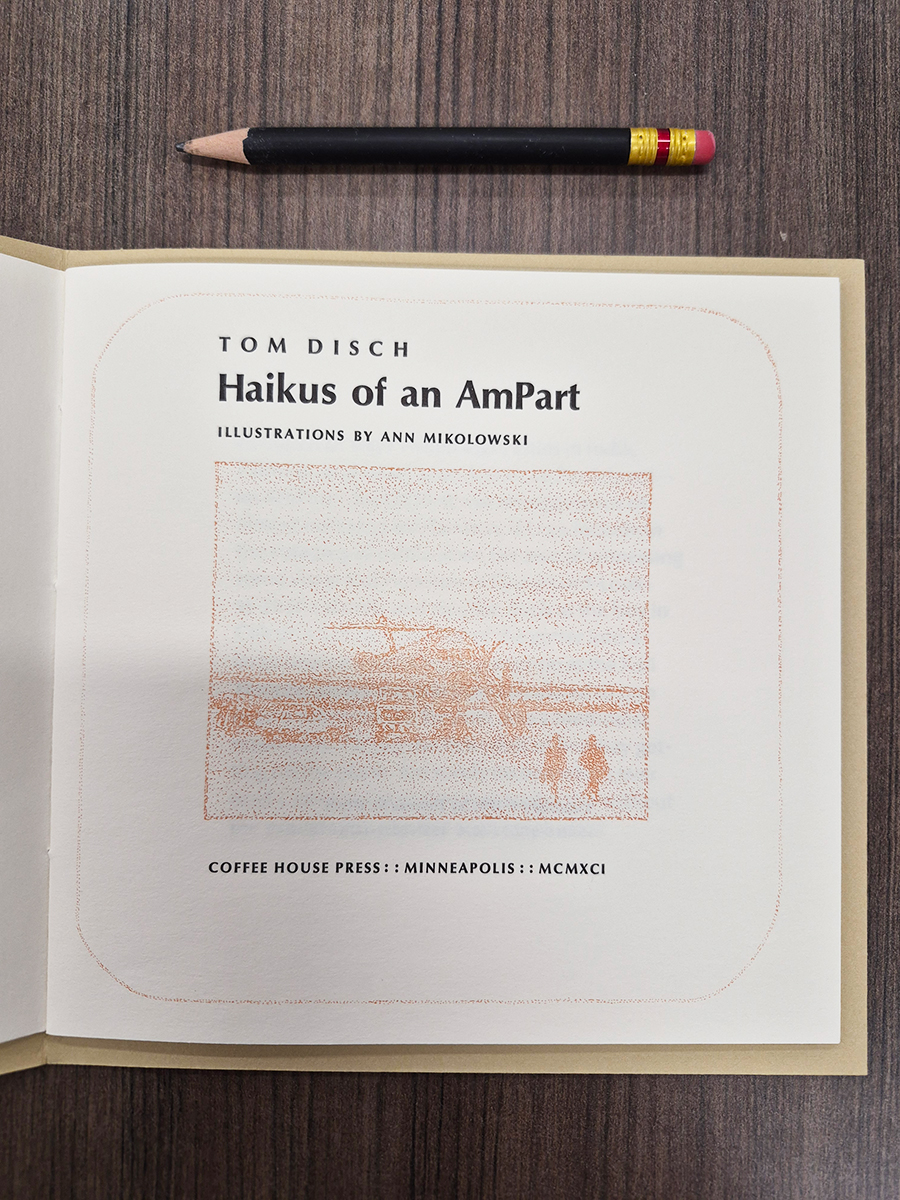
Noted science fiction author Thomas Disch wrote haiku on trips to India, Pakistan and Israel; for him it was an "ideal art form for airport waiting rooms, hotel lobbies, and other such limbos." These poems were subsequently published by Coffee House Press, with illustrations by Ann Mikolowski; the book was limited to 300 copies, each signed by author and artist.
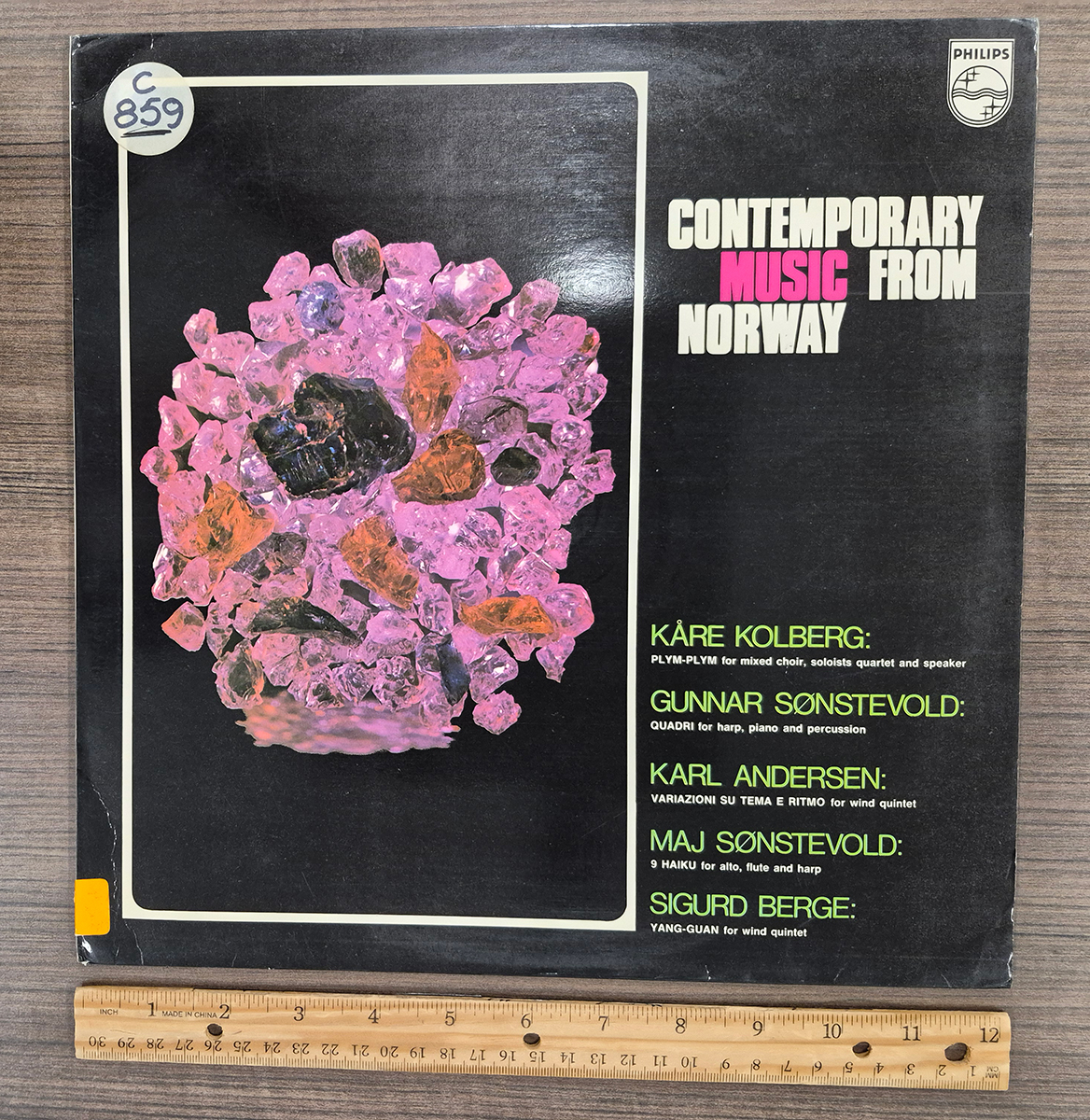
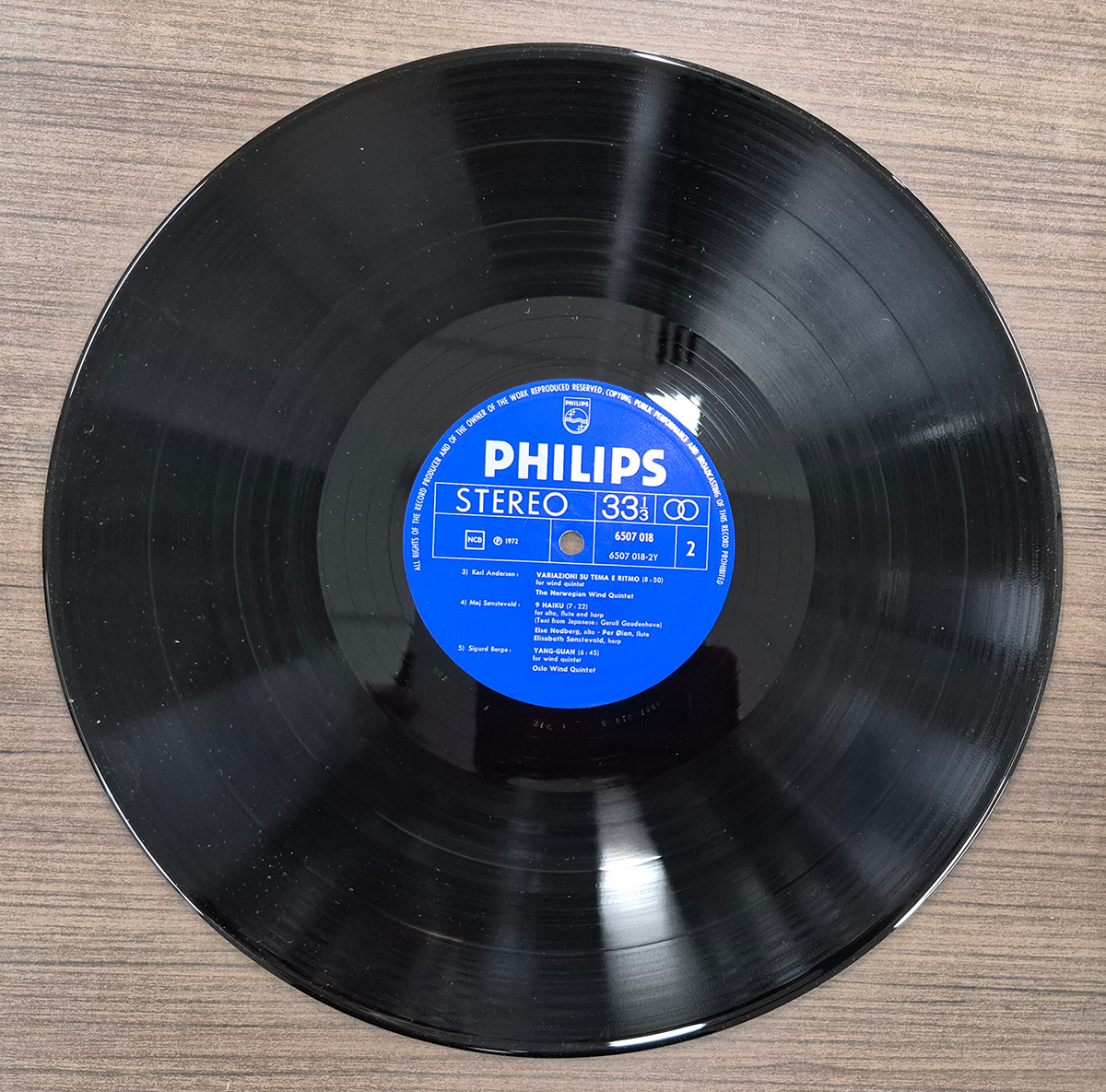
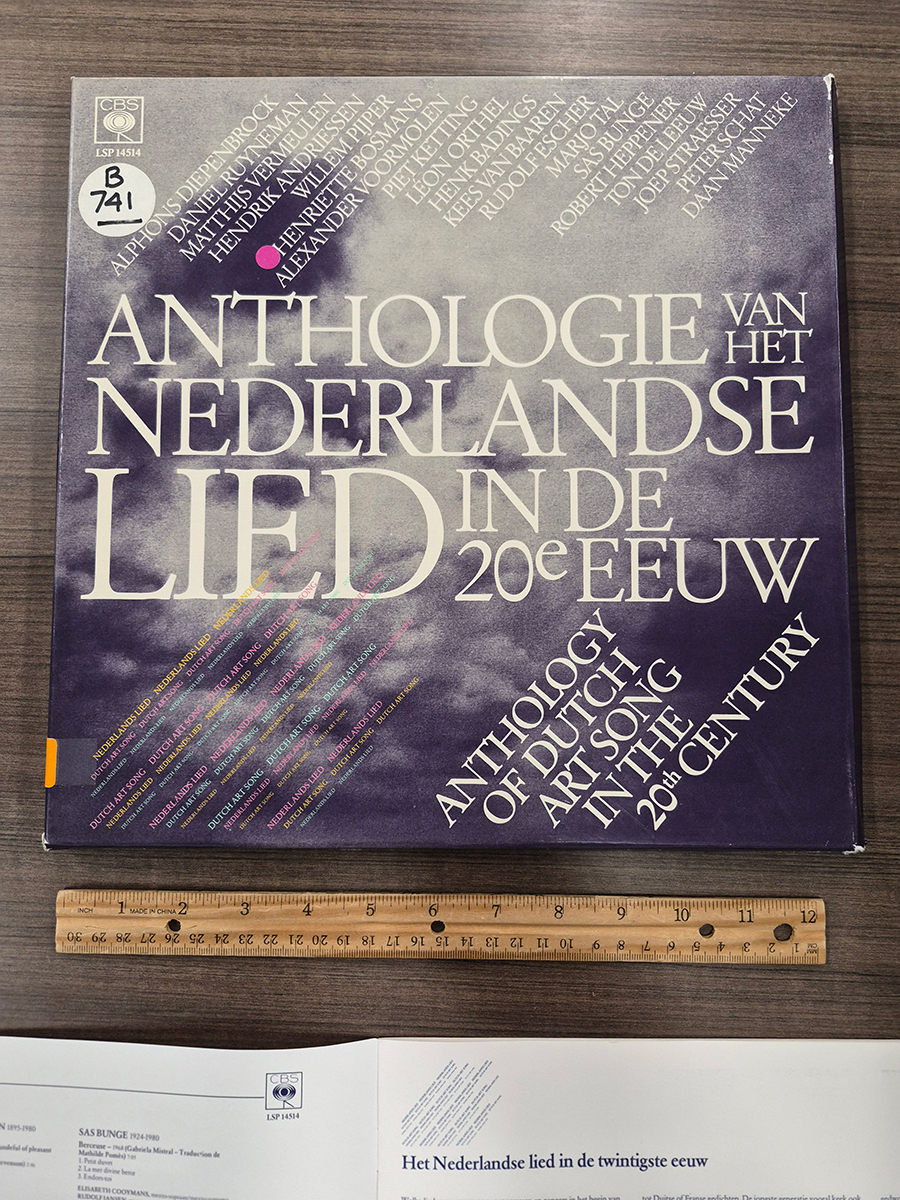
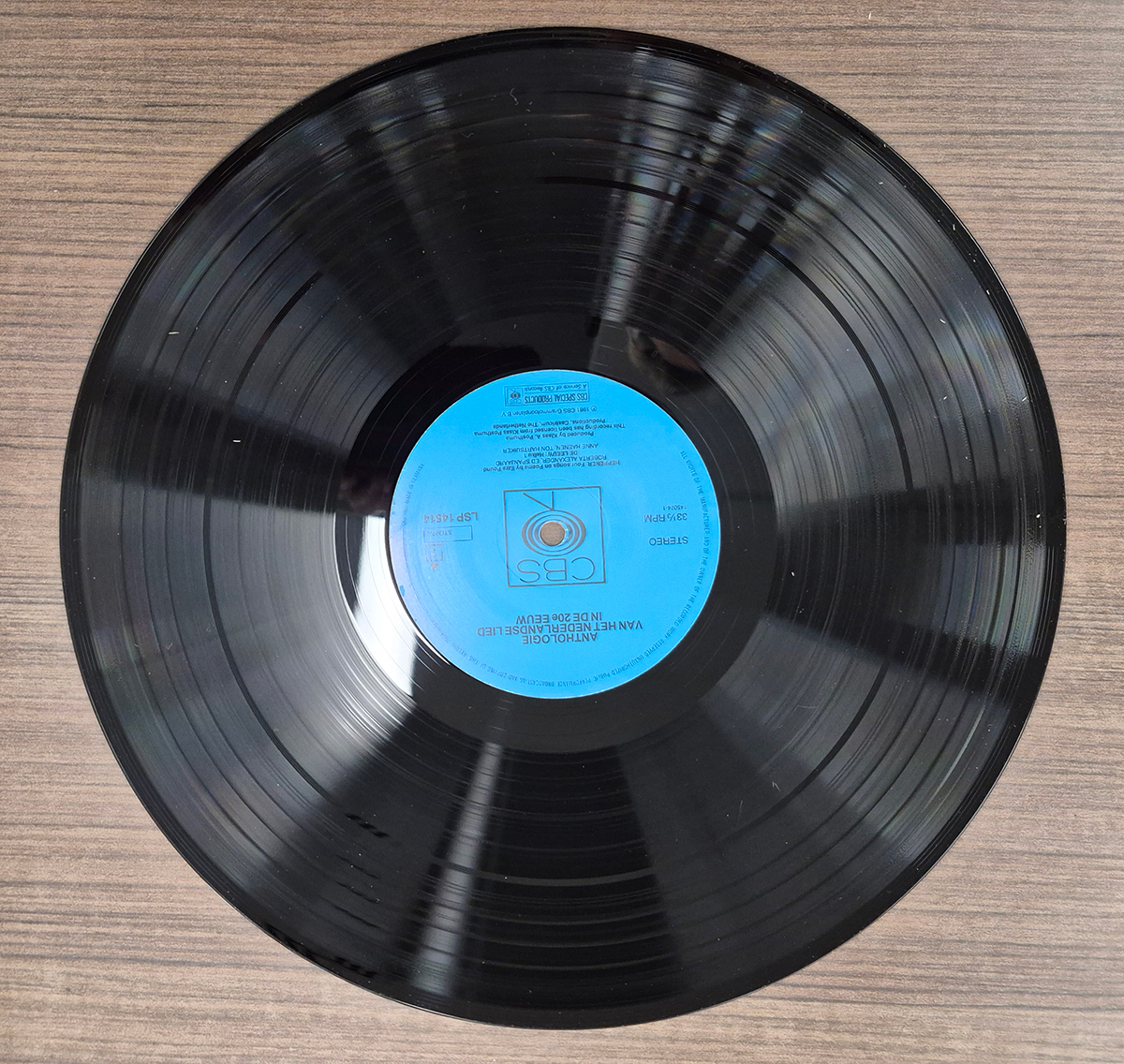
Our collection also features music inspired by haiku, including 20th century Dutch composer Ton de Leeuw’s "Haiku," an art song based on a haiku by Issa, and translated by poet Harold Henderson; this piece, like many of his other works, is a reflection of his commitment to the exploration of the interaction between cultures.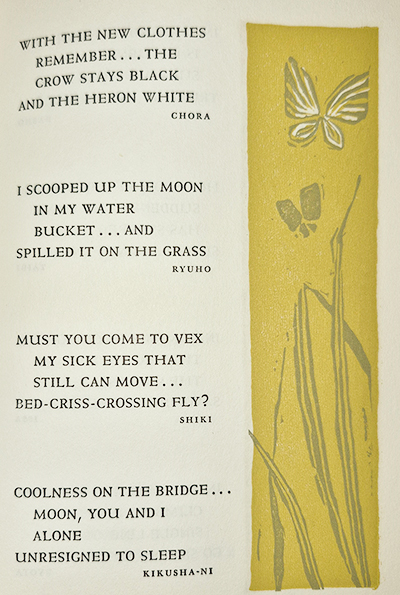 Norwegian composer Maj Sønstevold used Arnold Schoenberg’s twelve-tone technique, and Japanese poems translated into German, to compose her "Nine Haiku" for alto voice, flute and harp.
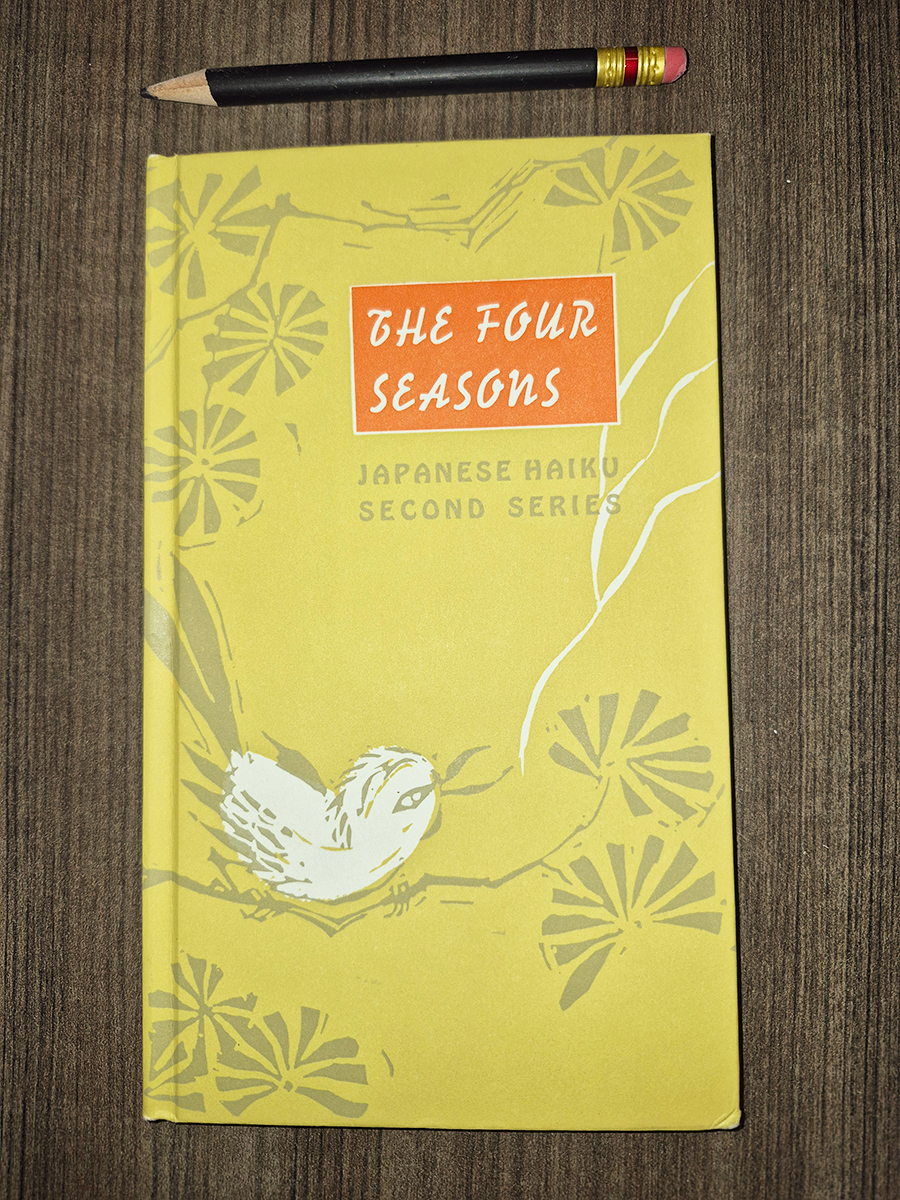
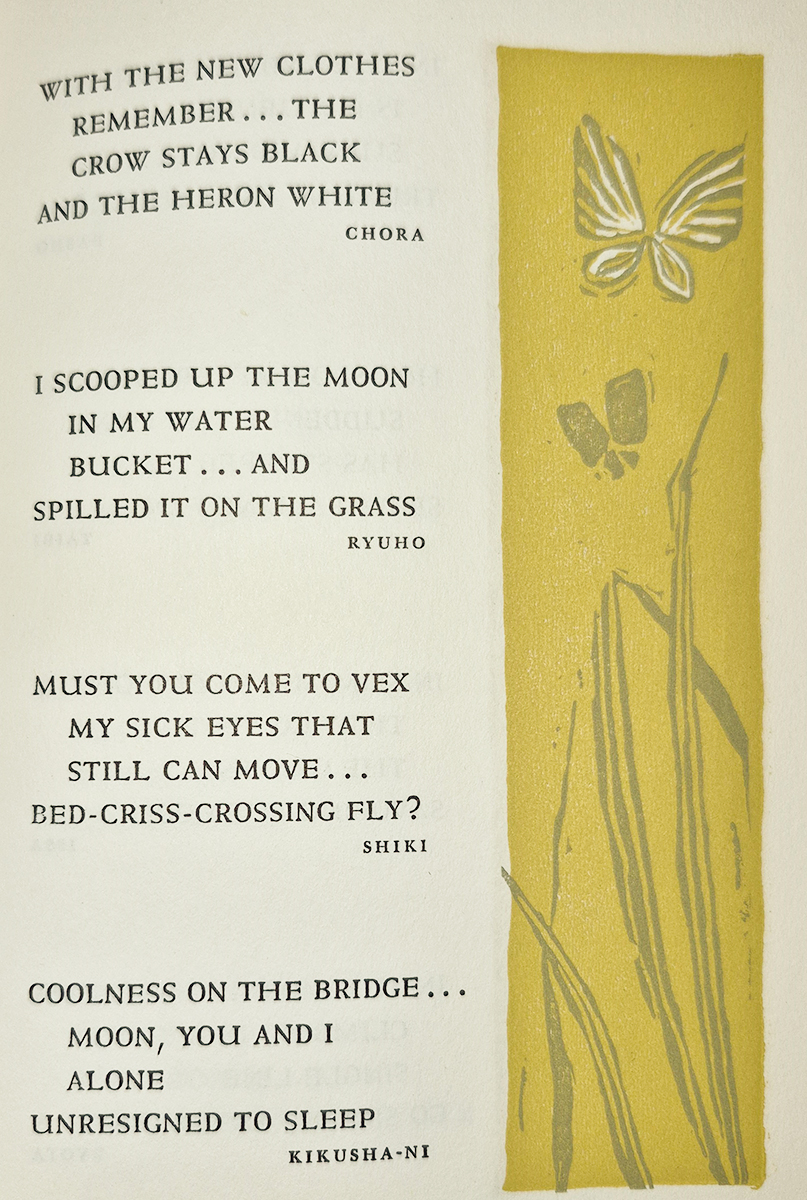
We have two books from Peter Pauper Press, founded by Peter Beilenson in his parents’ basement in 1928; as the name suggests, the press produced books which almost everyone could afford. These two haiku books were part of a line of one dollar gift books started by Peter’s wife, Edna, who ran the company with him. These collections contain translations of haiku by many different Japanese poets: The Four Seasons: Japanese Haiku and Japanese Haiku: Two Hundred and Twenty Examples of Seventeen-Syllable Poems.
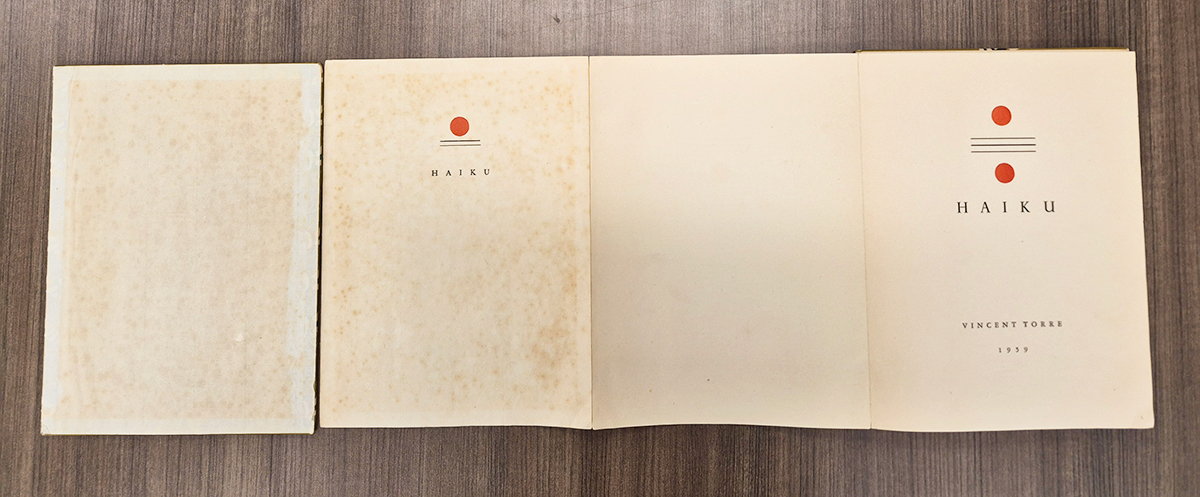
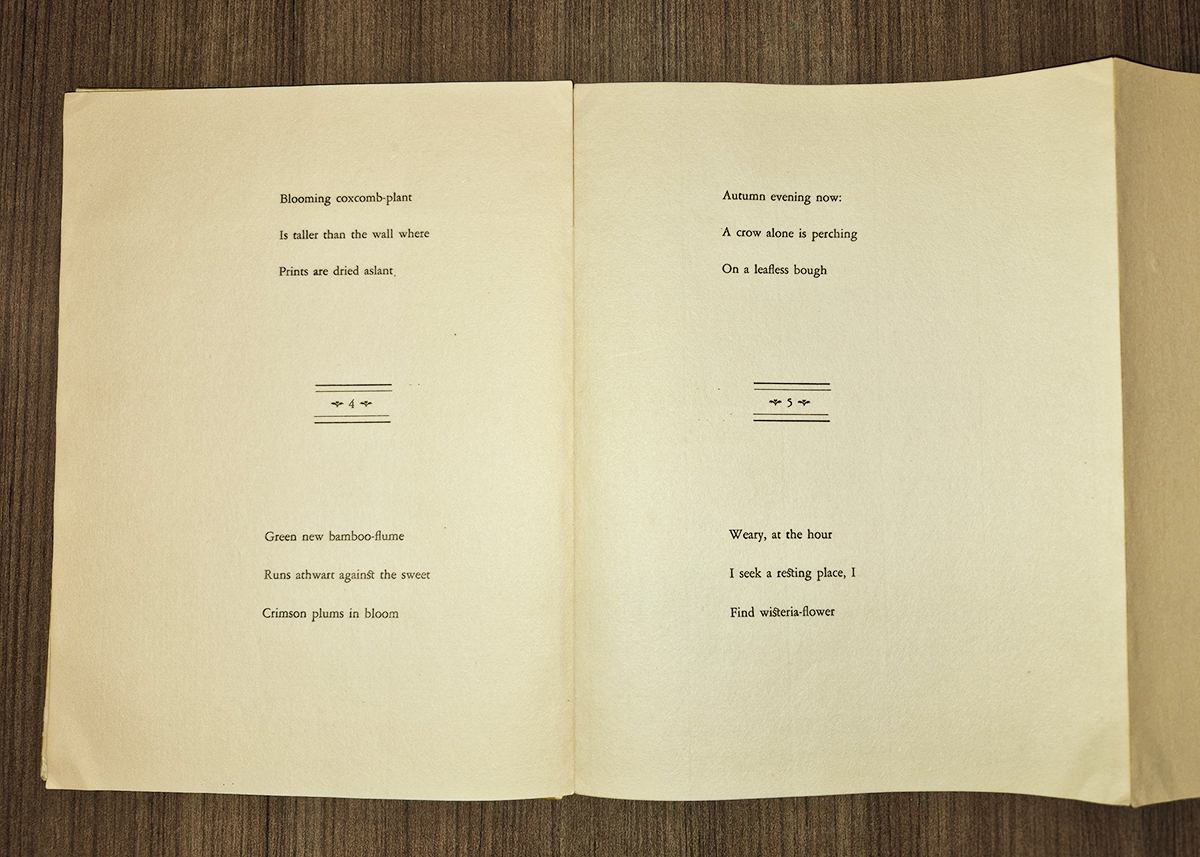
Another unusual book is Haiku, produced by Vincent Torre; our copy is number 3 of the 5 copies printed. The haiku are printed on an accordion book, a format which was much used in Pacific Asia.
Image Gallery
Post tagged as: special collections, rare books, publications, audiovisual materials, international
Read more Peek in the Stacks blog entries